Build a narrative-focused project starting from research and finishing with documentation tailored for team collaboration
Create branching and linear dialogue that will be congruent with the characters and seamlessly lead to the desired gameplay
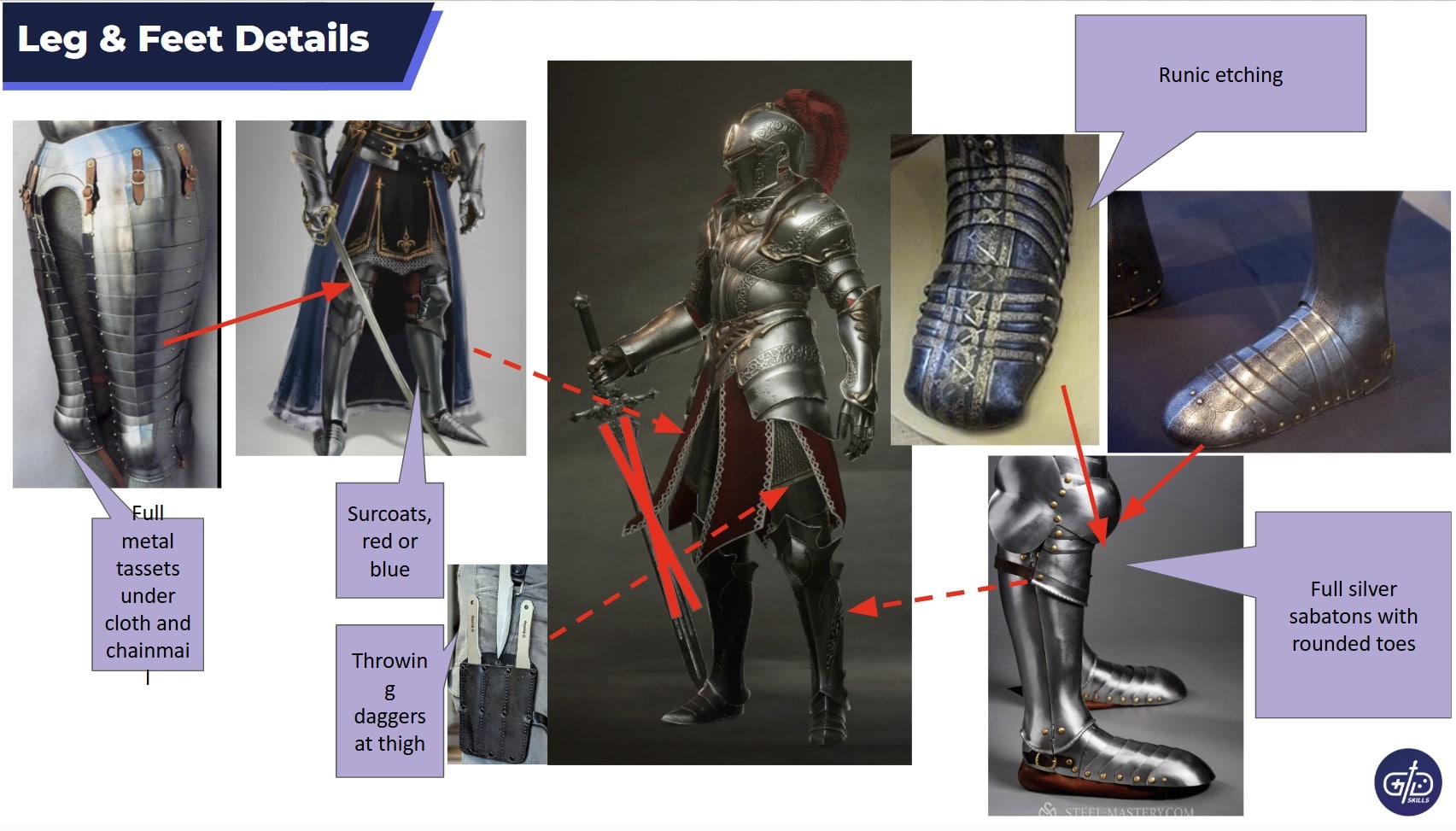
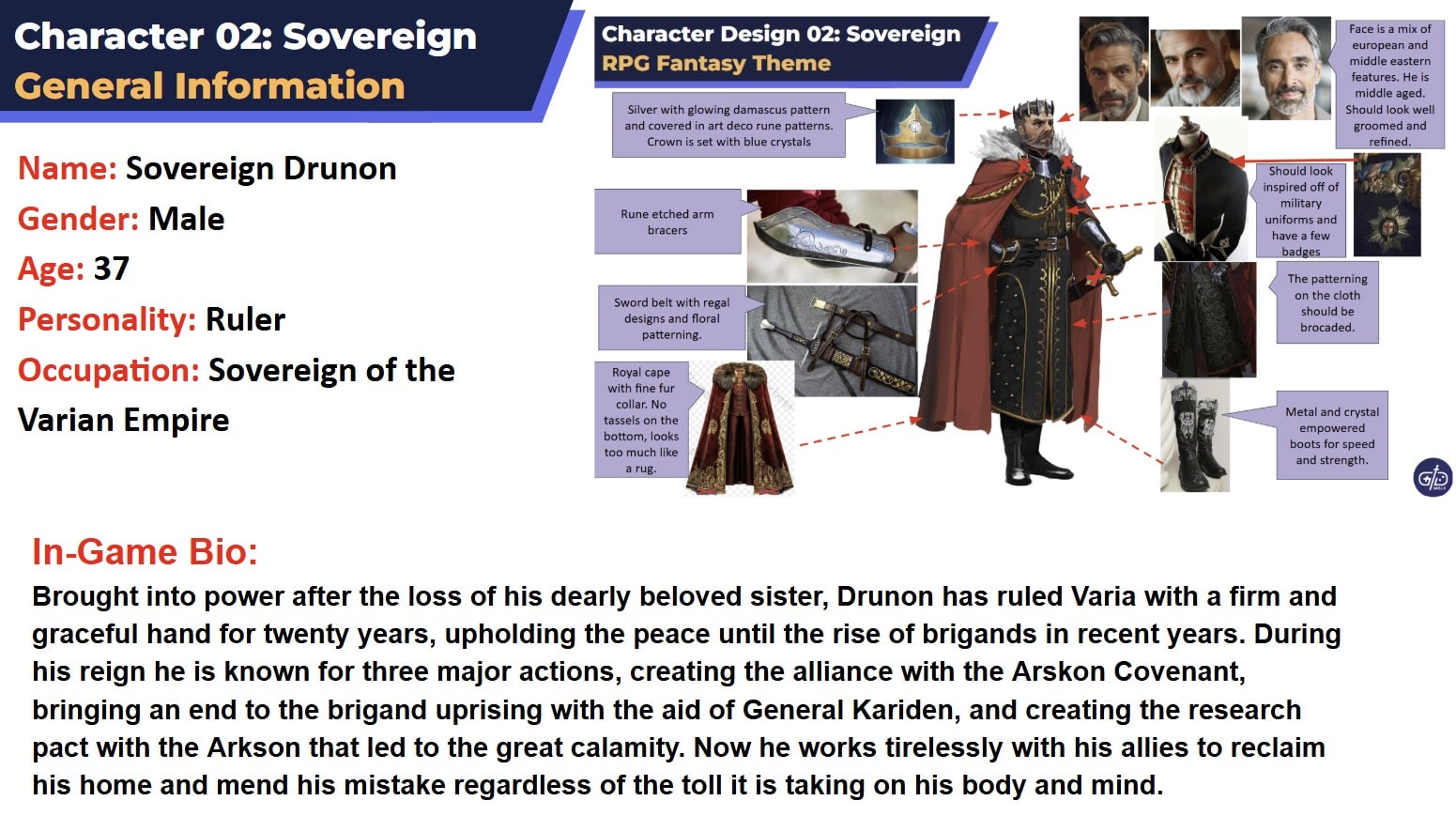
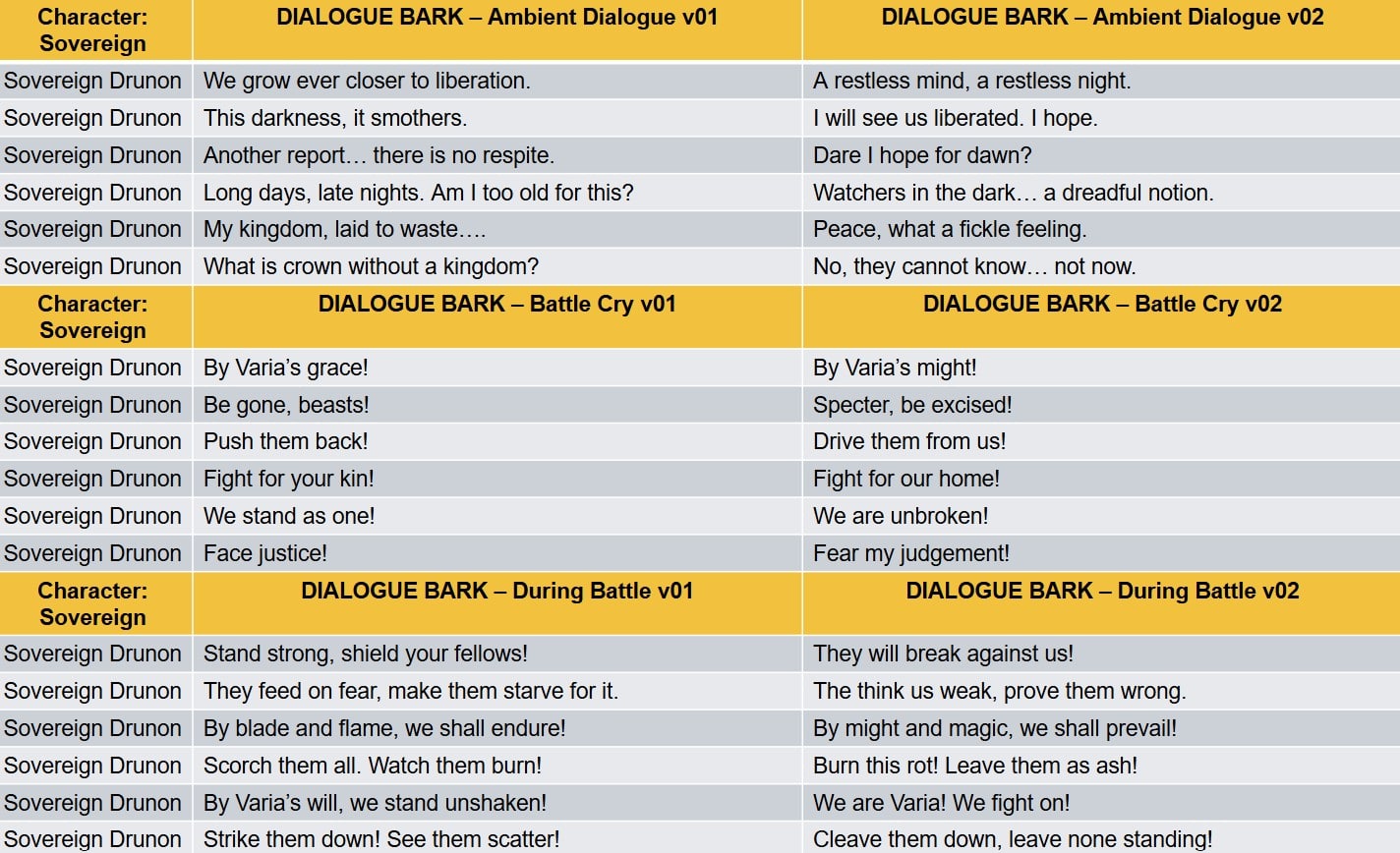
Design various characters, including bios, barks and visual research
Create clear and digestible character, location, voiceover script, and storyboard materials for collaboration with the art, combat, design and marketing teams
Work in a studio-like environment, practice soft skills, get better understanding of collaborative processes between teams.
Overview
1. Created game world’s foundations including lore, geography, locations, and cartography design
2. Designed playable and non-playable characters based on the world’s baseline context and unit type to blend narrative and mechanics into their identities
3. Designed branching dialogues that are integrated into the game flow
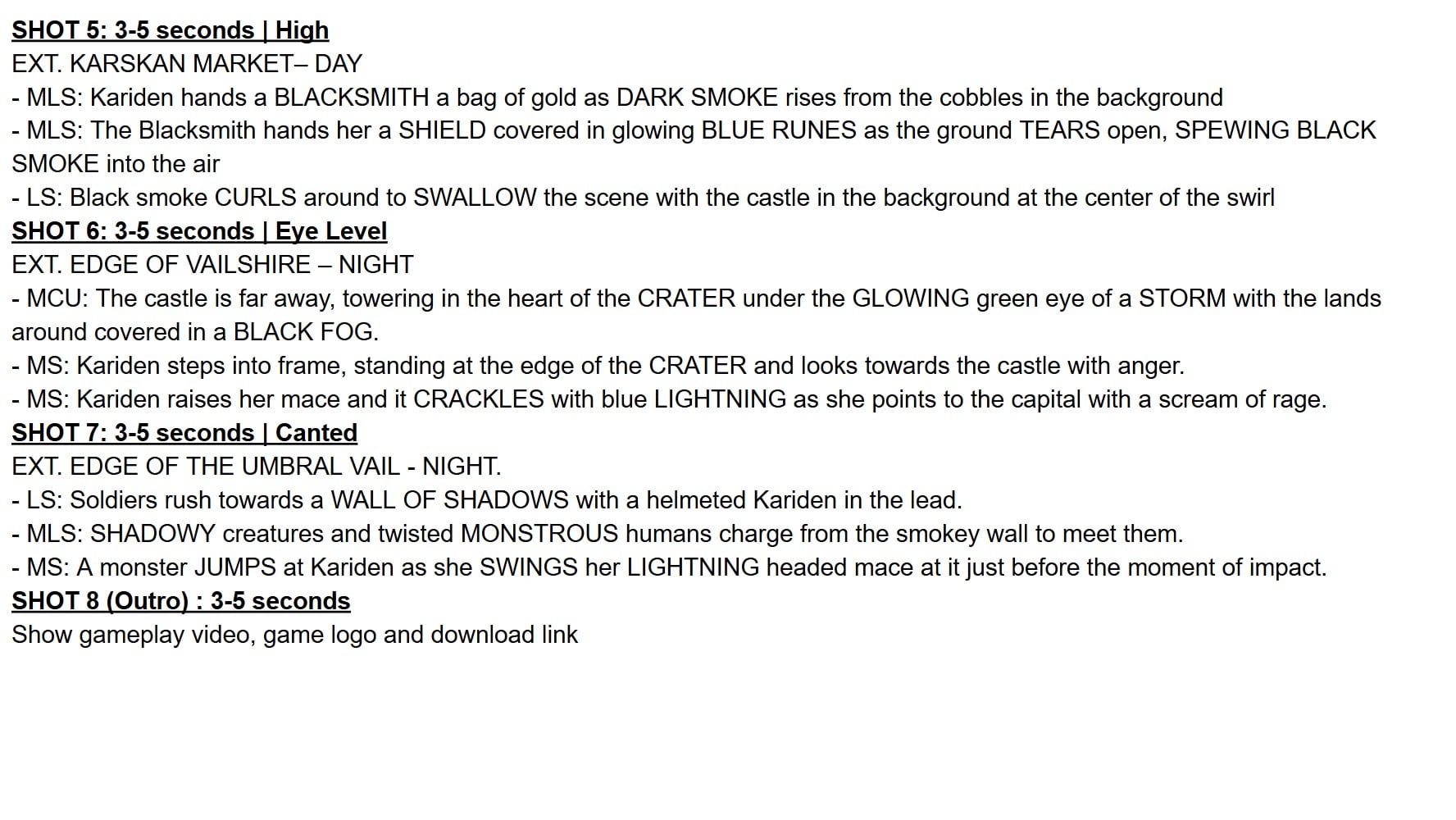
4. Created opening cinematic trailer script and storyboard that leads into gameplay
5. Produced voice over scripts for each character including bios, dialogue, barks, and a master script for team collaboration and onsite edits
6. Produced documentation in Excel, PowerPoint, and Arcweave for collaborative use
Branching Dialogue Design
Quest Branching Dialogue Creation Process:
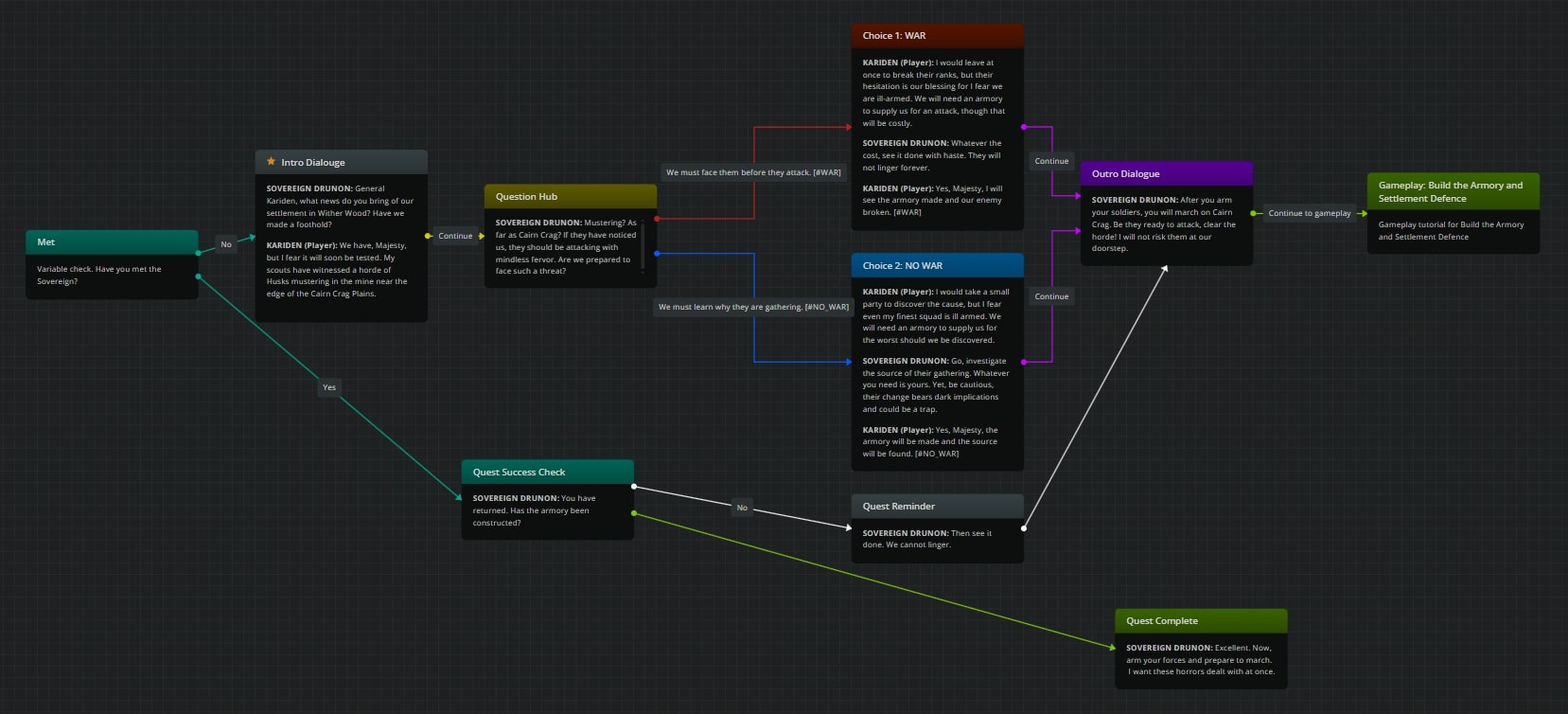
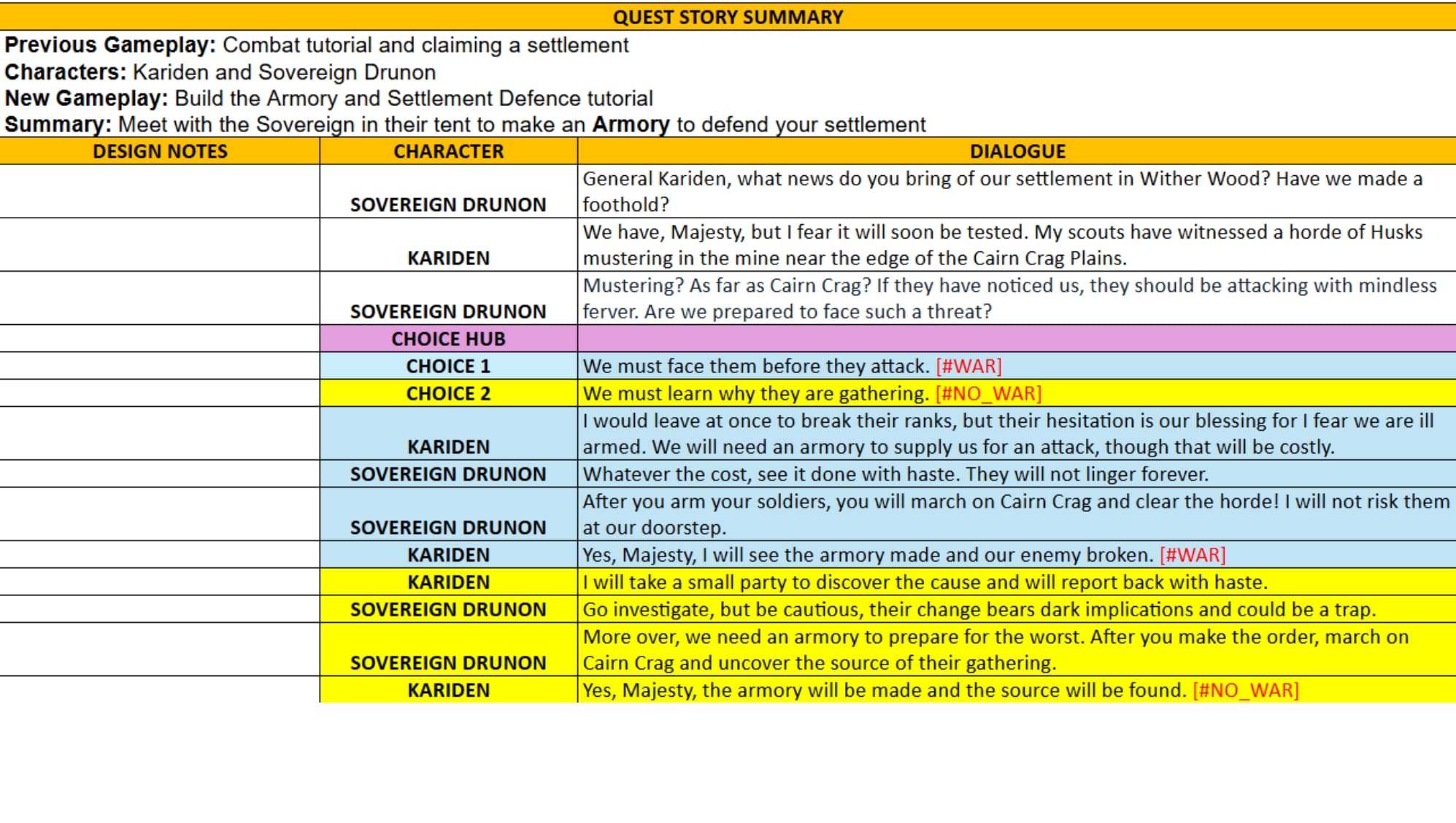
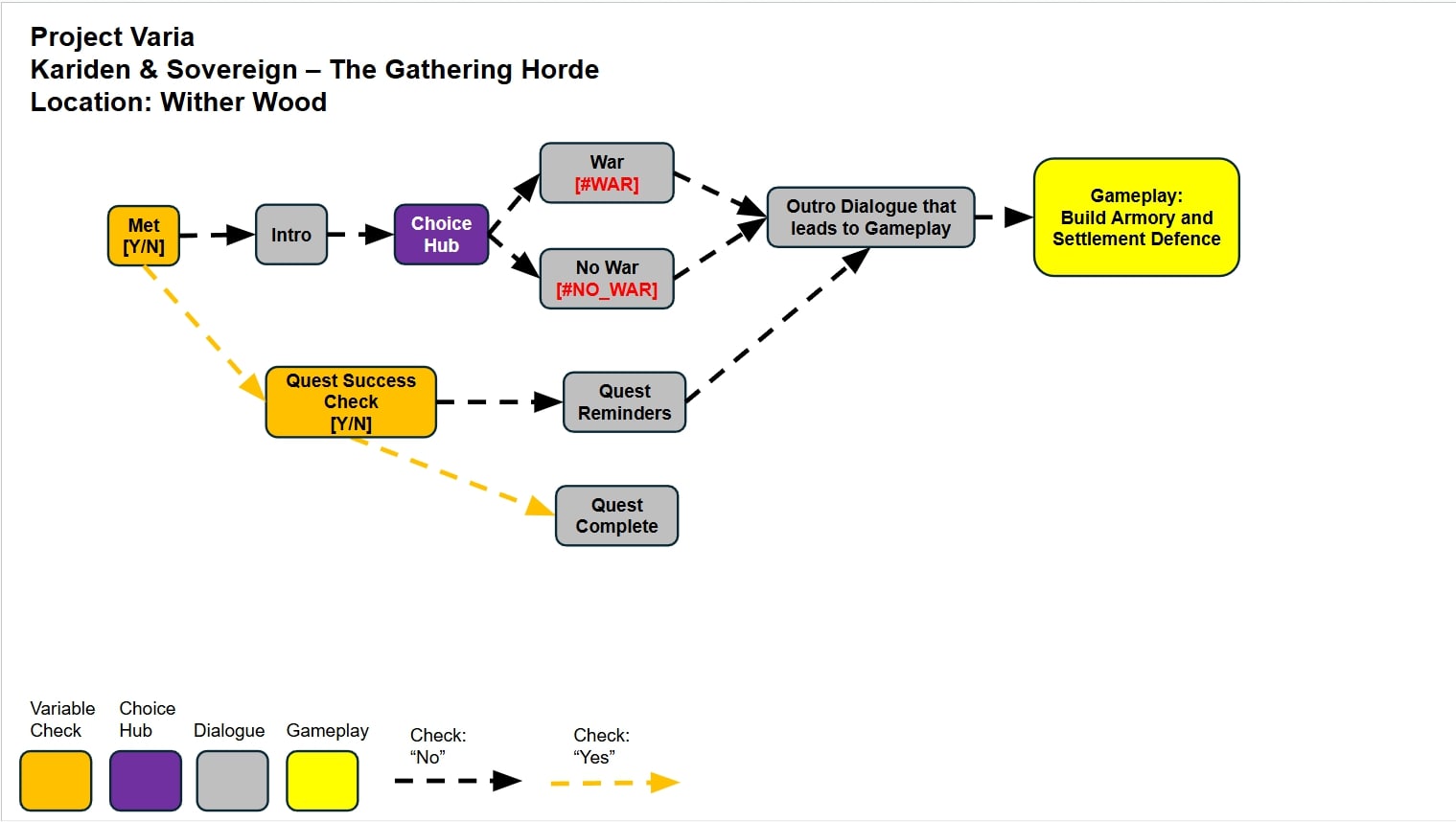
1. Designed branching dialogue threads that integrate variables and choices seamlessly into the gameplay:
Roleplay choice HUB – Allows the player to respond the NPC with polar opposite choices that best suit their own playing styles
Tutorial Quest – As this quest is still part of the tutorial, there are no quest acceptance hubs.
2. Wrote dynamic dialogue with thematic choices to increase immersion by:
Urgent Stakes: Ensured clarity on the narrative urgency for the Build the Armory and Settlement Defenses gameplay
Respected Player Character – Made it clear that the sovereign trusts the player character’s insights, so that player choice feels their choice holds weight
Narrative Simplicity – Quest reflects the player character’s unquestioning loyalty to her sovereign at this stage of the game, but gives polar opposite choices to cater to different player types
3. Prototyped a clickable branching dialogue script using Arcweave to simulate narrative flow with the following goals:
Optimize player taps/clicks: For improved pacing and increased player investment
Allow design teams to leave real-time notes for feedback and collaboration
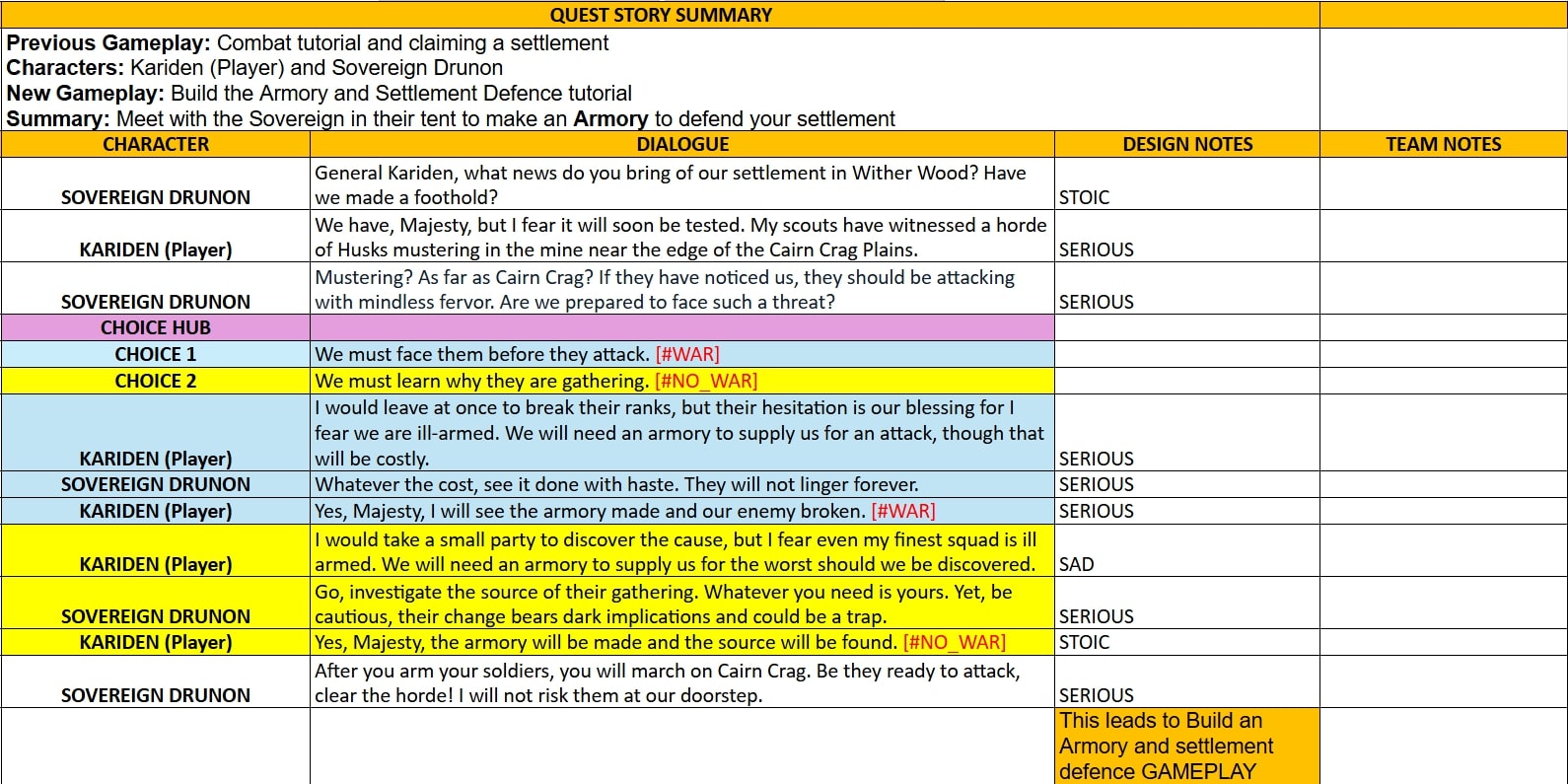
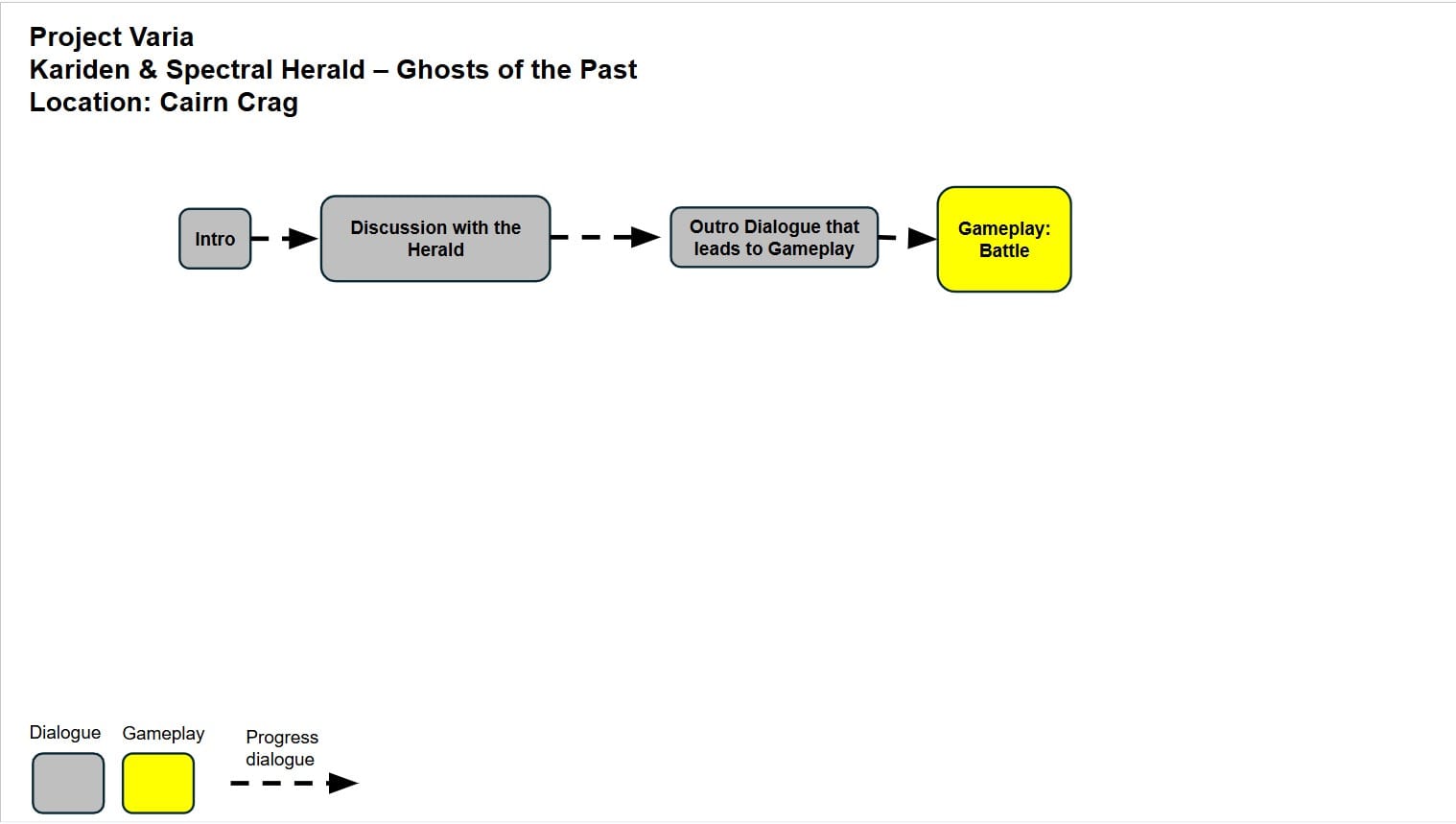
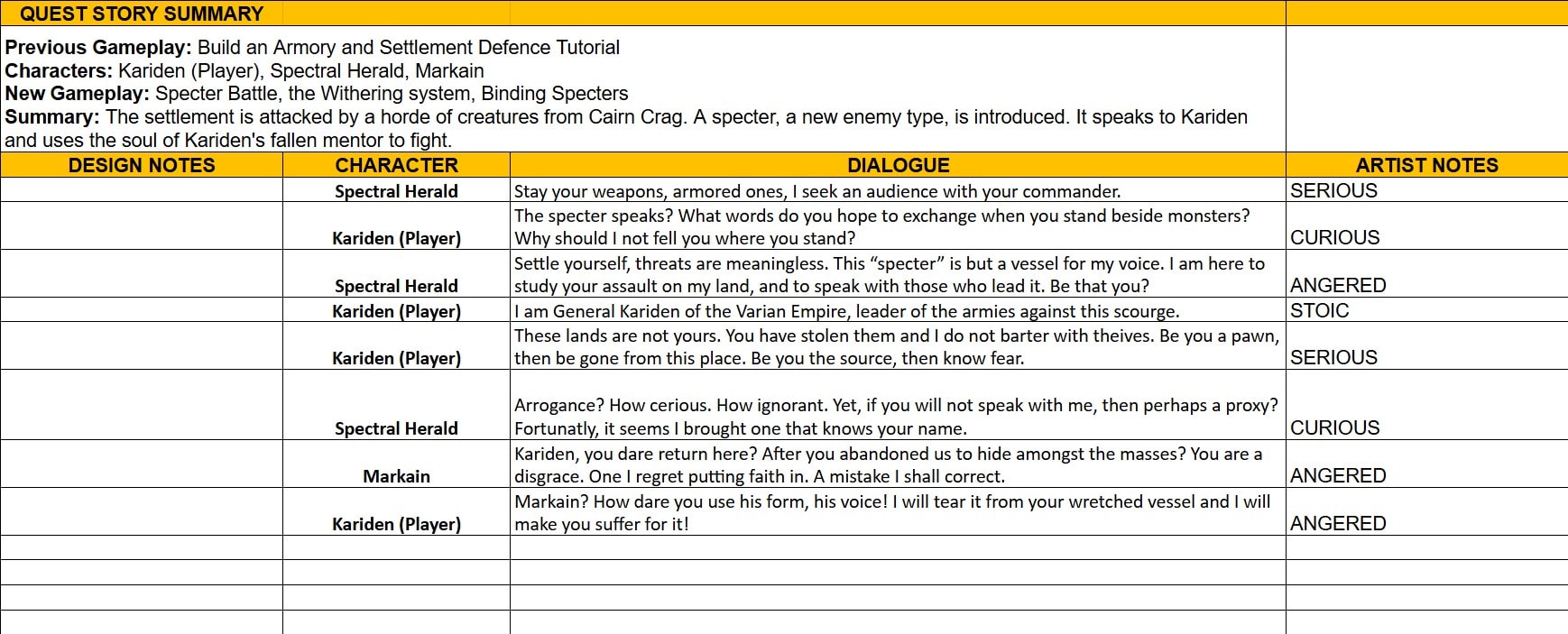
Designed linear dialogue threads to proof story to gameplay functionality for both cutscenes and tutorial quests with the following considerations:
1. Cutscene Dialogue: Designed cutscene dialogue in a linear system with the following considerations
Pacing: Kept dialogue concise to build tension before a battle
Simplicity: Designed dialogue without quest check or variable hubs, given its cutscene context
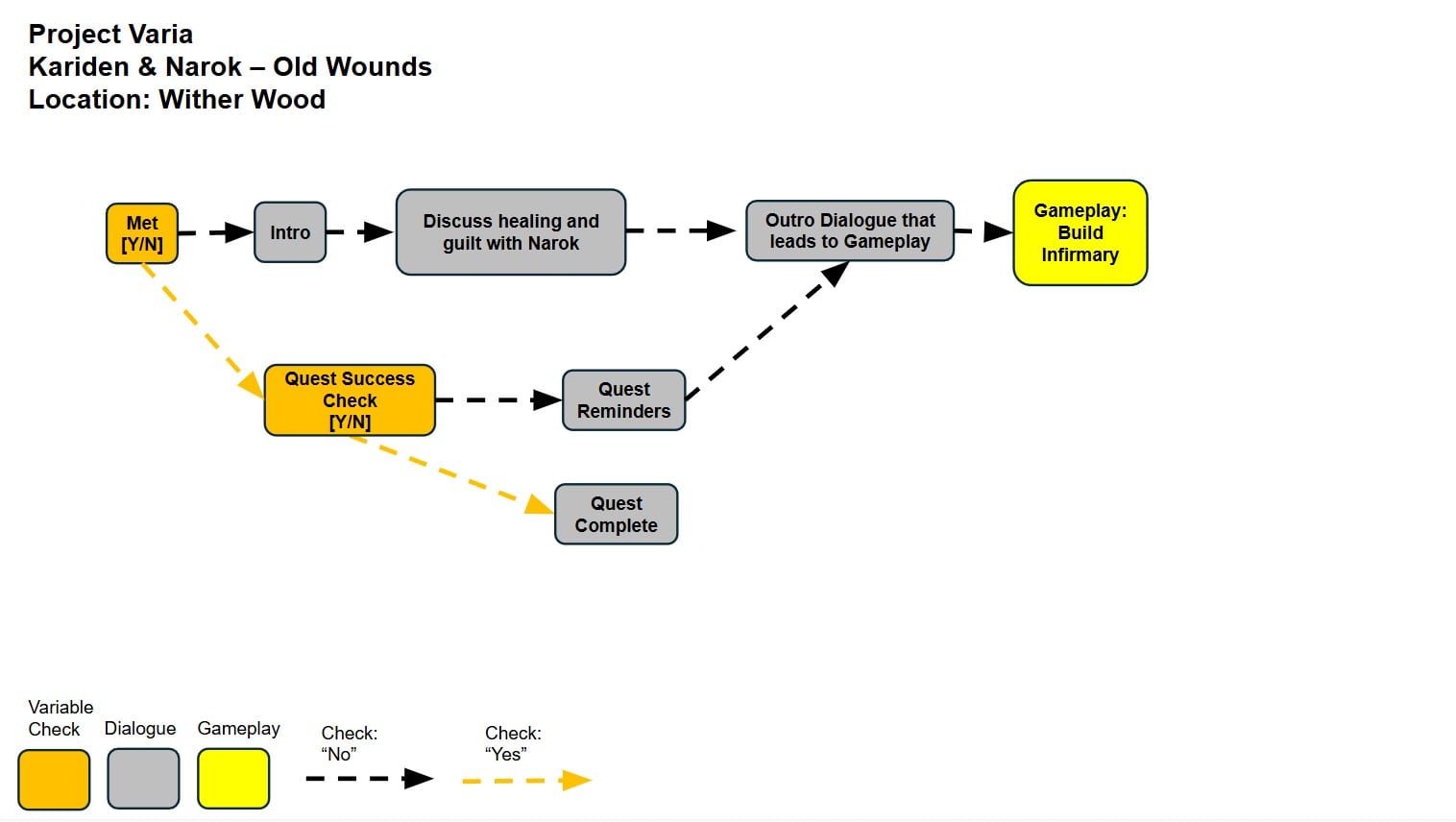
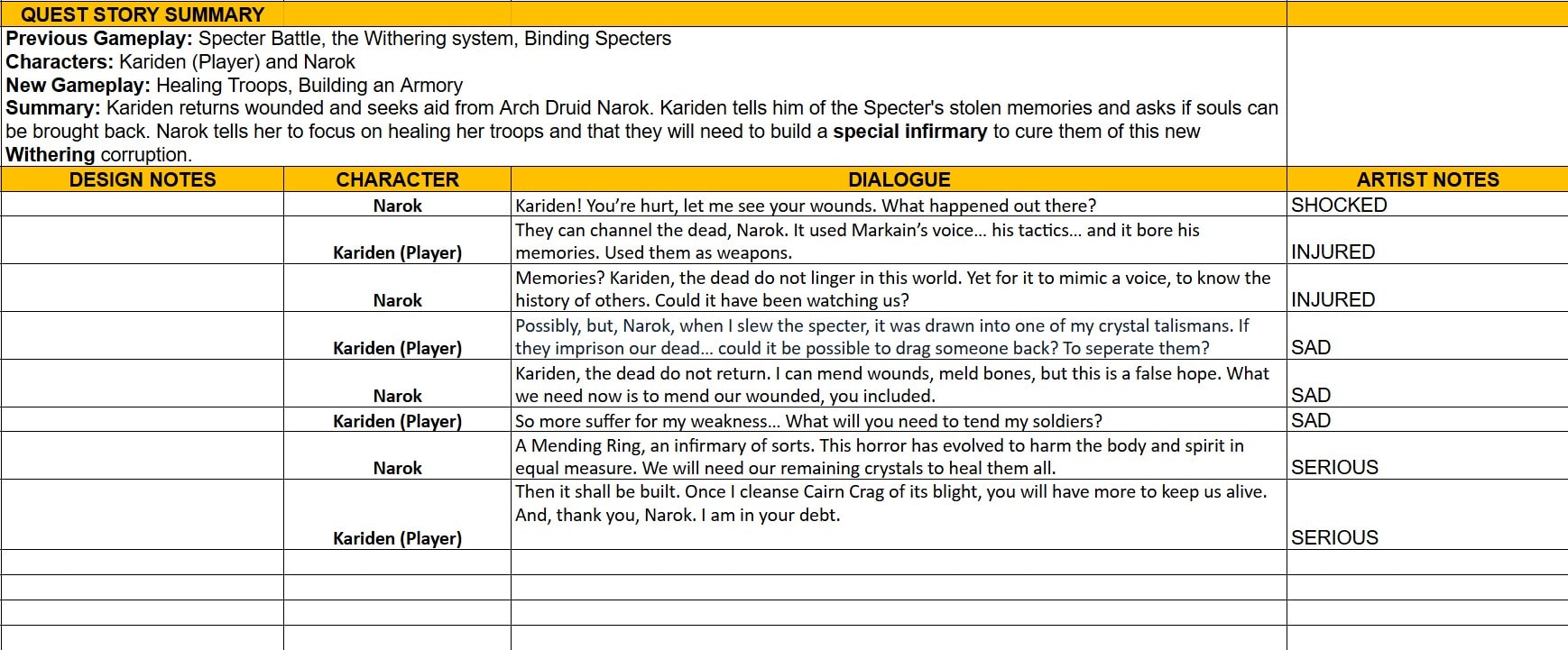
2. Tutorial Quest: Designed tutorials with linear dialogue, including the following design considerations
Clear goals – As part of the tutorial section, dialogue was designed to convey simple, clear goals using the narrative to lead to gameplay
Communicate Resource Cost – Gave clear resource costs for the tutorial section as a narrative and mechanical incentive to claim resources from future quests and locations for narrative and gameplay progression
Quest Reminders – Added a Quest Check Hub for player to remind themselves of the Quest Requirements
Character Design
Character Design
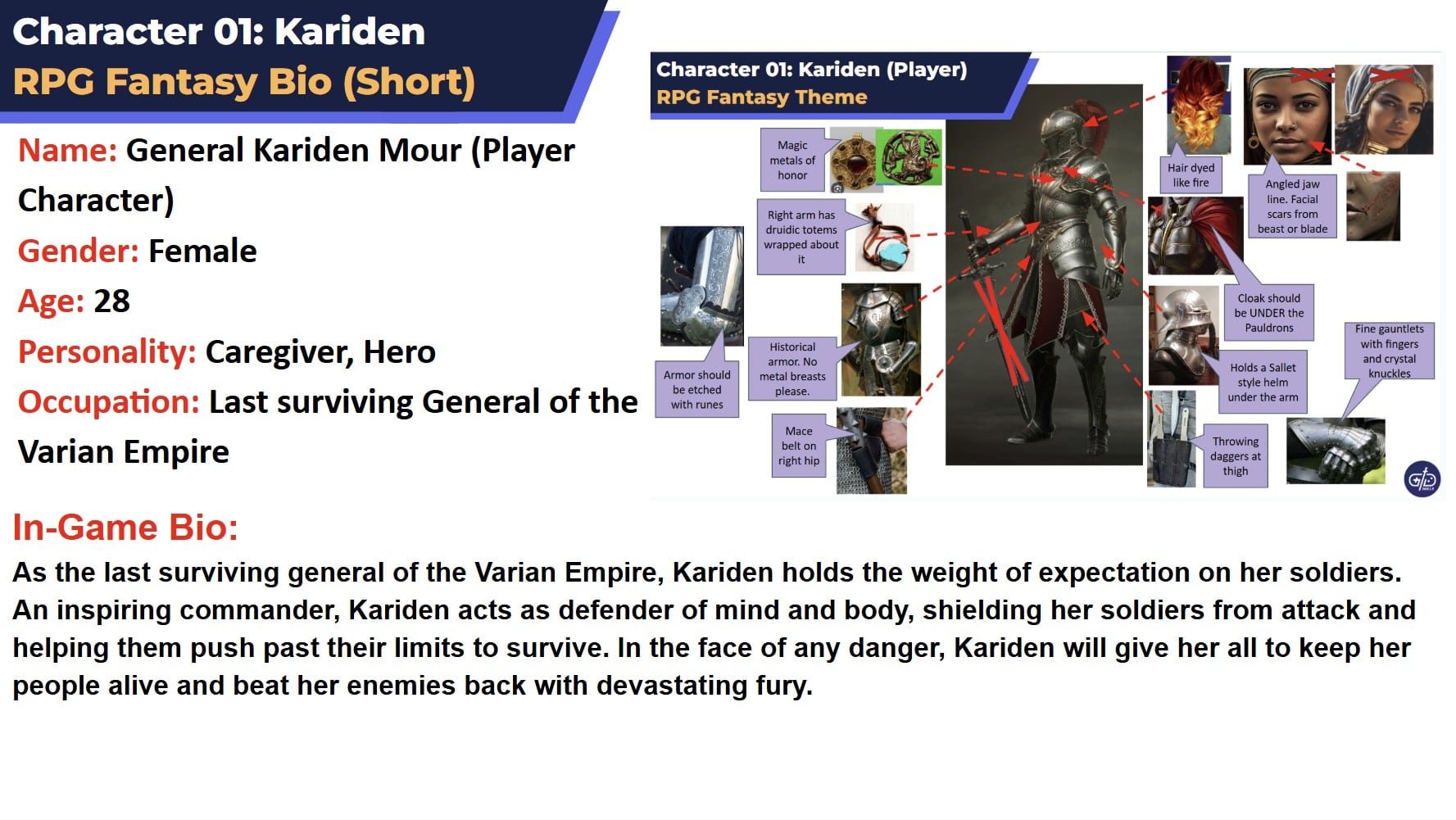
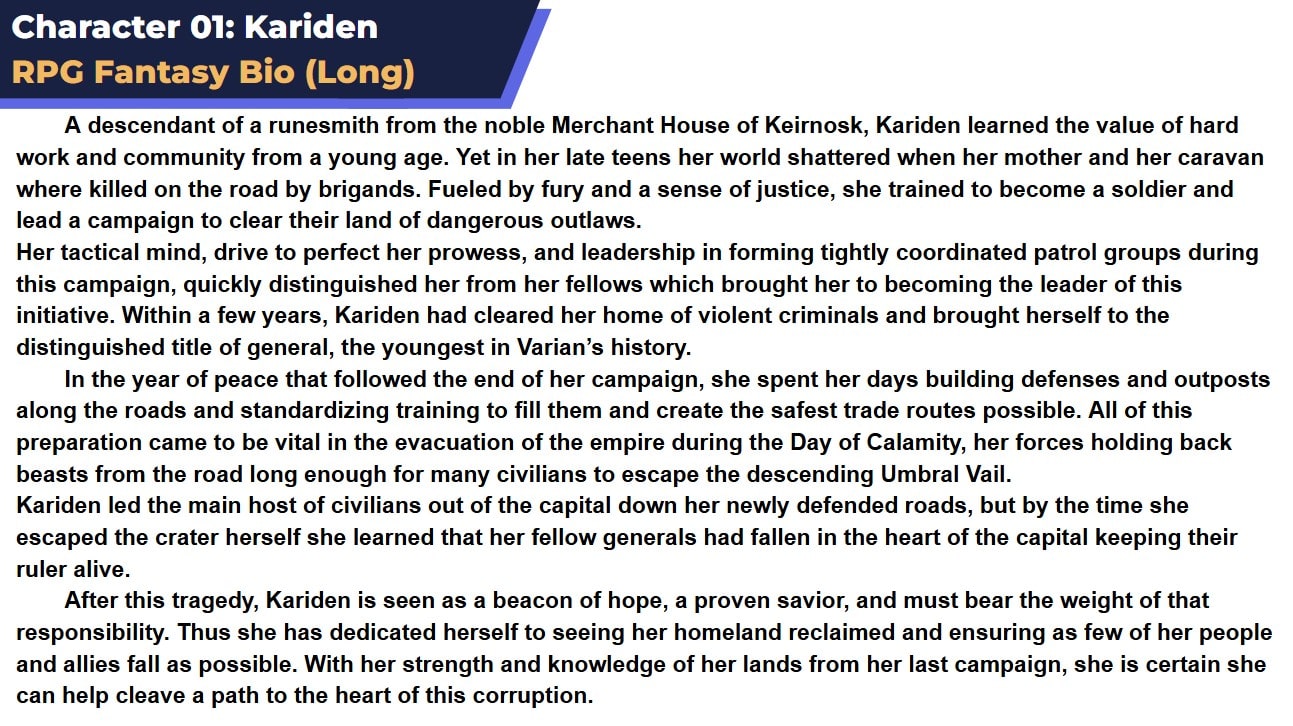
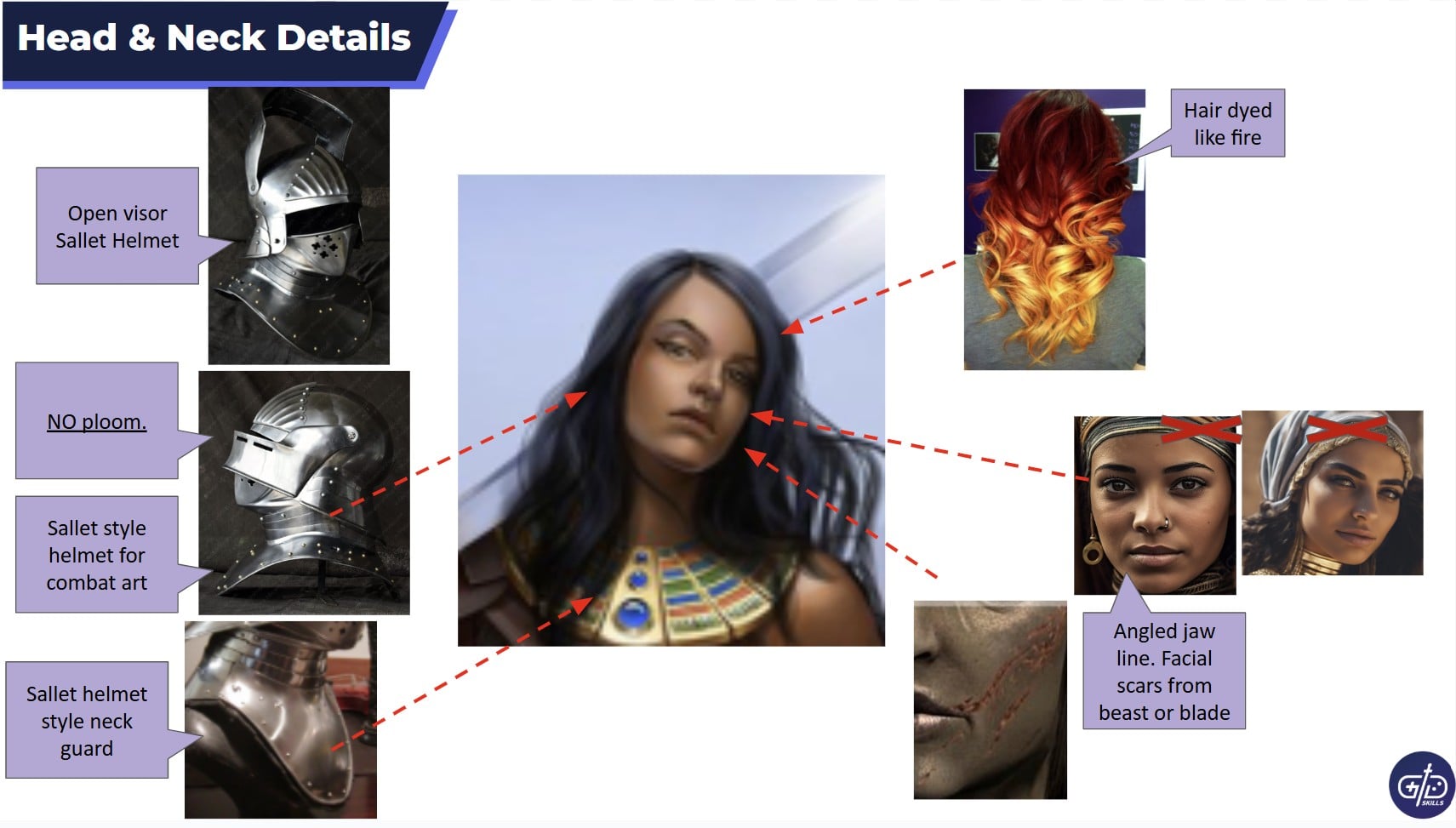
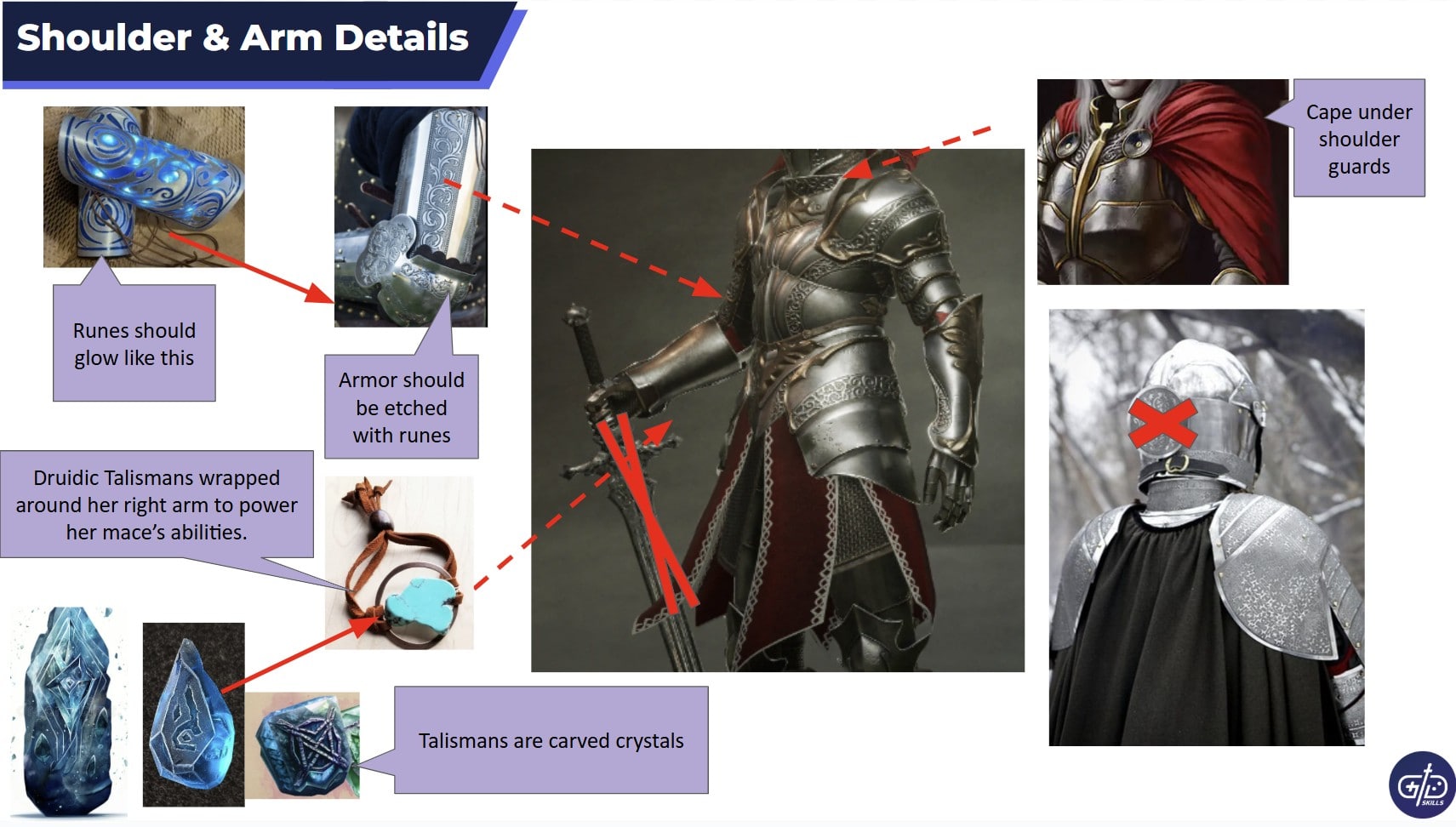
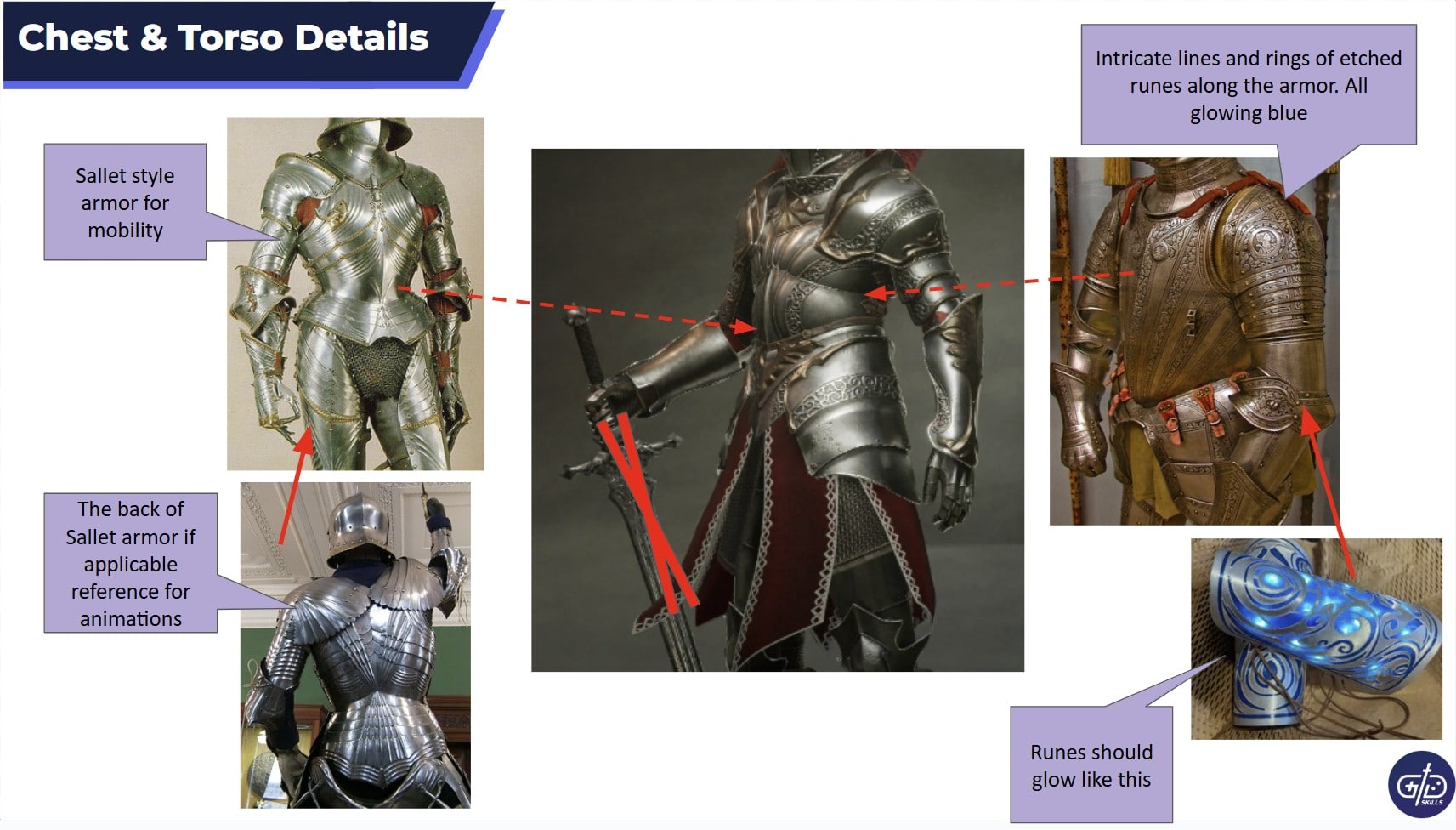
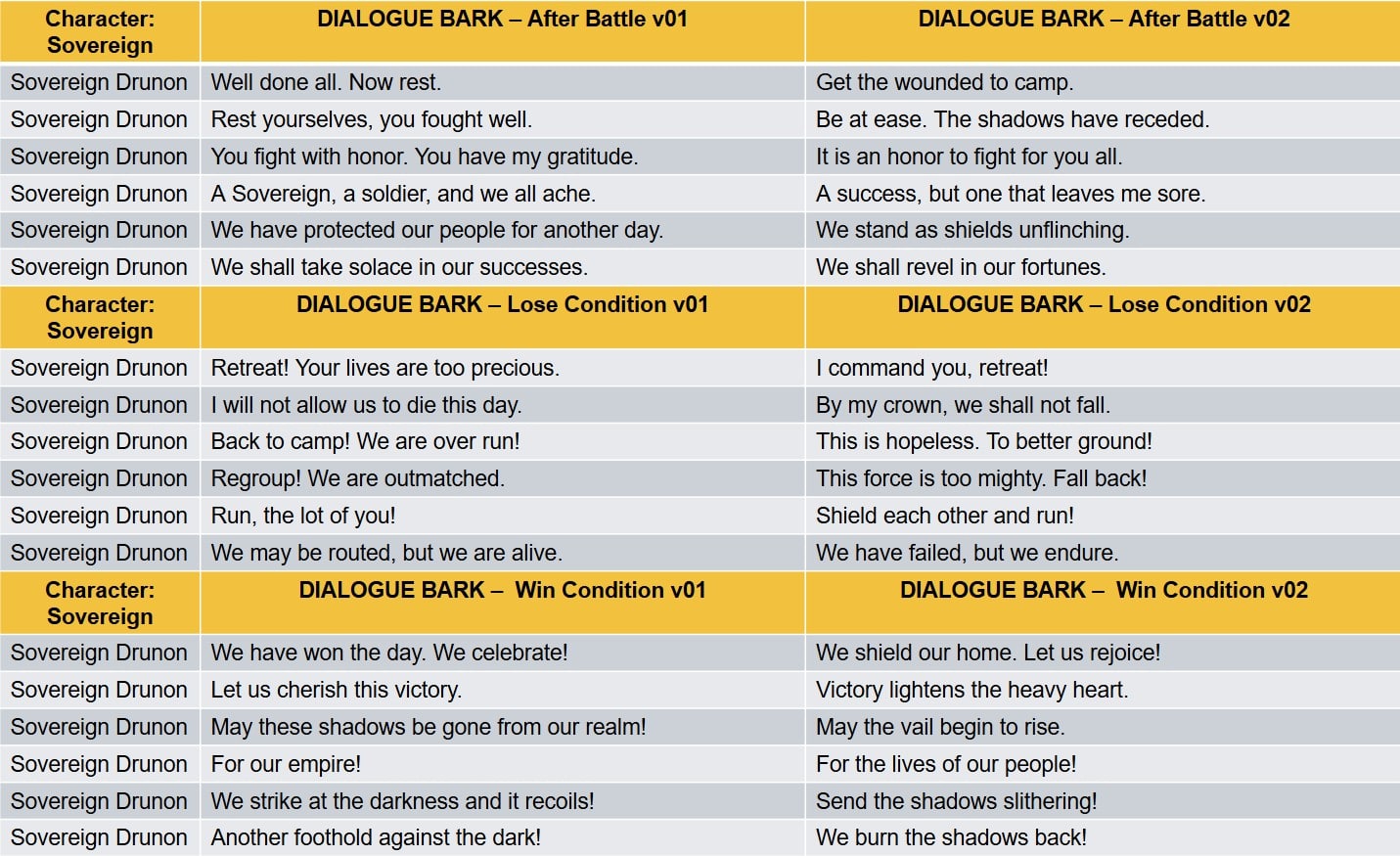
Player Character: Kariden
Crafted a player character with motivations that conflict throughout the story, leading to dynamic choices that shape her growth and branch her story into three exclusive character arcs that resonate with players across various gameplay quests and mechanical themes:
Continuity: Researched, designed, and fleshed out character motivations and personality to reflect narrative themes, combat functions, and game mechanics
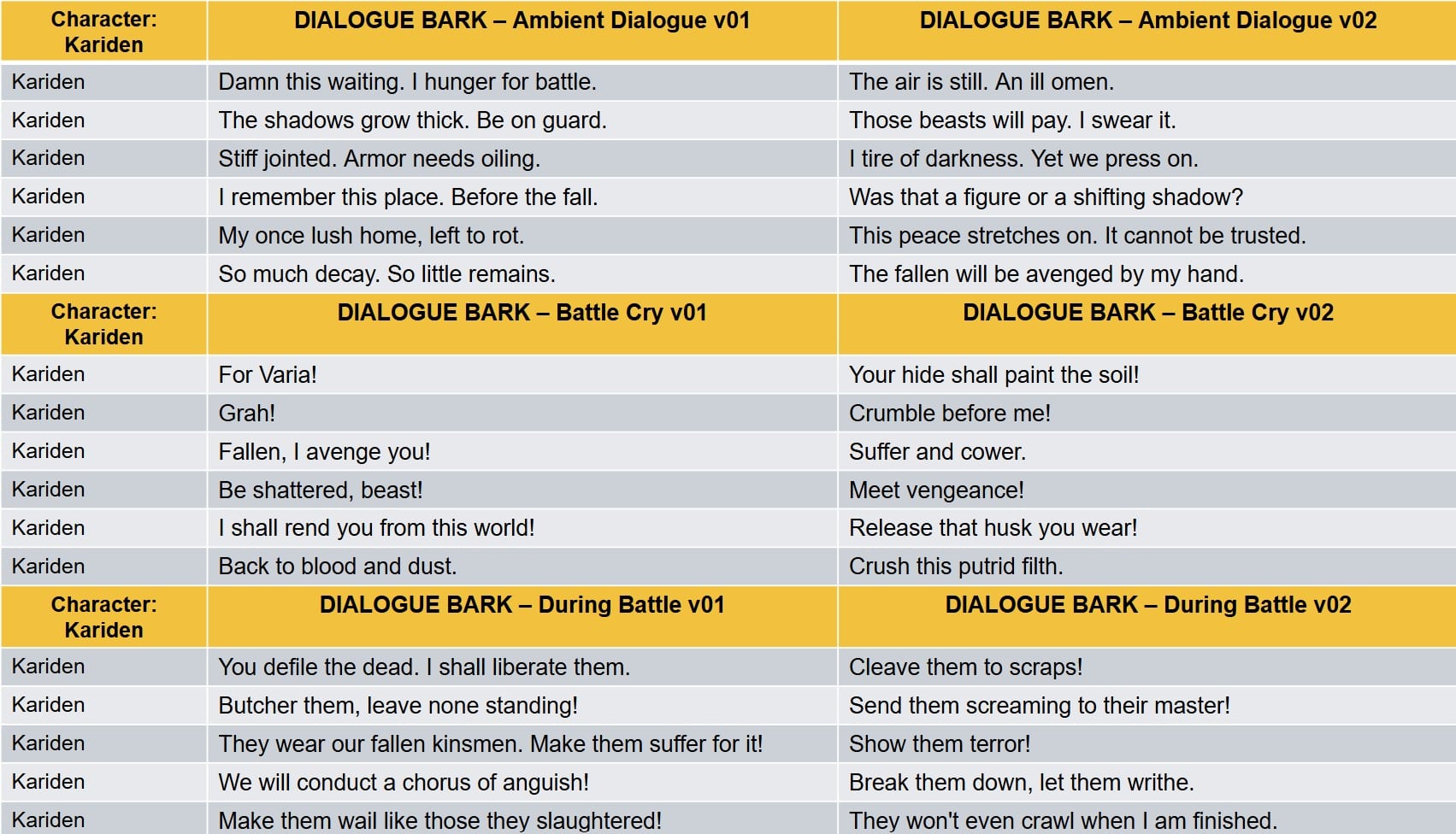
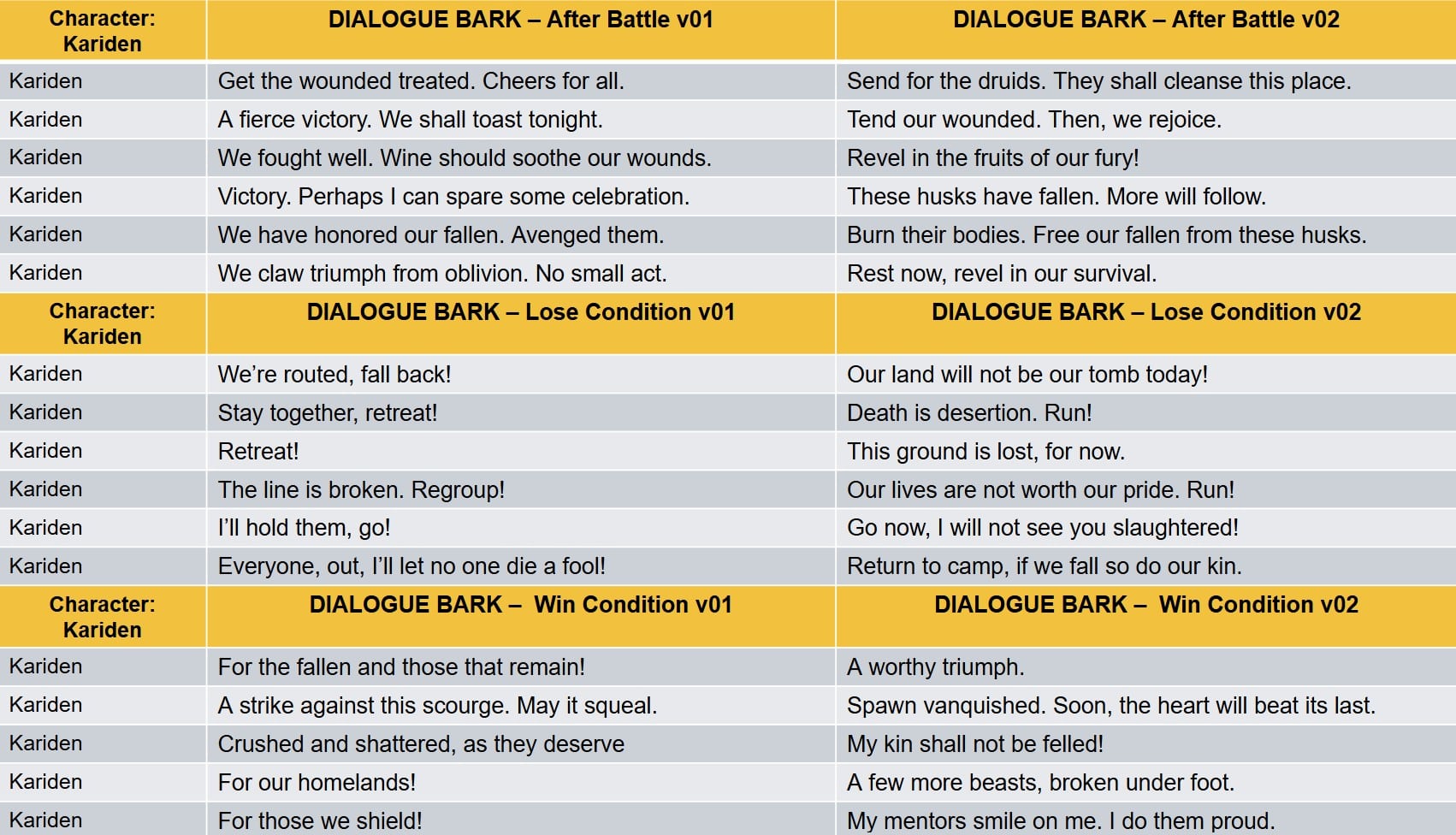
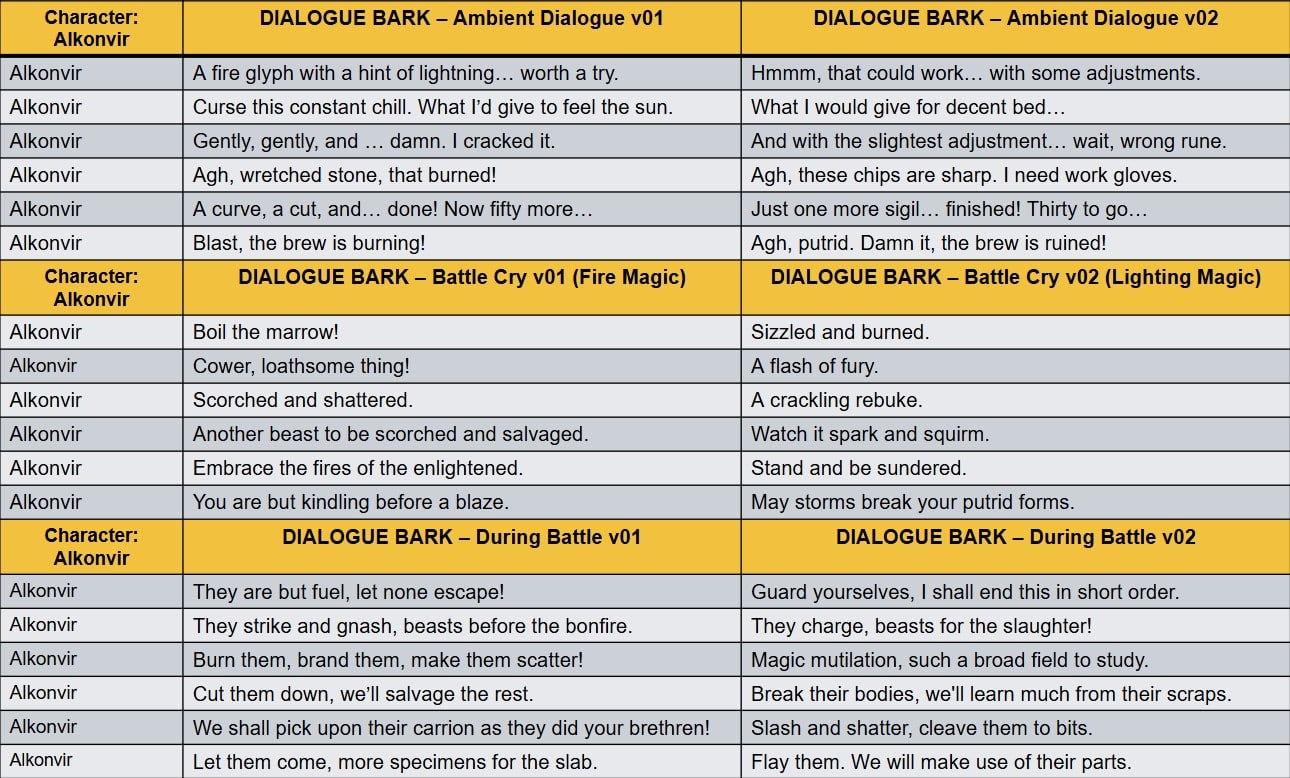
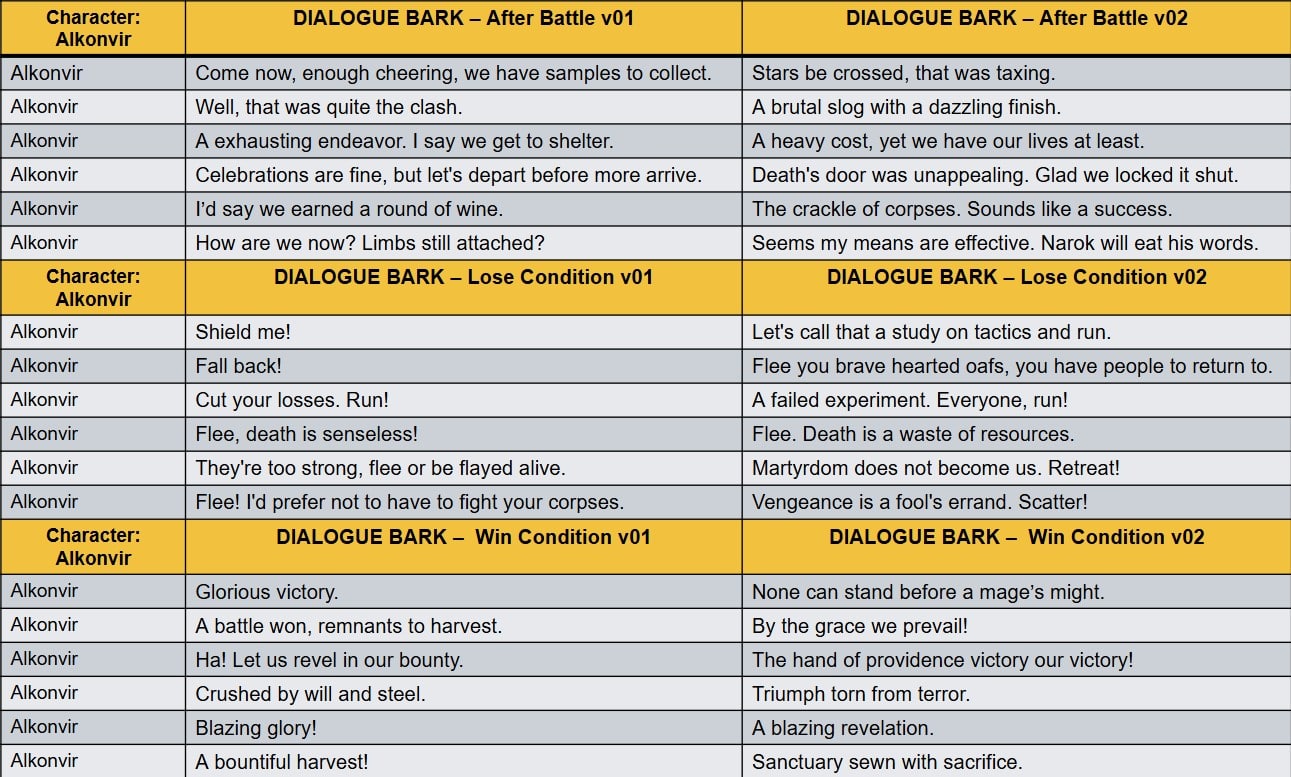
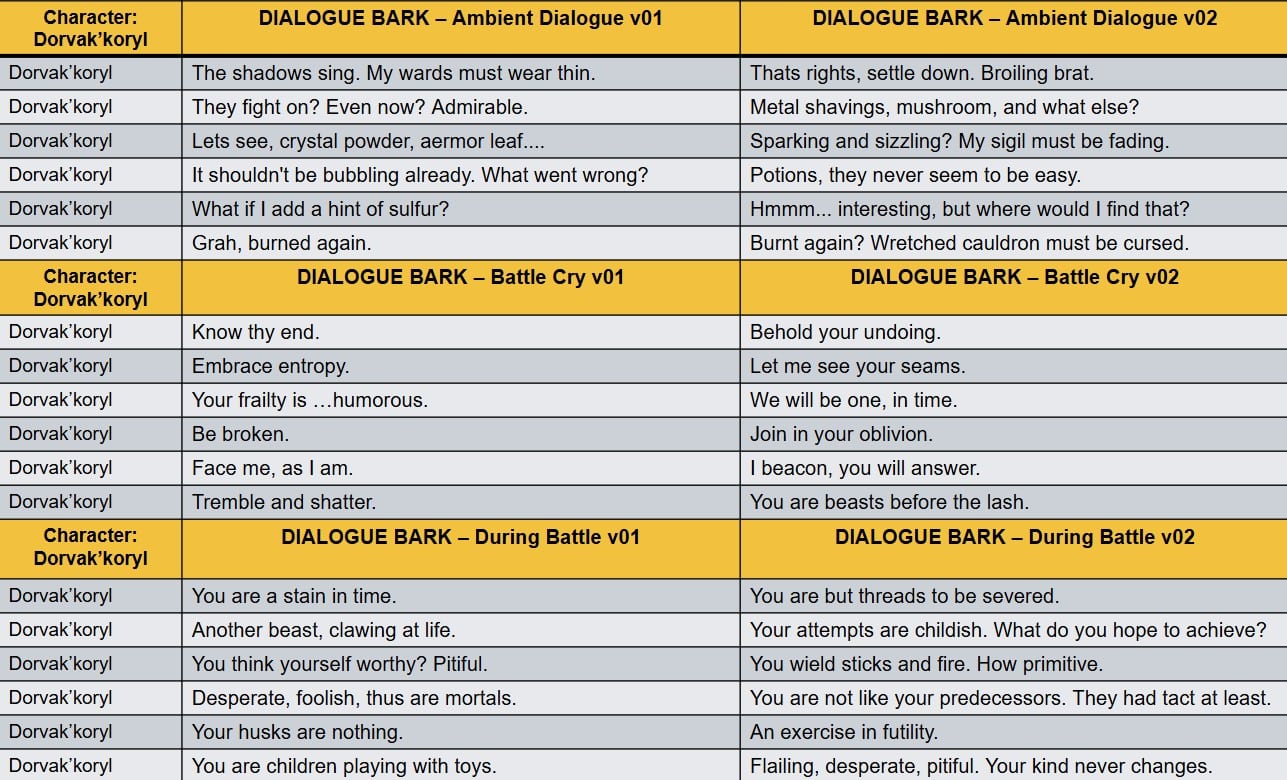
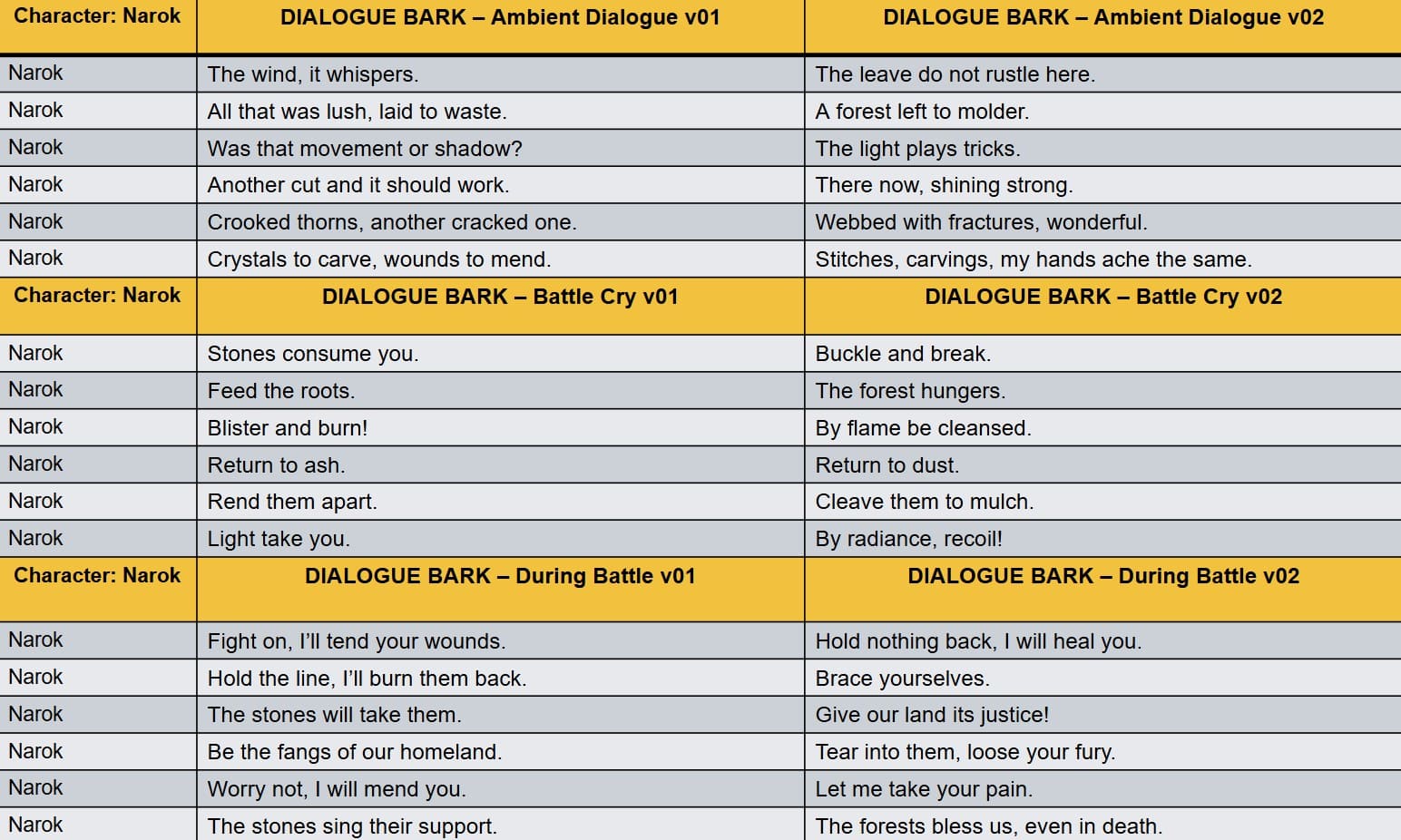
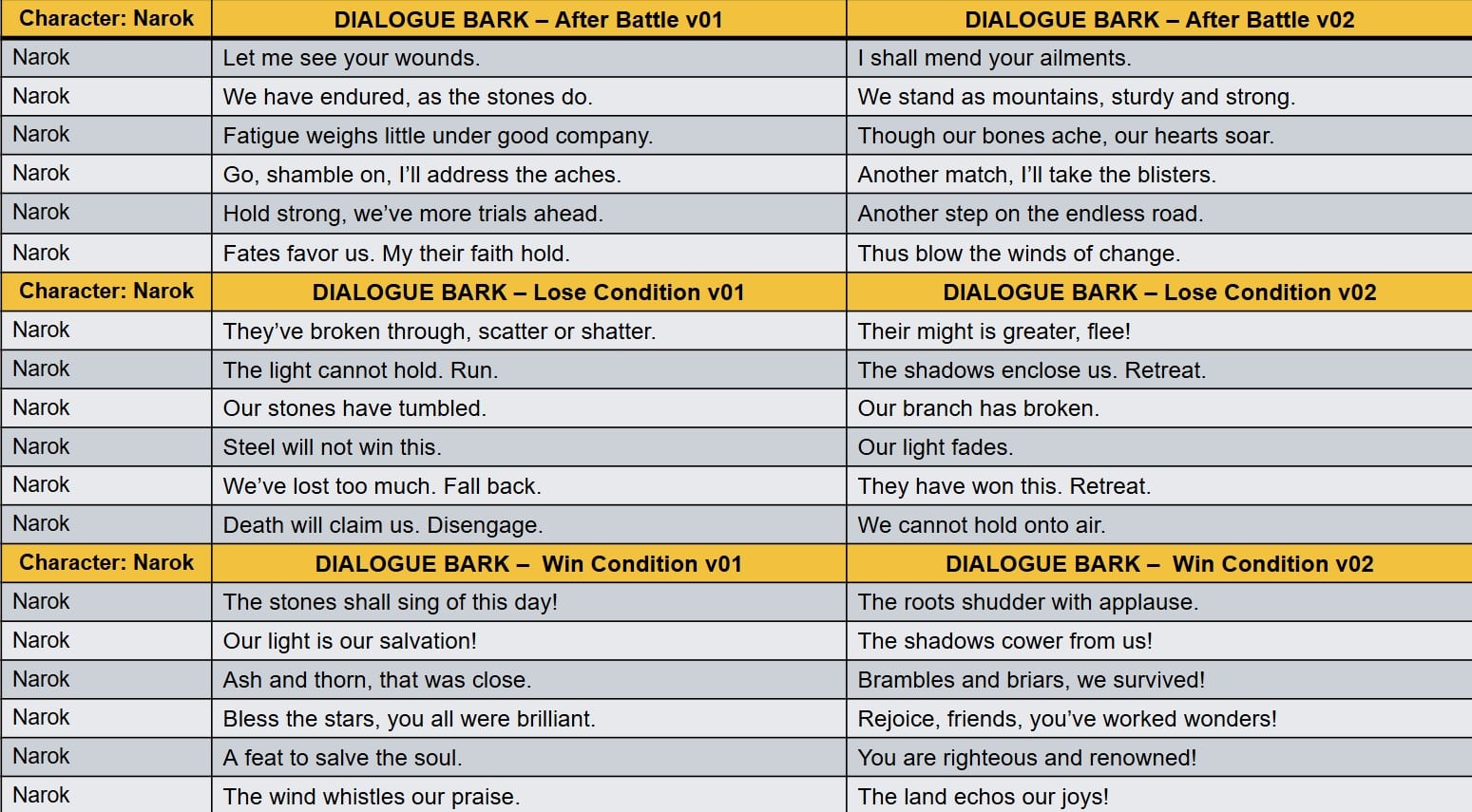
Voice from Gameplay: Wrote the character bio and gameplay barks with their design, combat function, and Jungian personality archetypes in mind
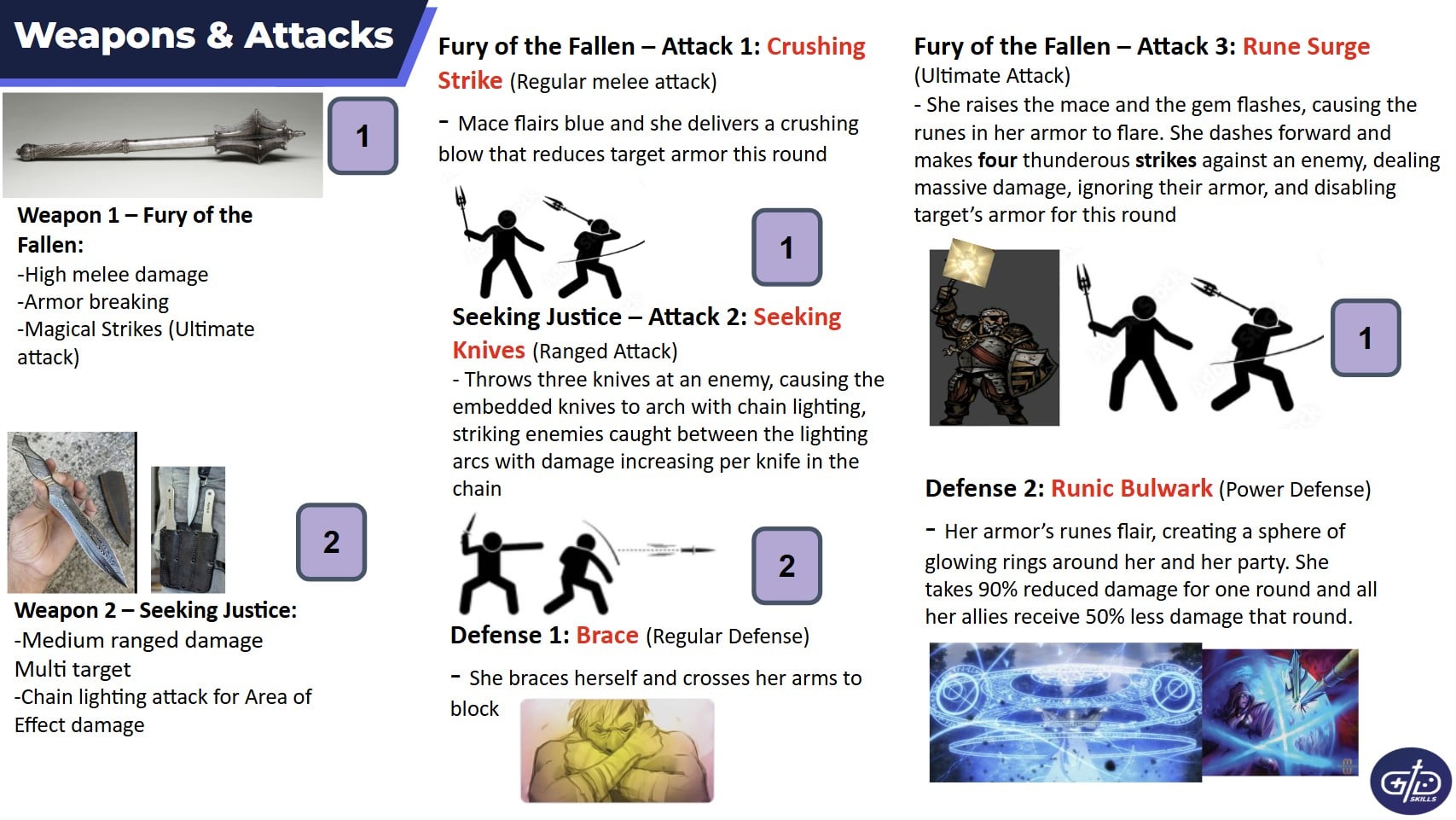
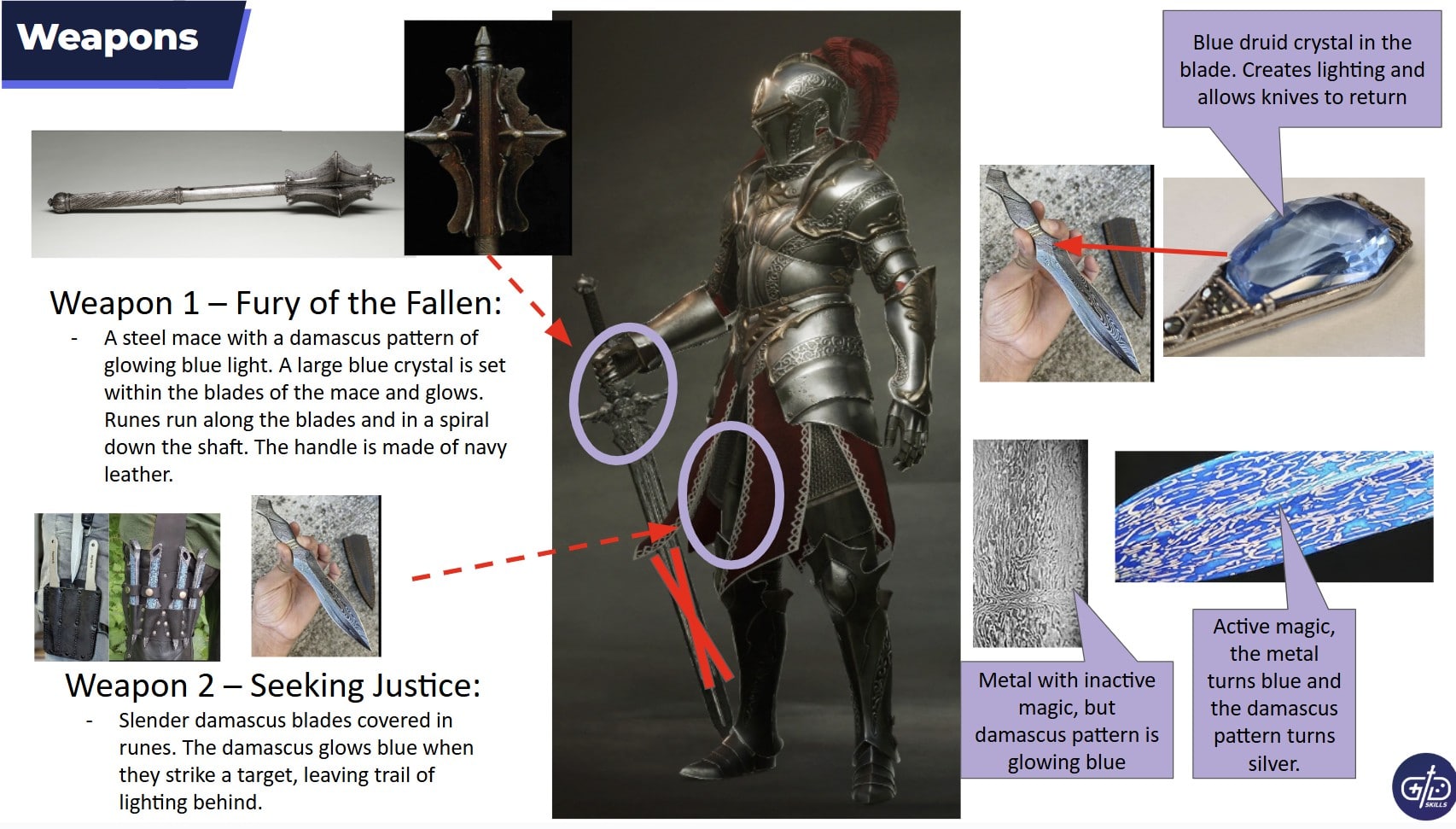
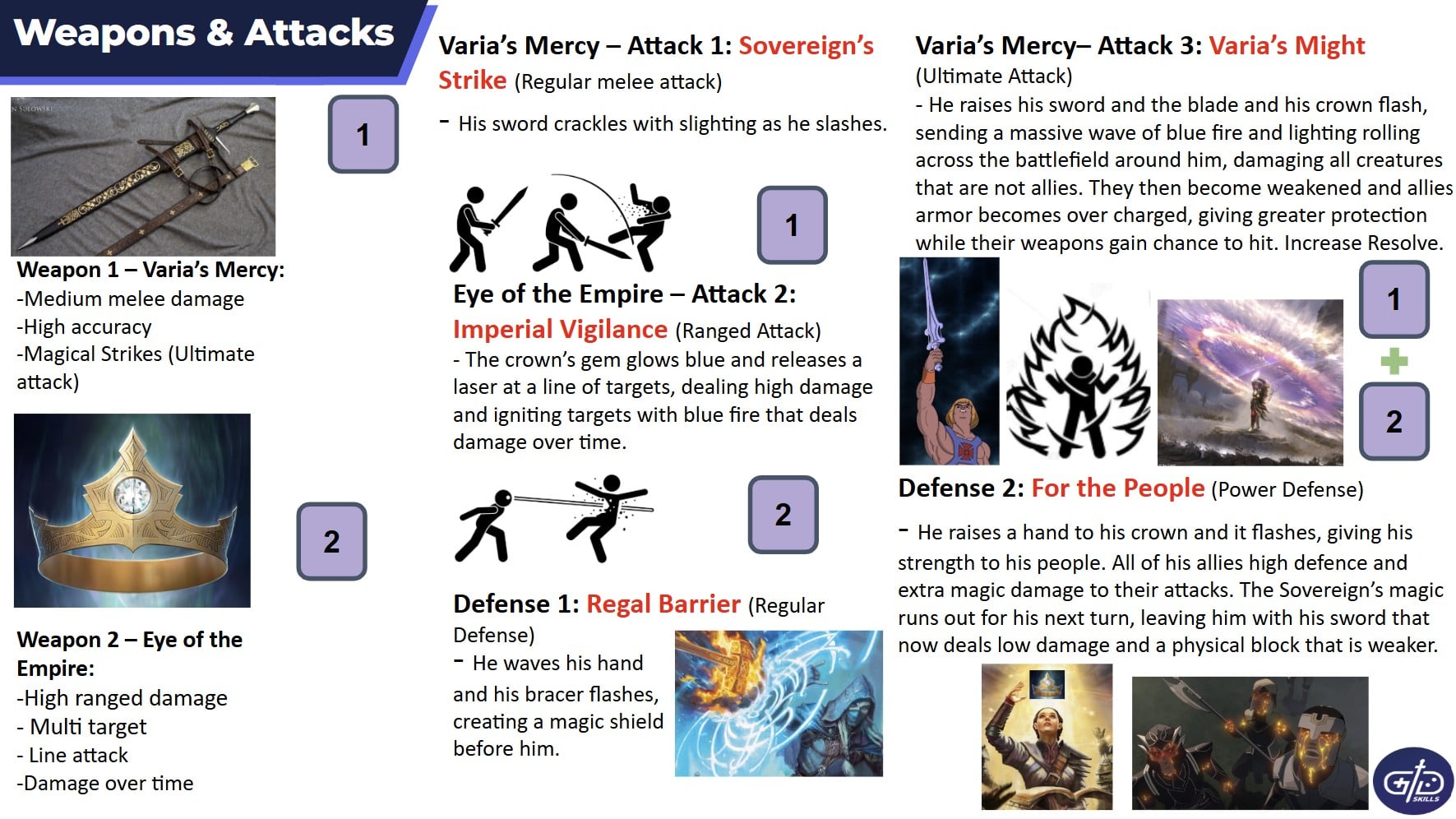
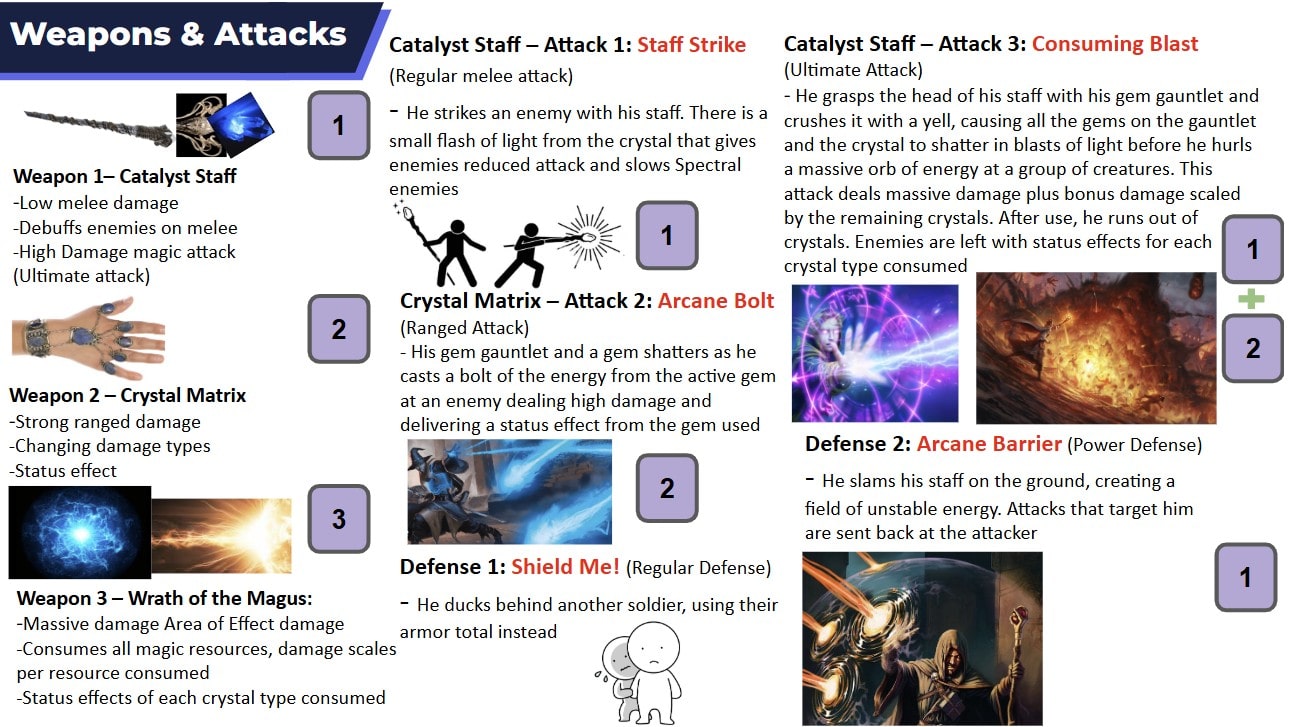
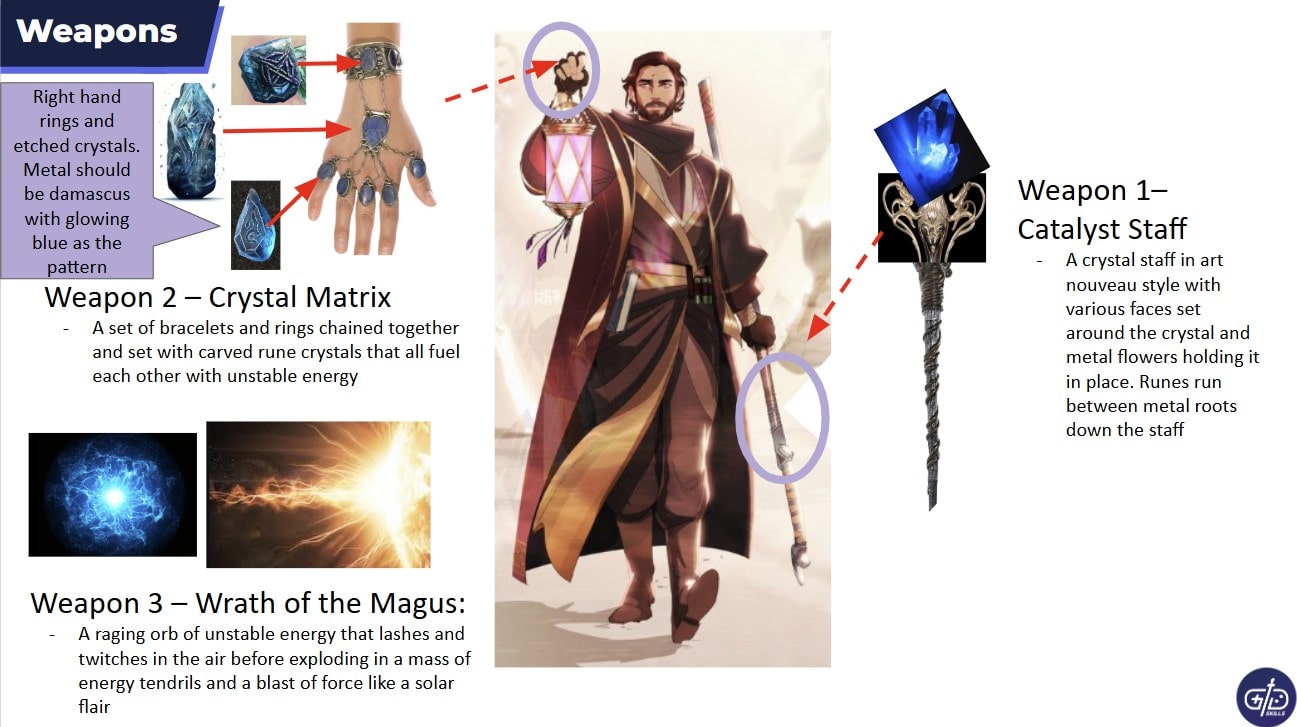
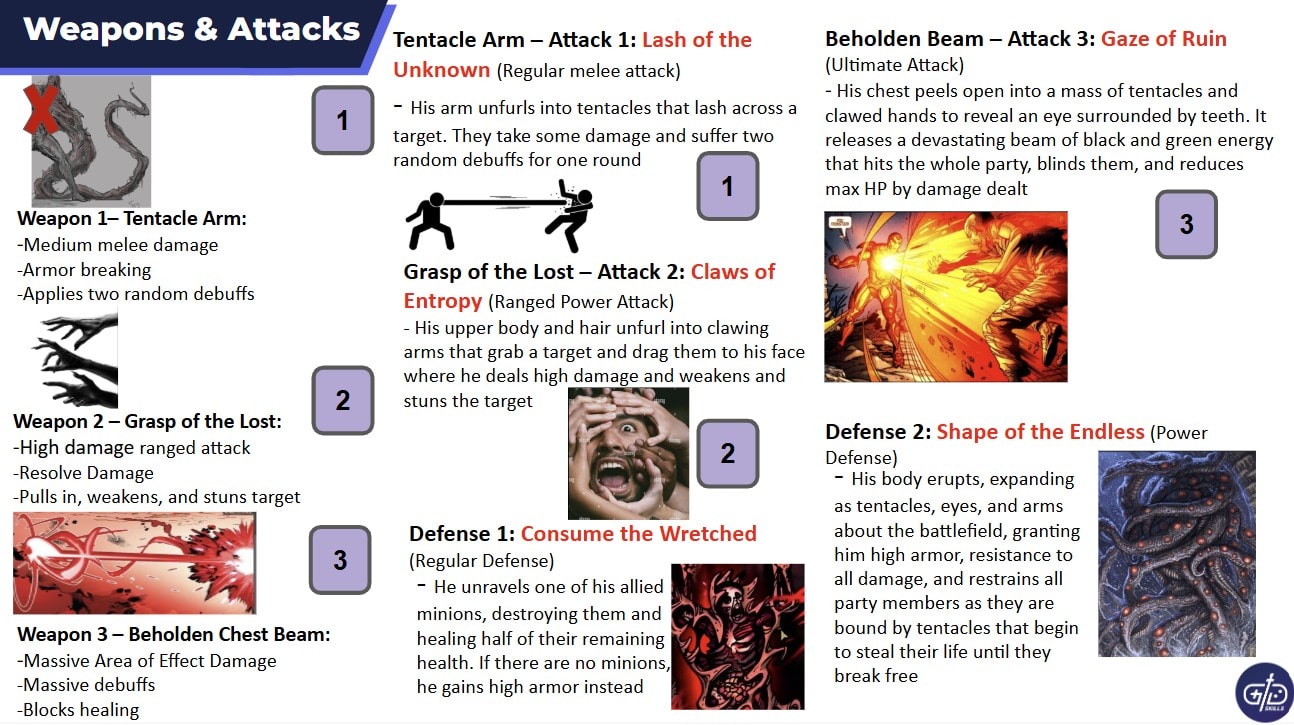
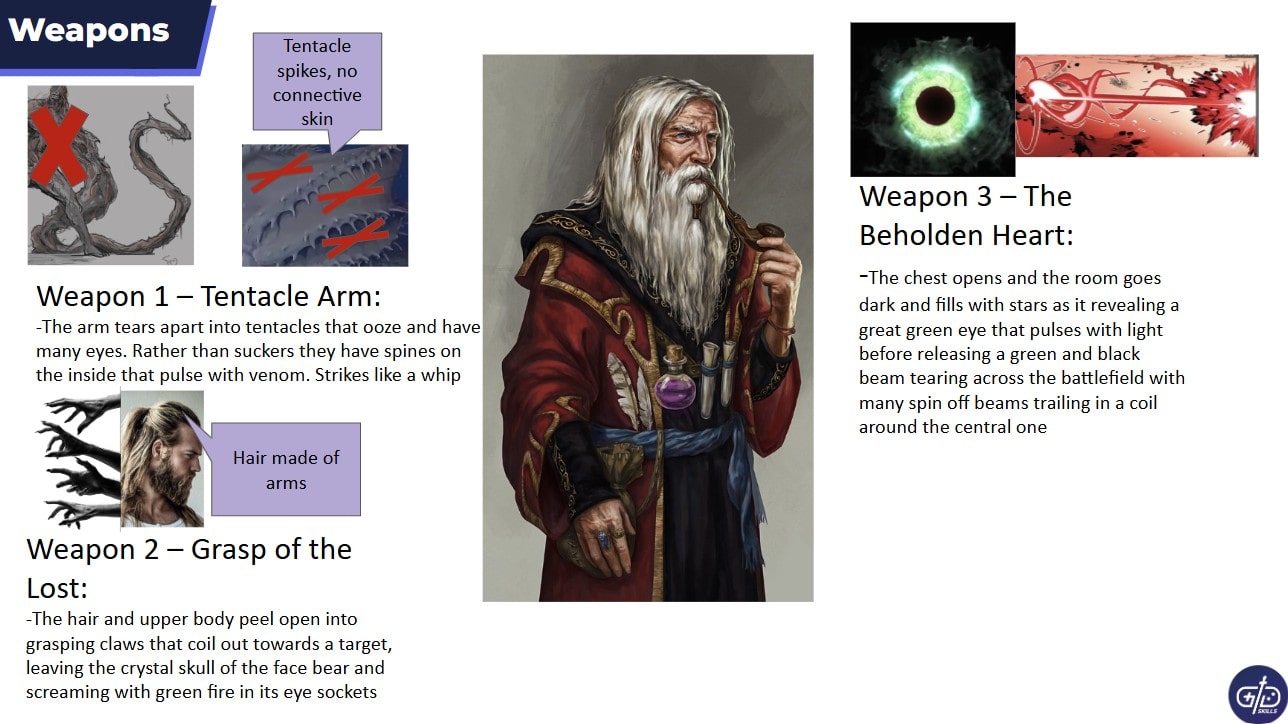
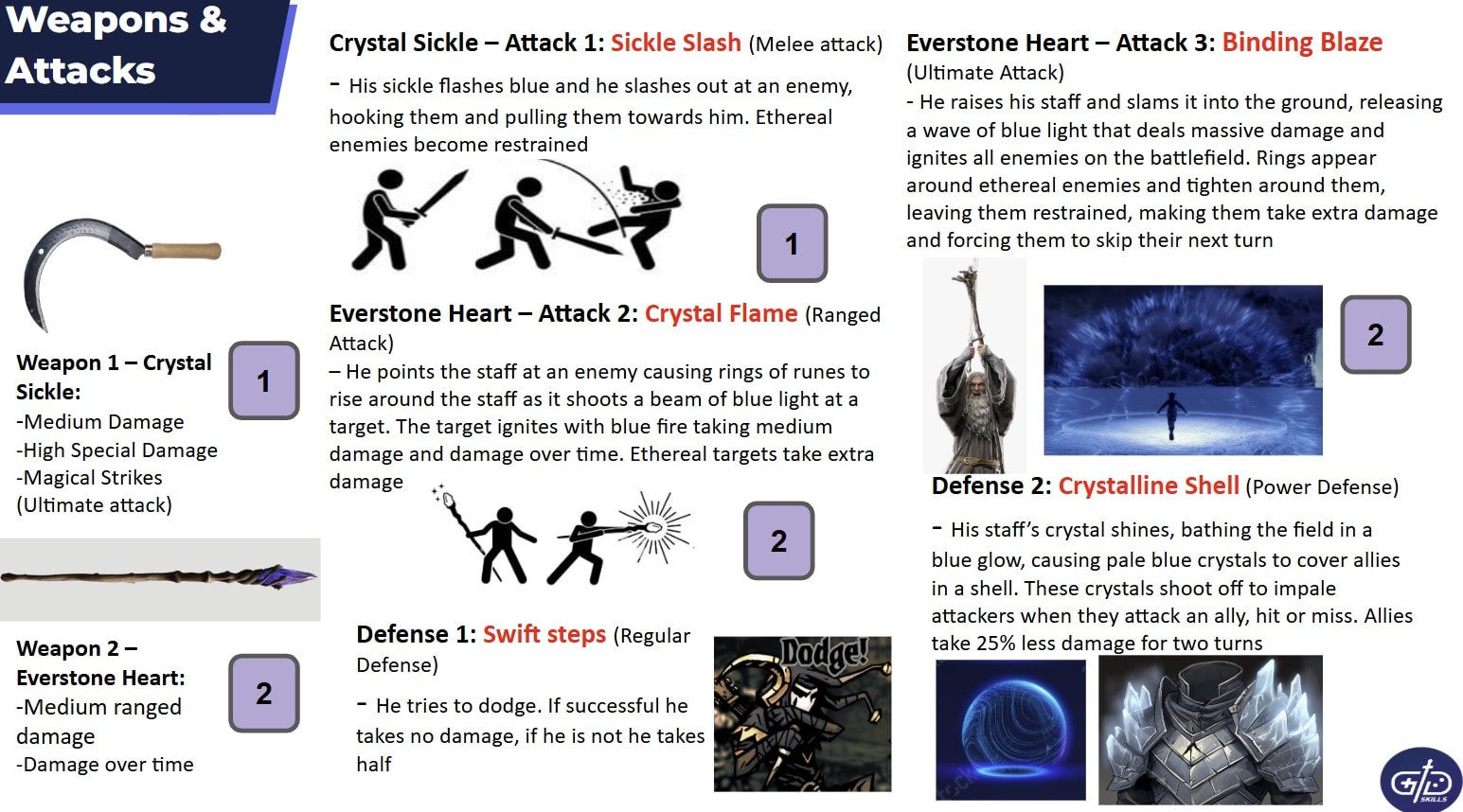
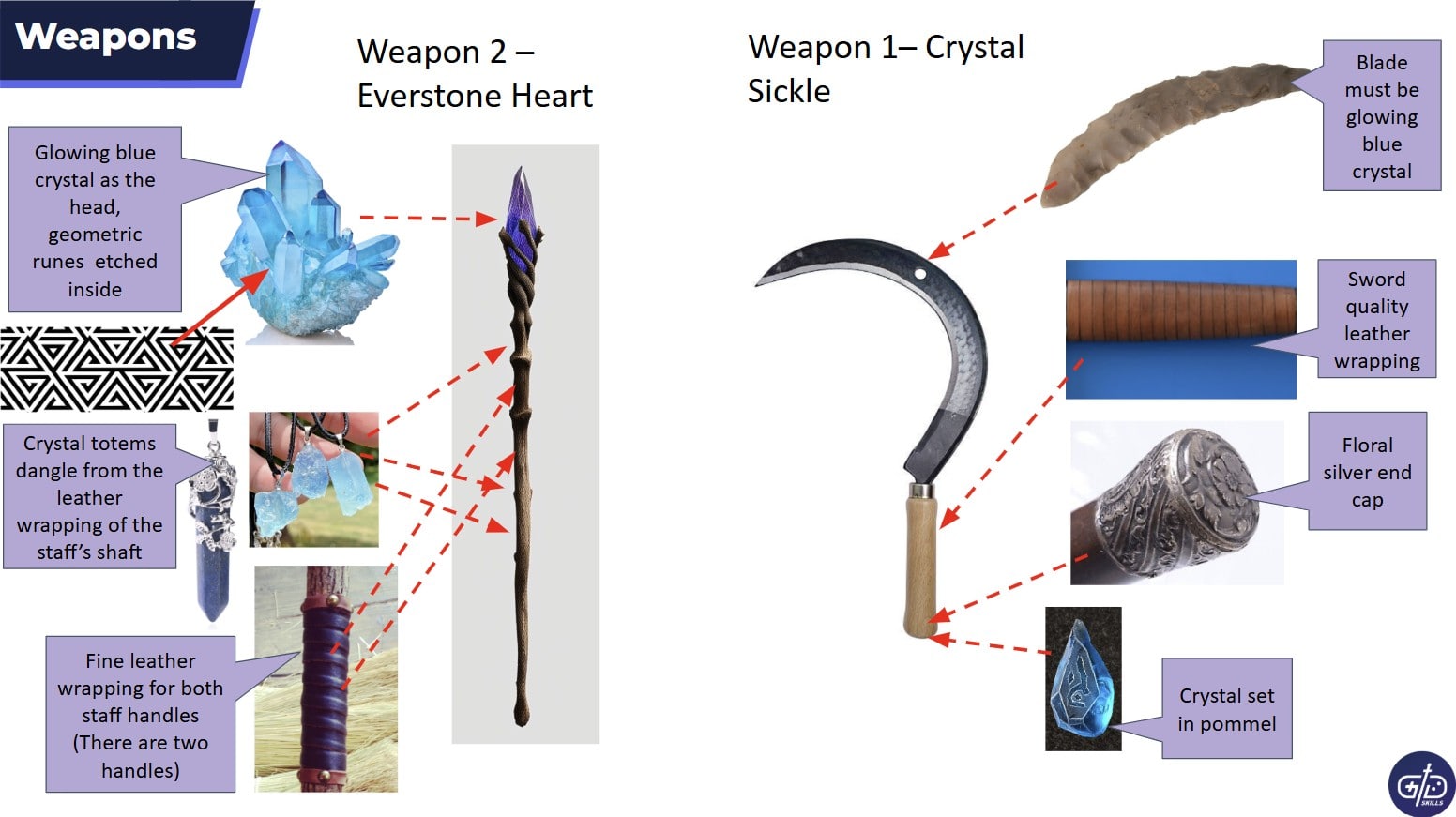
Character Combat: Supported the combat designer by designing unique weapons and attacks for each character, as well as naming and describing their attacks
Refined from Design: Polished the player character’s personalities, bios, and barks based on the finished character designs
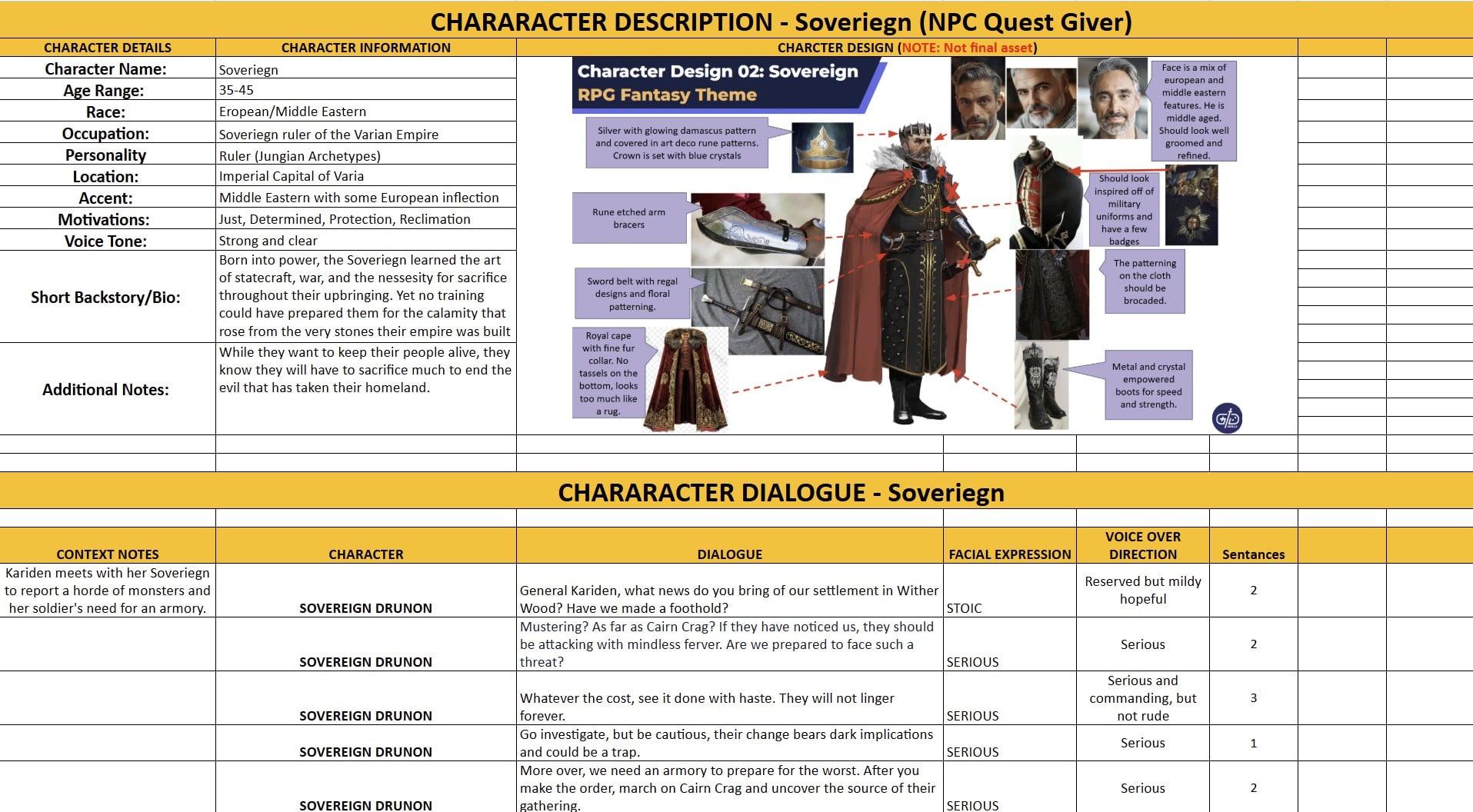
NPC: Sovereign (Quest Giver)
Designed a King Quest Giver NPC, including barks and storyline to achieve the following goals:
Mentor Figure: Designed a mentor character to guide both the player and player character by giving orders and direction to lead main quest progression.
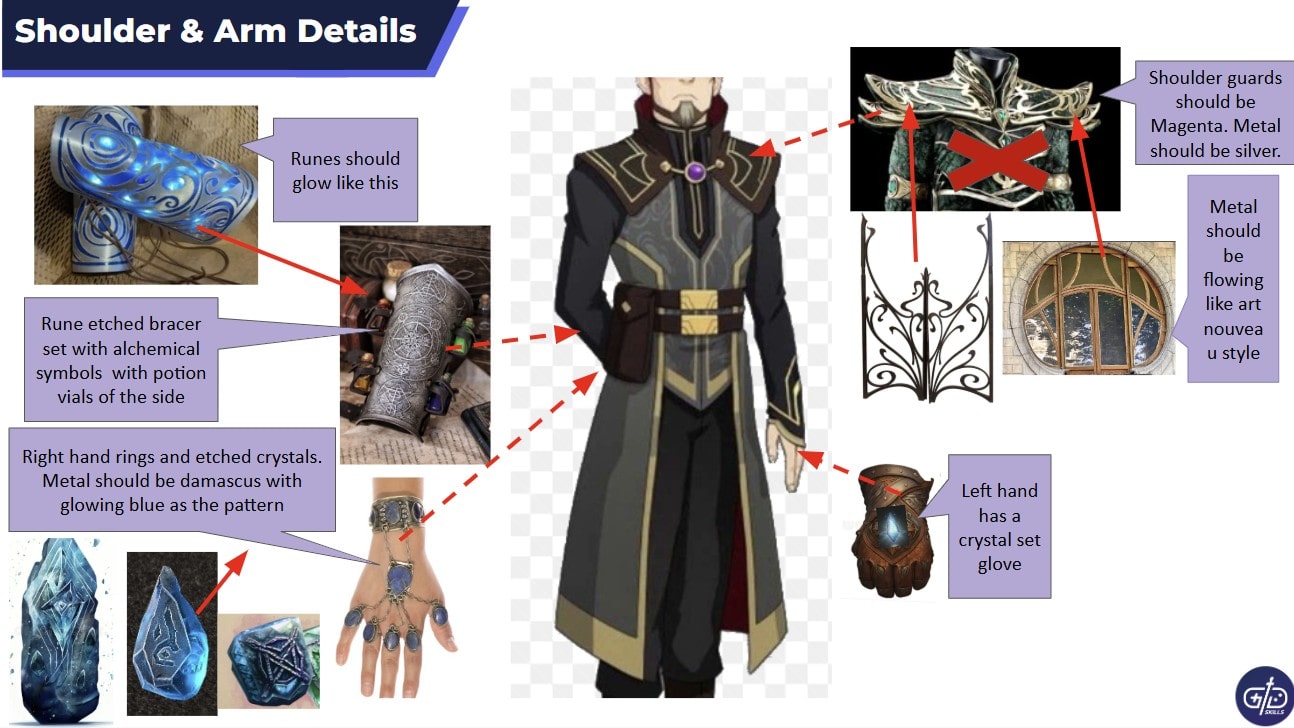
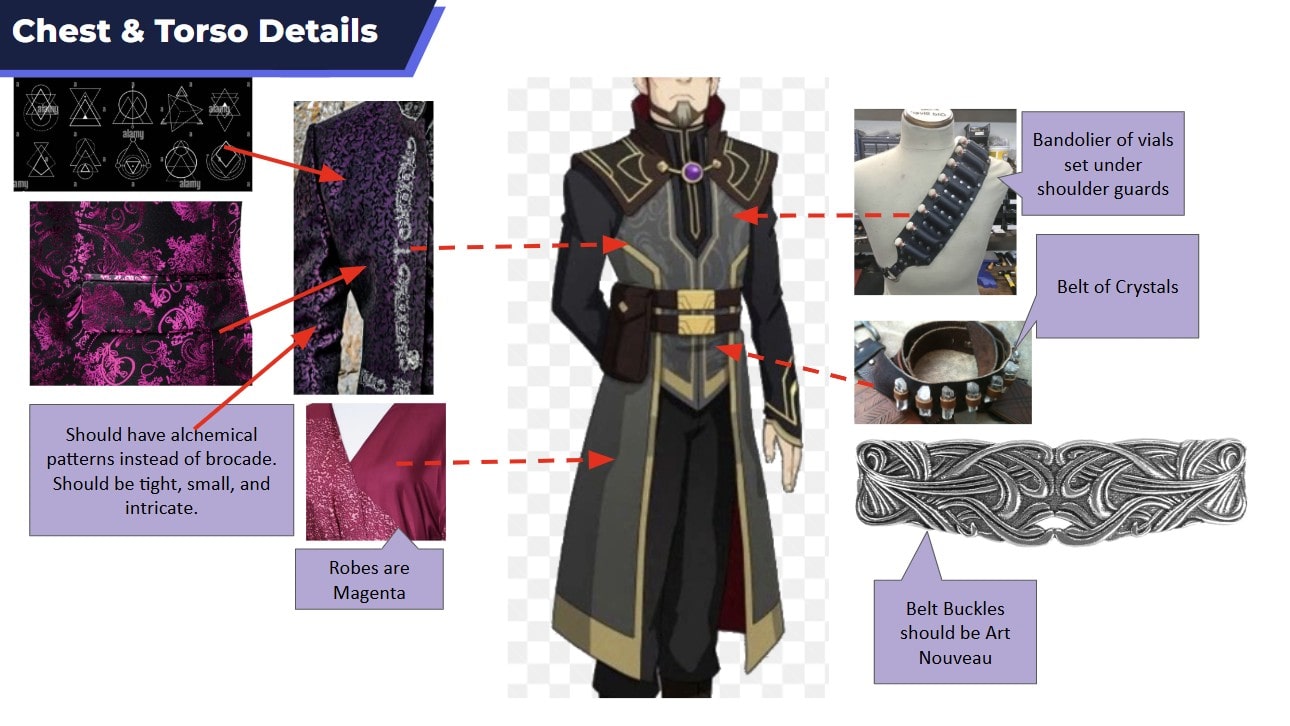
Archetypal: Used Jungian personality archetypes to inform both narrative and character designs for collaboration with art teams and the voice actor.
Character Flaws: Create a flawed authority figure that can be questioned by both the player and NPCs as the story unfolds.
Thematic Character: Create a theme of eroding power and determination from a ruler that gives the player the opportunity to aid them or rise to take command.
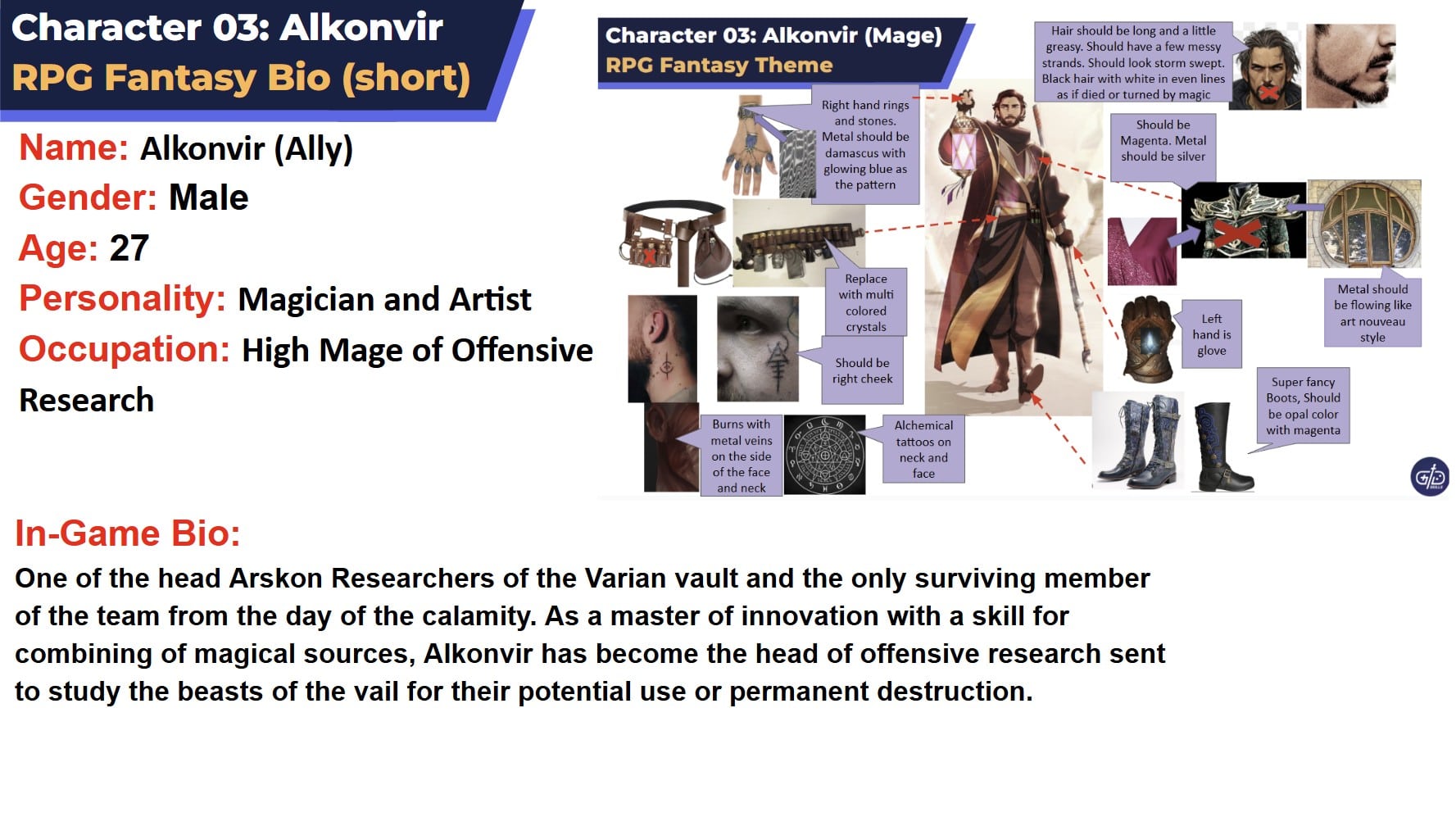
NPC: Alkonvir (Ally)
Designed an ally commander NPC to achieve the following design goals:
Parallel Perspective: Parallel the Player Character’s personality by being excited about the magical potential of the monsters
Foil Character: Foil the Player Character by being almost solely offensive, with his only defensive abilities being shielding himself to reflect his cowardice and disregard for others.
Thematic Madness: Achieve the narrative themes of the dangers of dehumanization by shaping his obsession with self-modification and magical enhancement to conflict with the Player Character’s morals and motivations by having him gradually devalue natural life and view others as resources or works to improve upon
Equal Intensity: Mirror the intensity of the Player Character’s obsession with vengeance with his obsession with researching the monsters.
Manipulator: Uses the Player Character’s grief and hope that the dead can be saved to get her to help him with his research, which eventually does achieve what he promised, mostly.
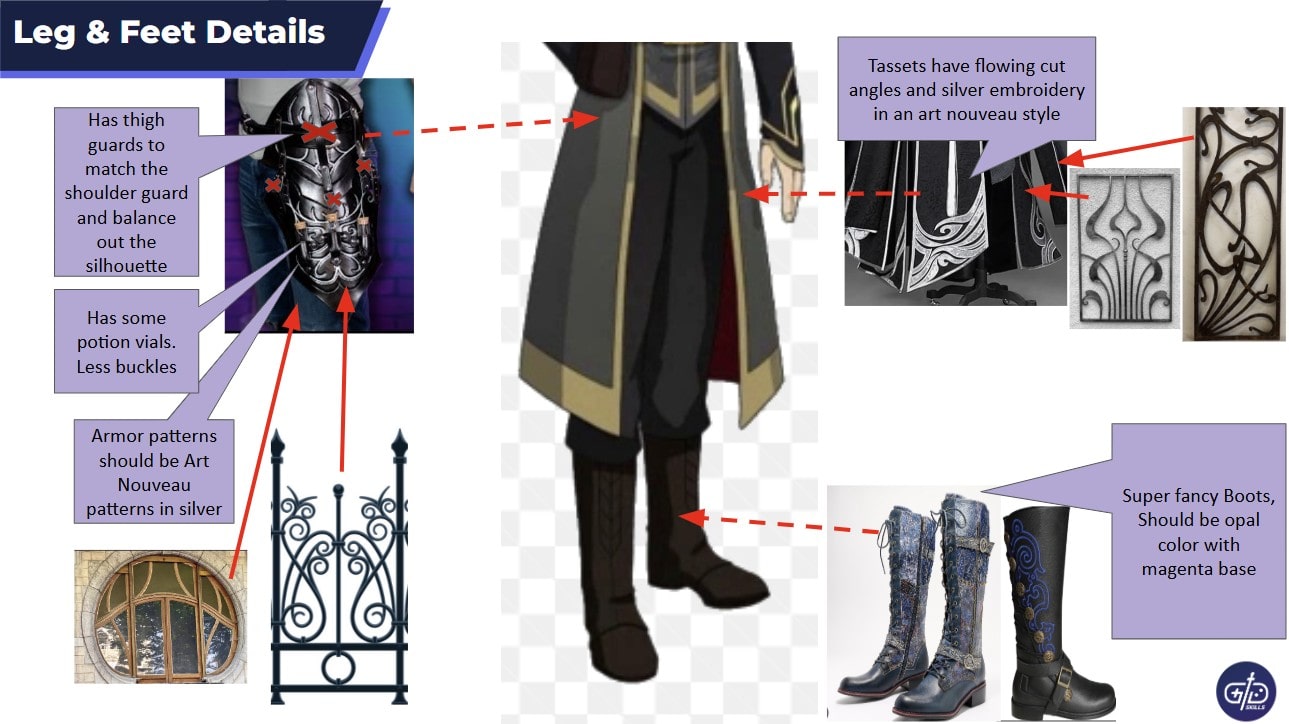
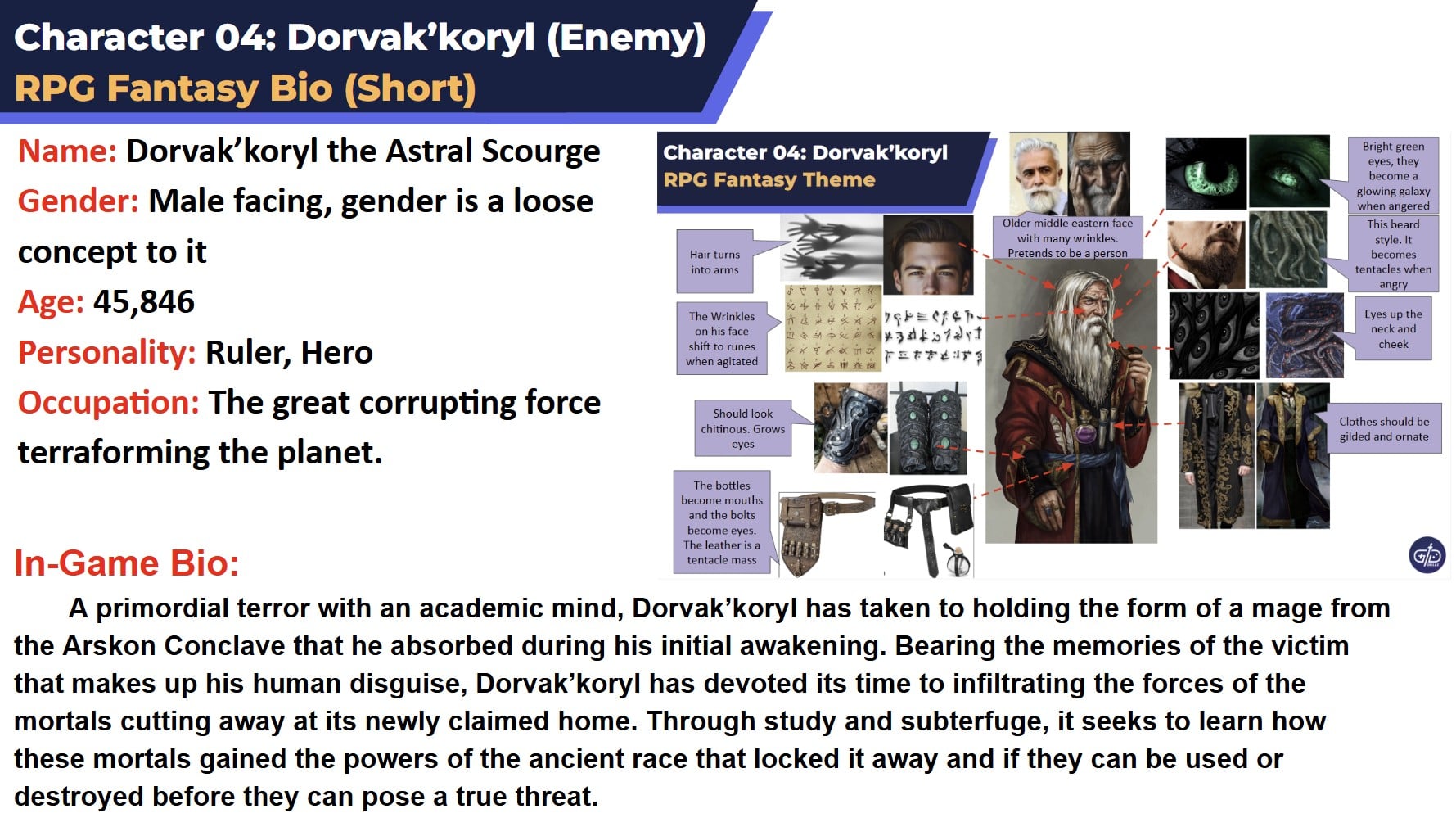
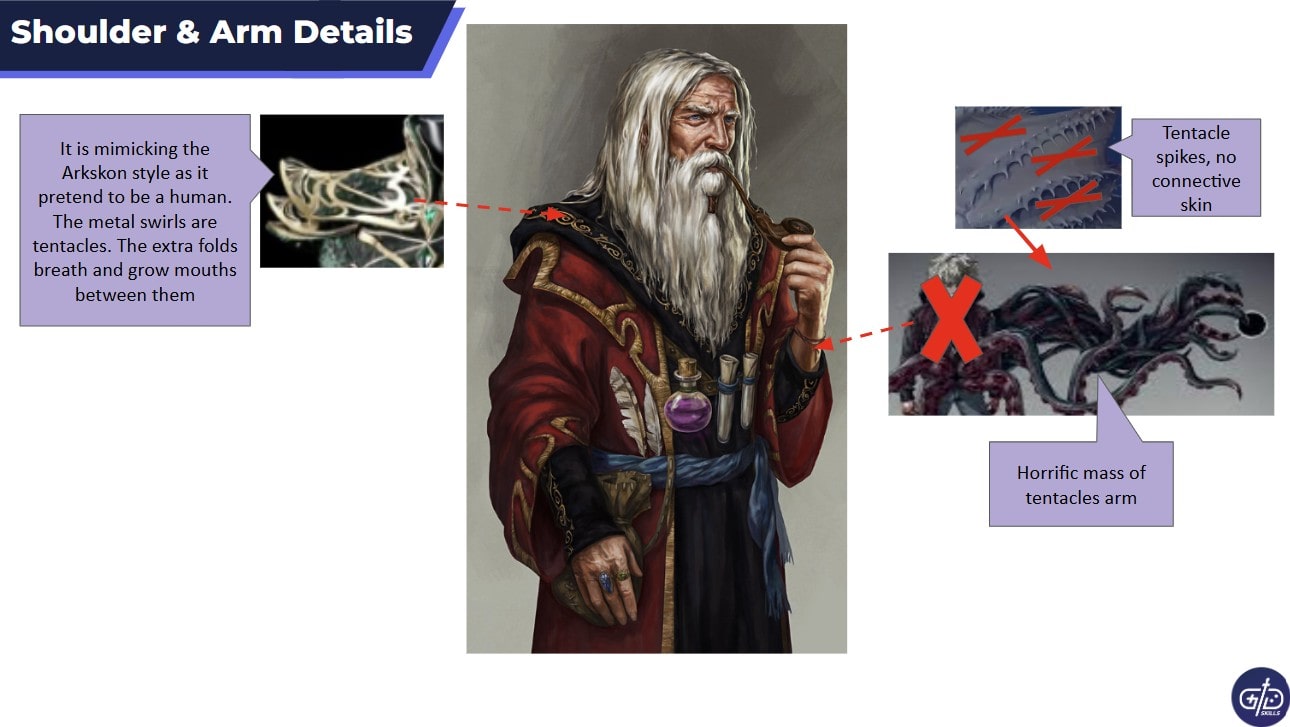
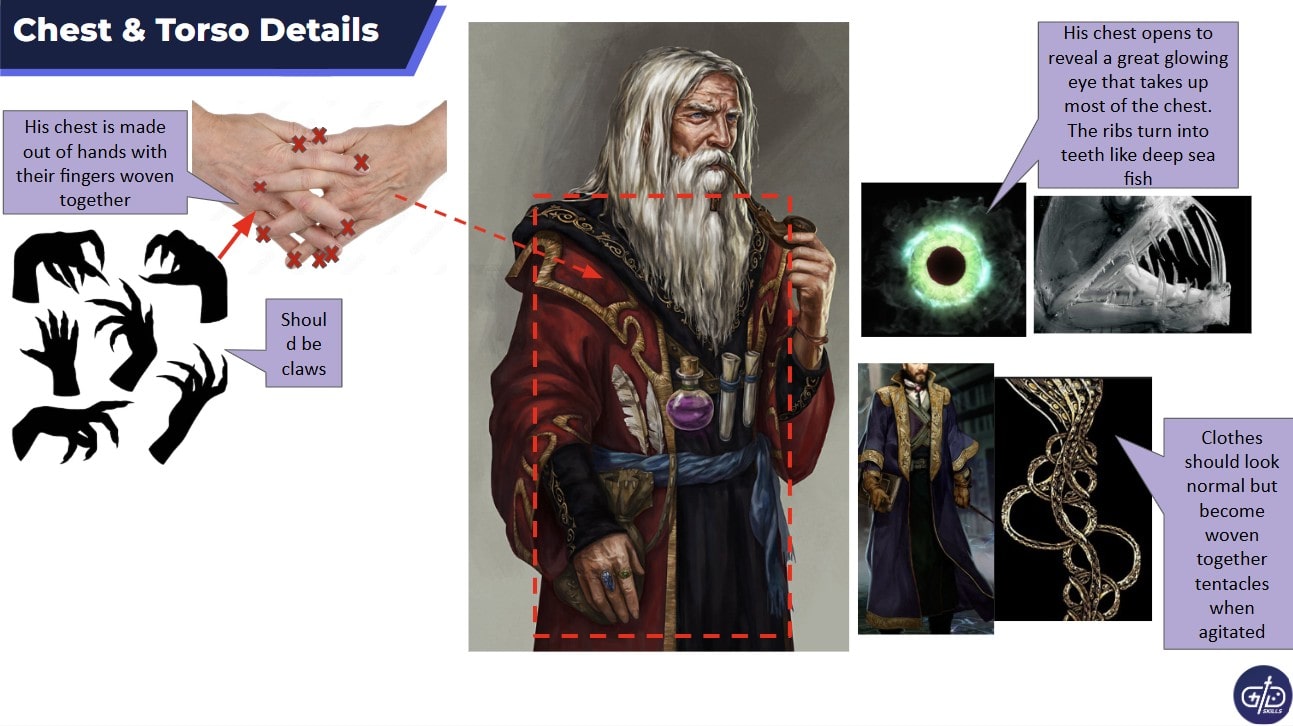
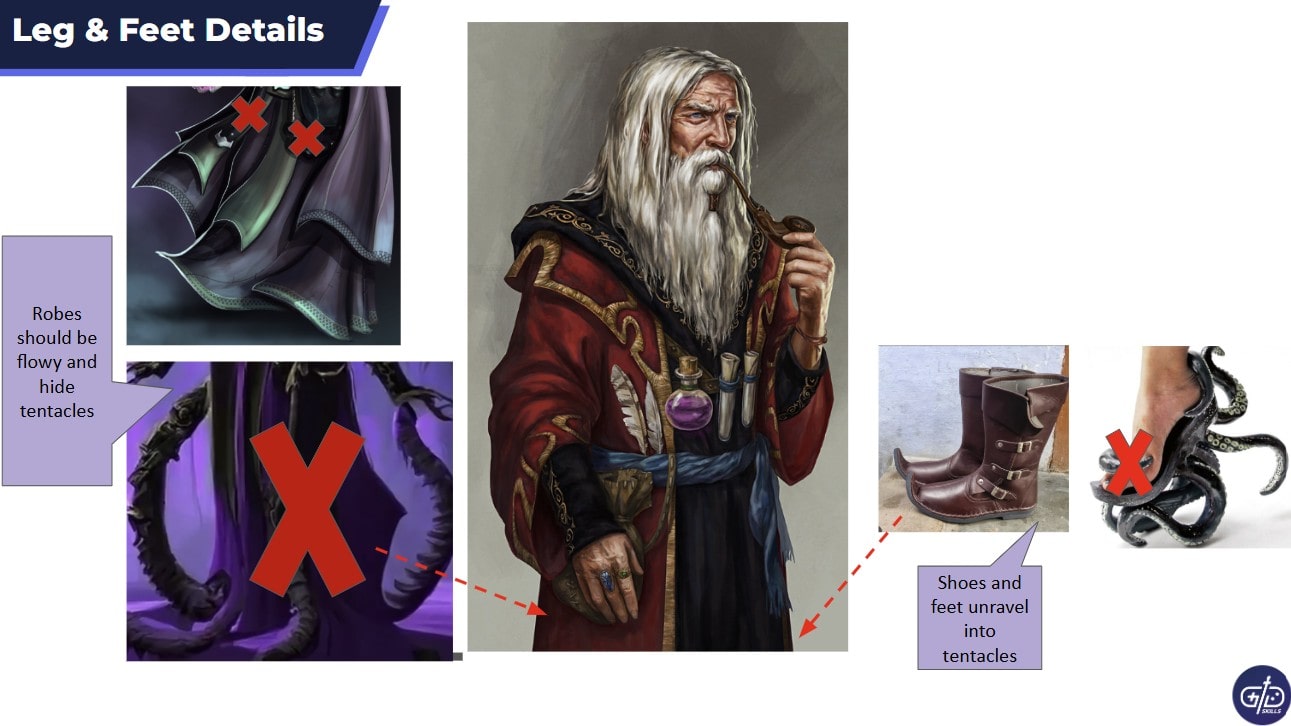
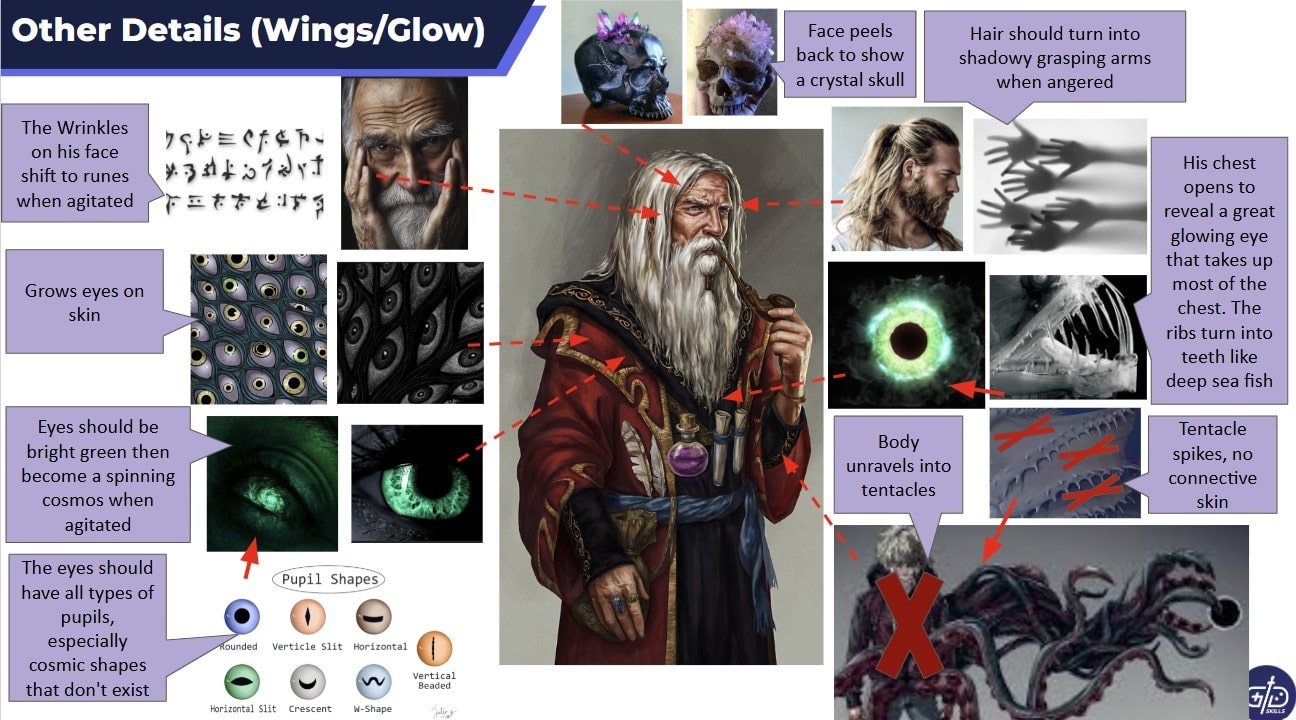
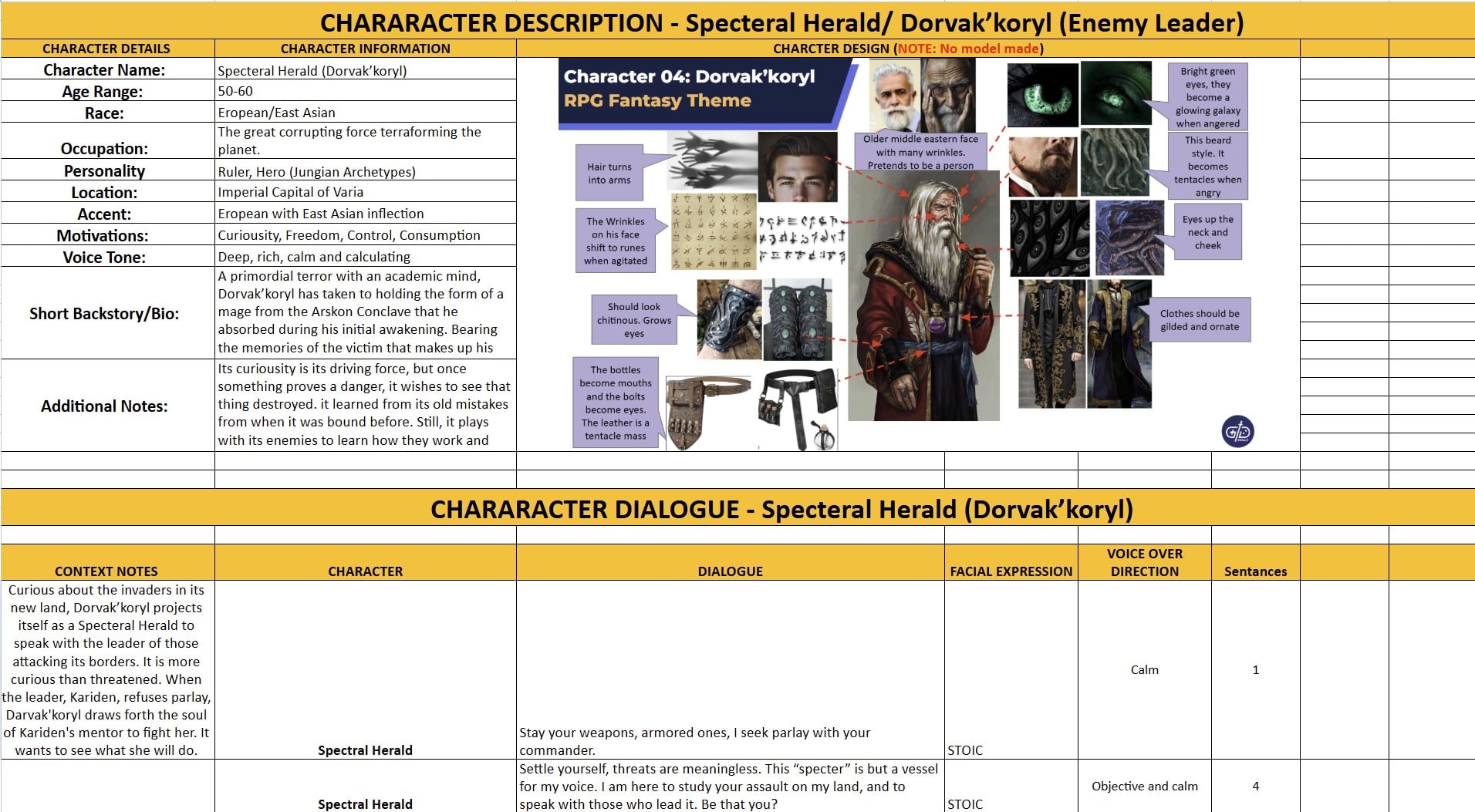
NPC: Dorvak’koryl (Enemy)
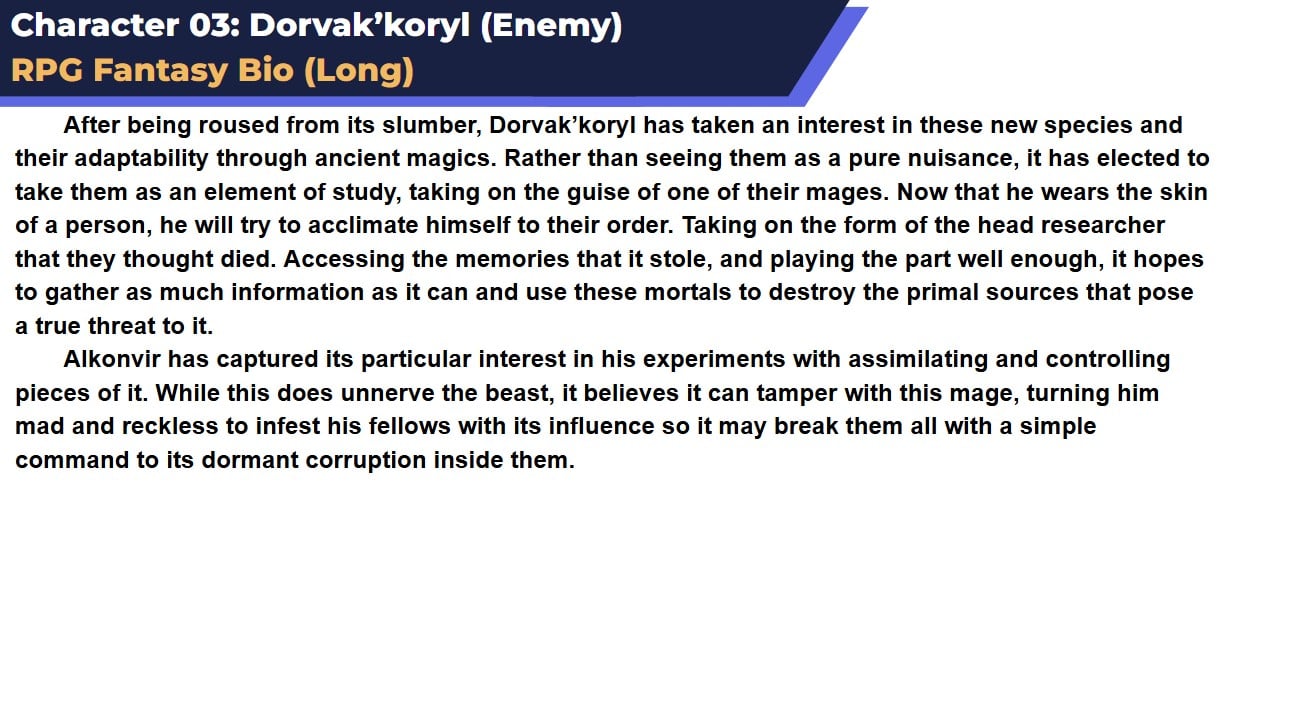
Designed the antagonist NPC to address the following design needs:
Make him a foil to the Player Character by:
Giving him a calm personality in battle that clashes with Kariden’s vengeful nature
Designing his attacks to devalue life by sacrificing his minions
Attack Kariden’s grief by raising her fallen loved ones and using them as soldiers against her
Create a theme of alien horror by:
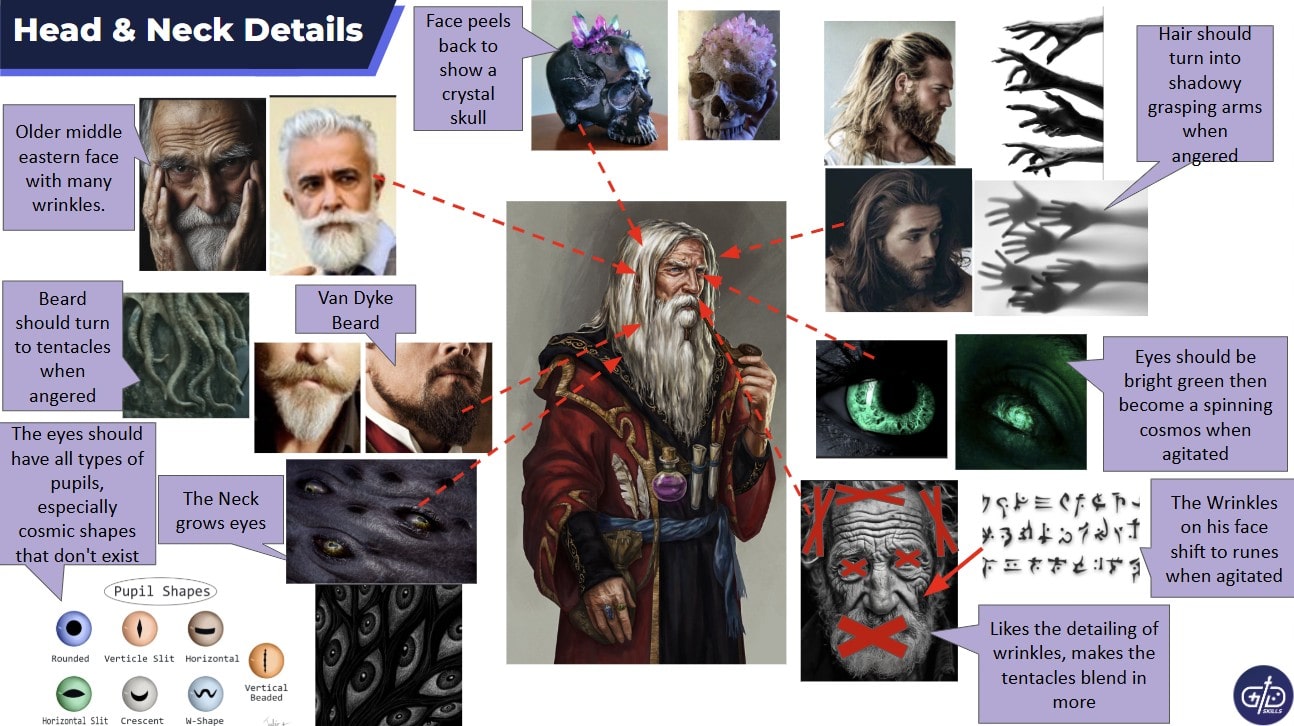
Designing his attacks with body horror in mind
Pulling inspiration from cosmic horror, the deep sea, and various phobias
Create a thematic connection to the three factions by:
Mirroring the Varian Empire by giving him a willingness to sacrifice a great deal to learn the truth of things
Crafting his personality and motives within the theme of academic curiosity of his foes and designing his magic to be consumptive to reflect the Arskon Covenant
Designing his benifits to conflict with the Everstone Enclave and their quest line by consuming non-renewable resources for powerful spells that leave permanent effects and side effects.
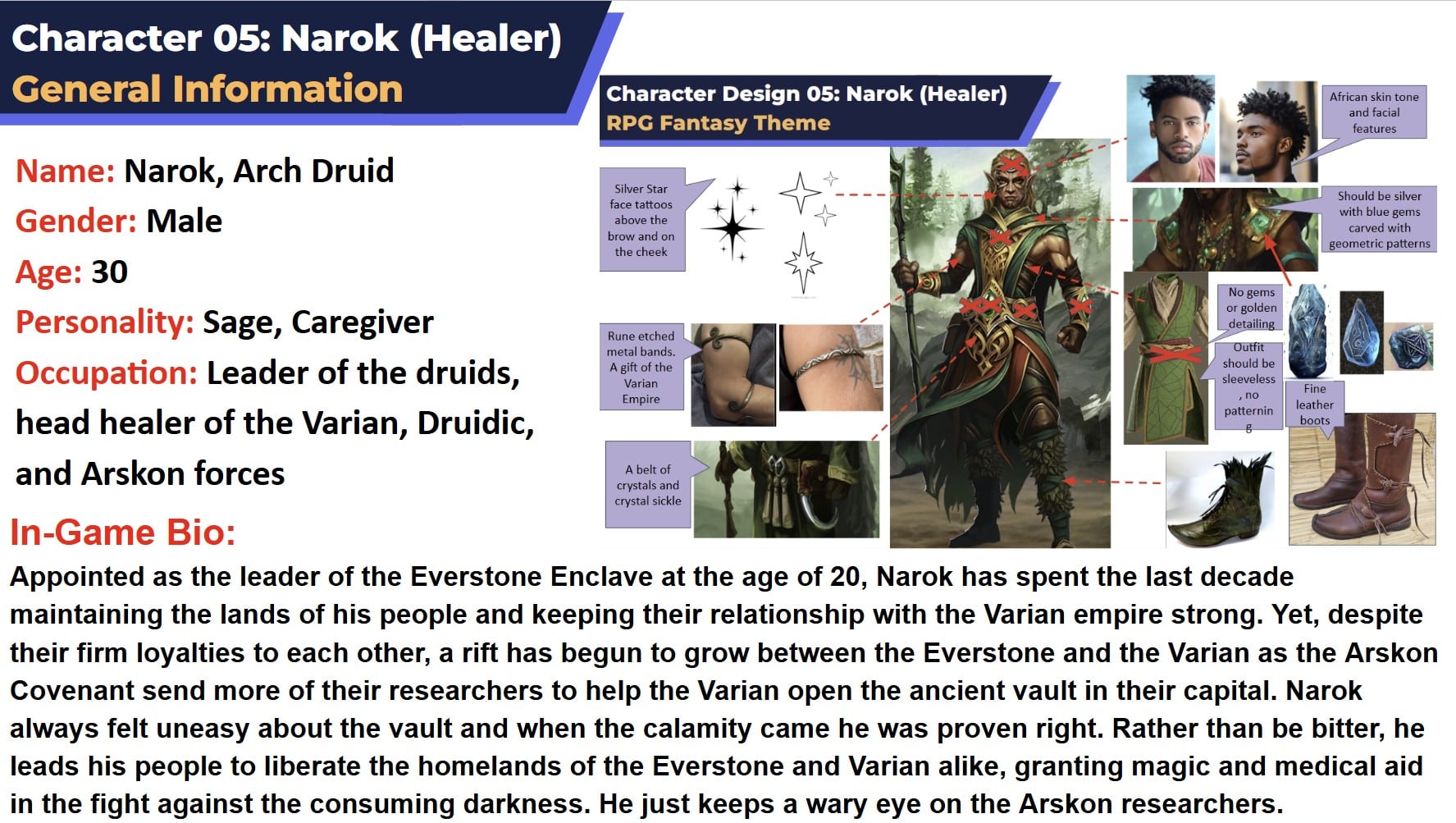
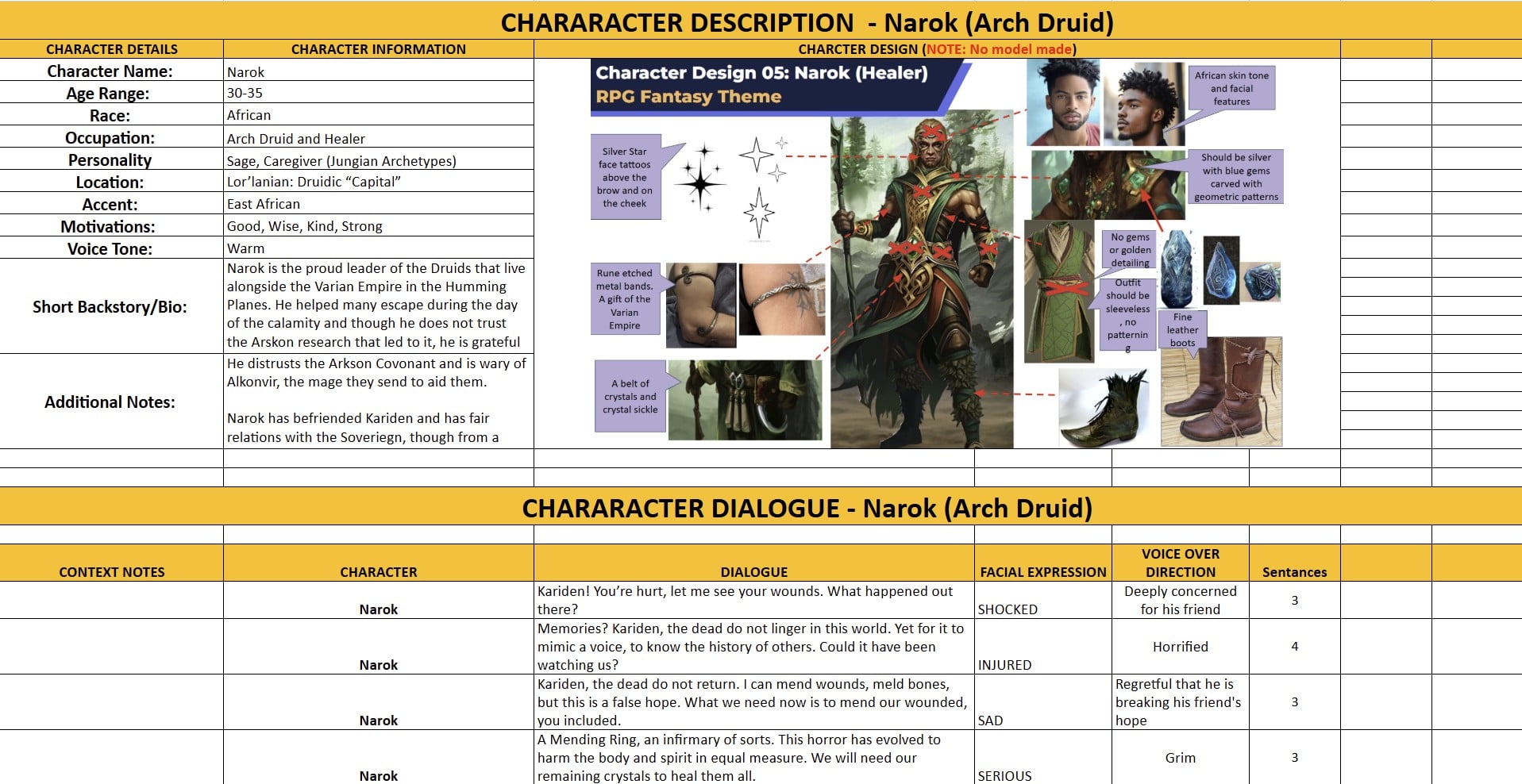
NPC: Narok (Ally)
Designed an ally commander NPC who is a friend to the Player Character to achieve the following design goals:
Complimentary Character: Compliment the Player Character’s desire to protect human life
Contrast the King: Foil Sovereign Drunon by sharing the burden of leadership with his people and trusting them to work for a common goal
Pre Story Friendship: Add depth to the narrative, world lore, and emotional stakes by giving the Player Character a friend with shared history
Calm Character: Balance out the intensity of the Player Character with patience and calm in the face of battle
Choice of Magic: Conflict with Alkonvir by preserving resources and creating renewable spells.
Optional Betrayal: Create narrative drama by giving the player the choice to forsake Narok’s questline and friendship in favor of Alkonvir’s questline
Voice Over Scripts
Voice Over Scripts
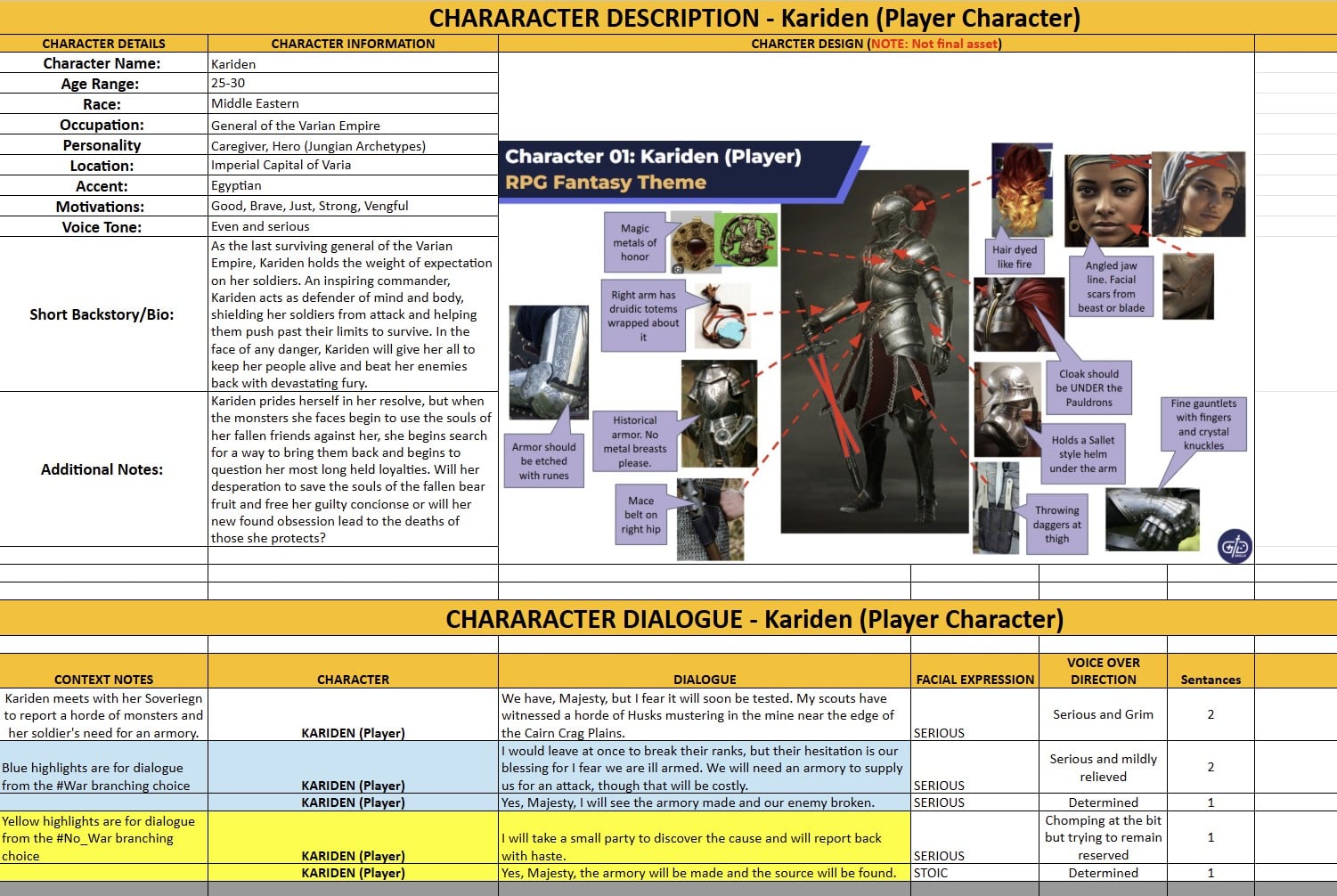
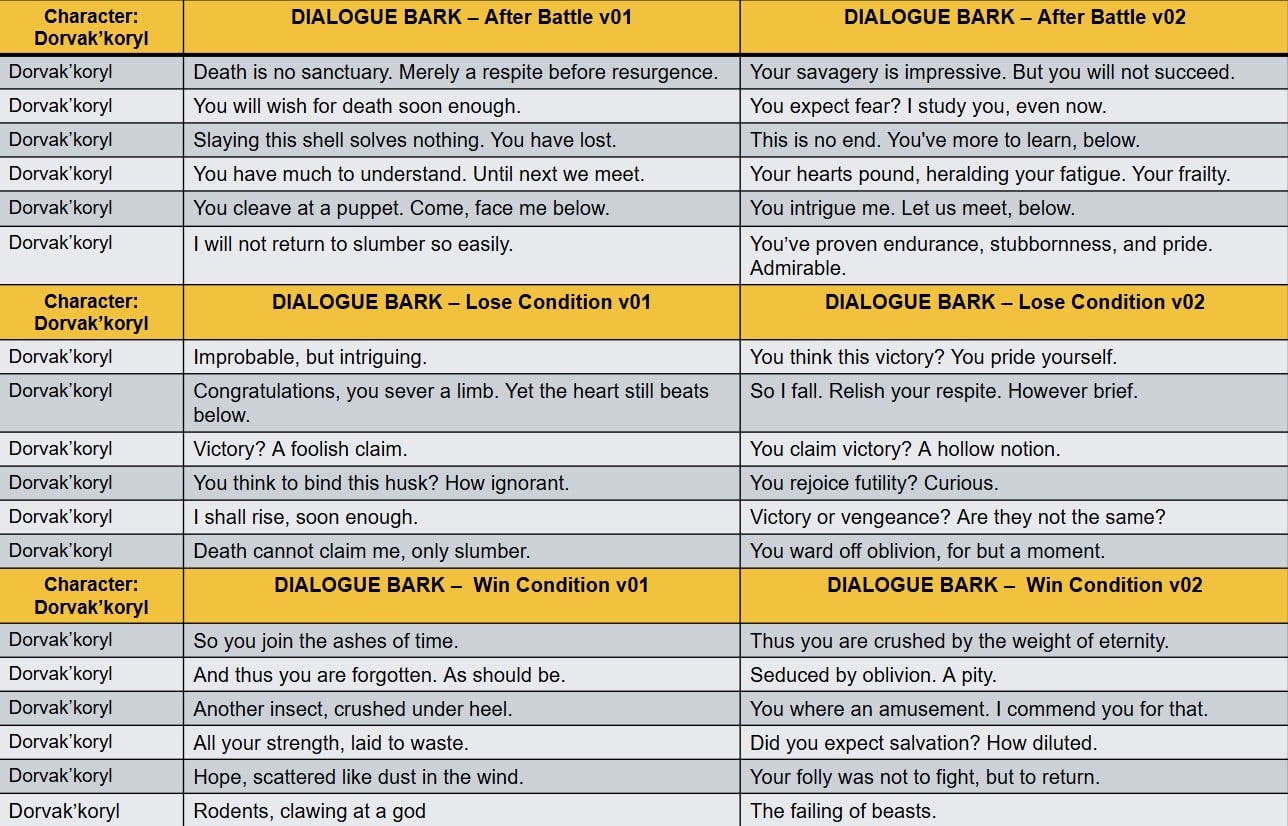
Created four Voice Over Actor documents for the Player Character, two quest characters, and the enemy leader (Kariden, Sovereign Drunon, Narok, and Dorvak’koryl, respectively) that provided detailed information to support the actor and provide faster and better voice recording sessions.
Each document included:
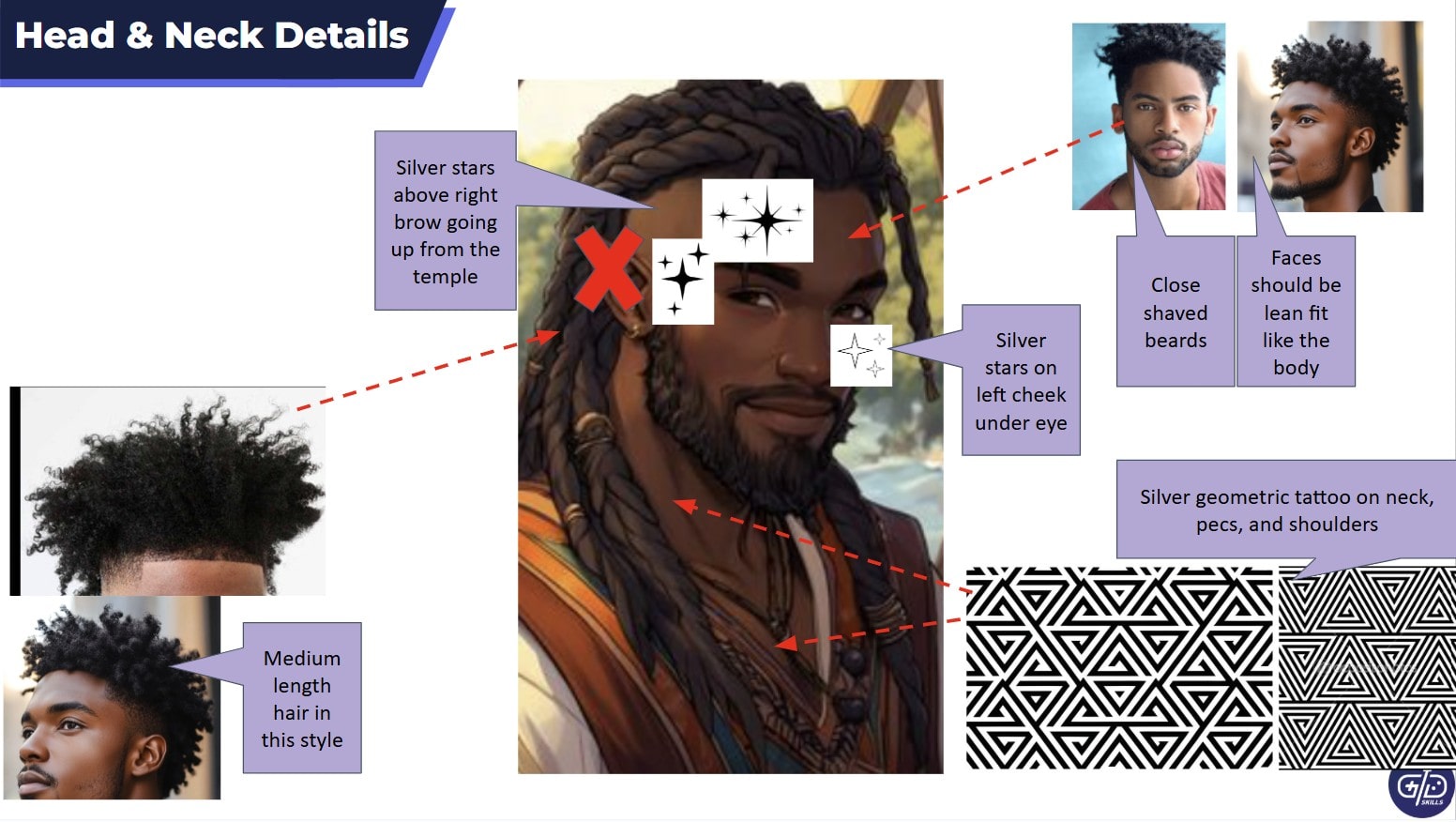
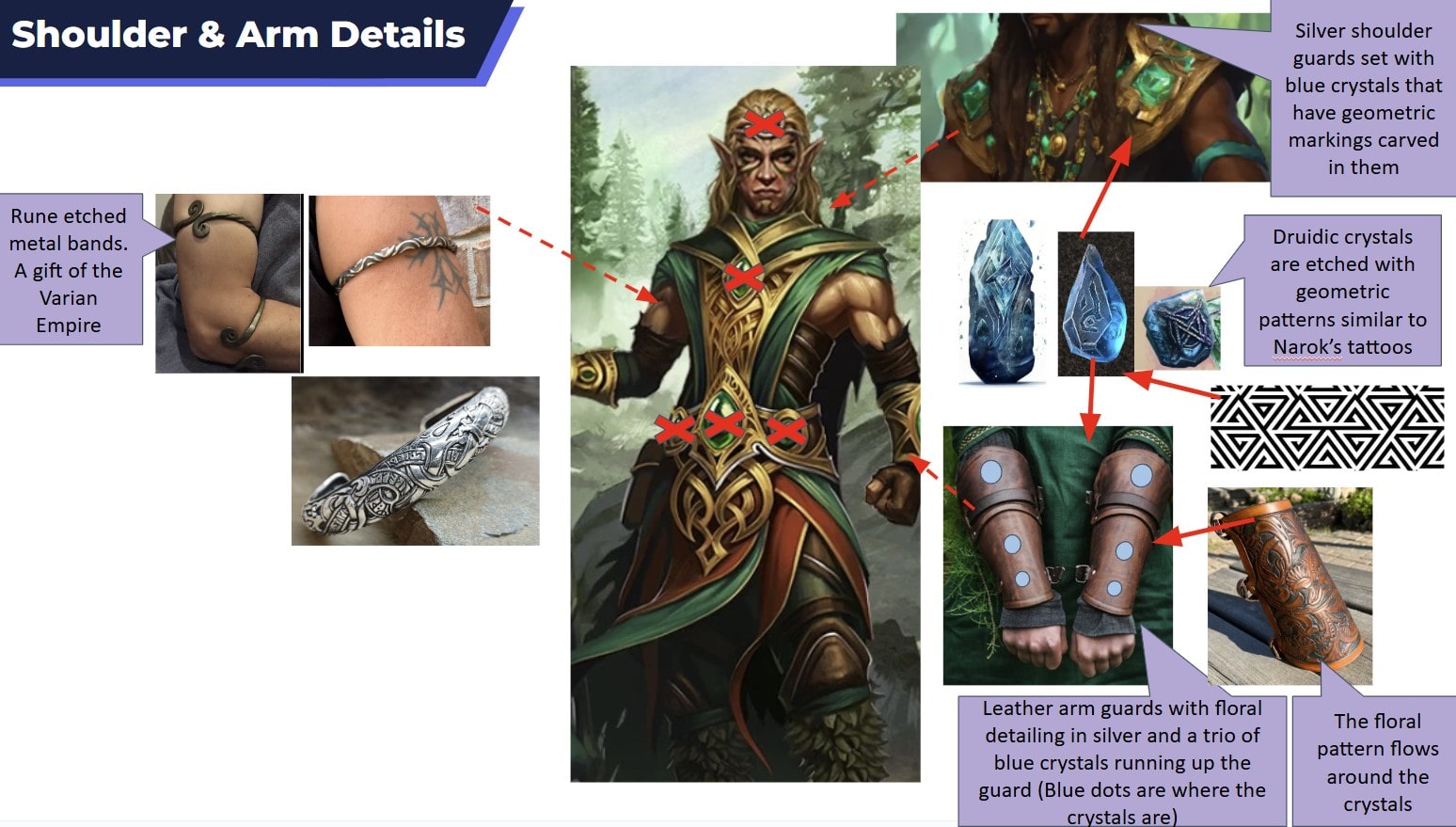
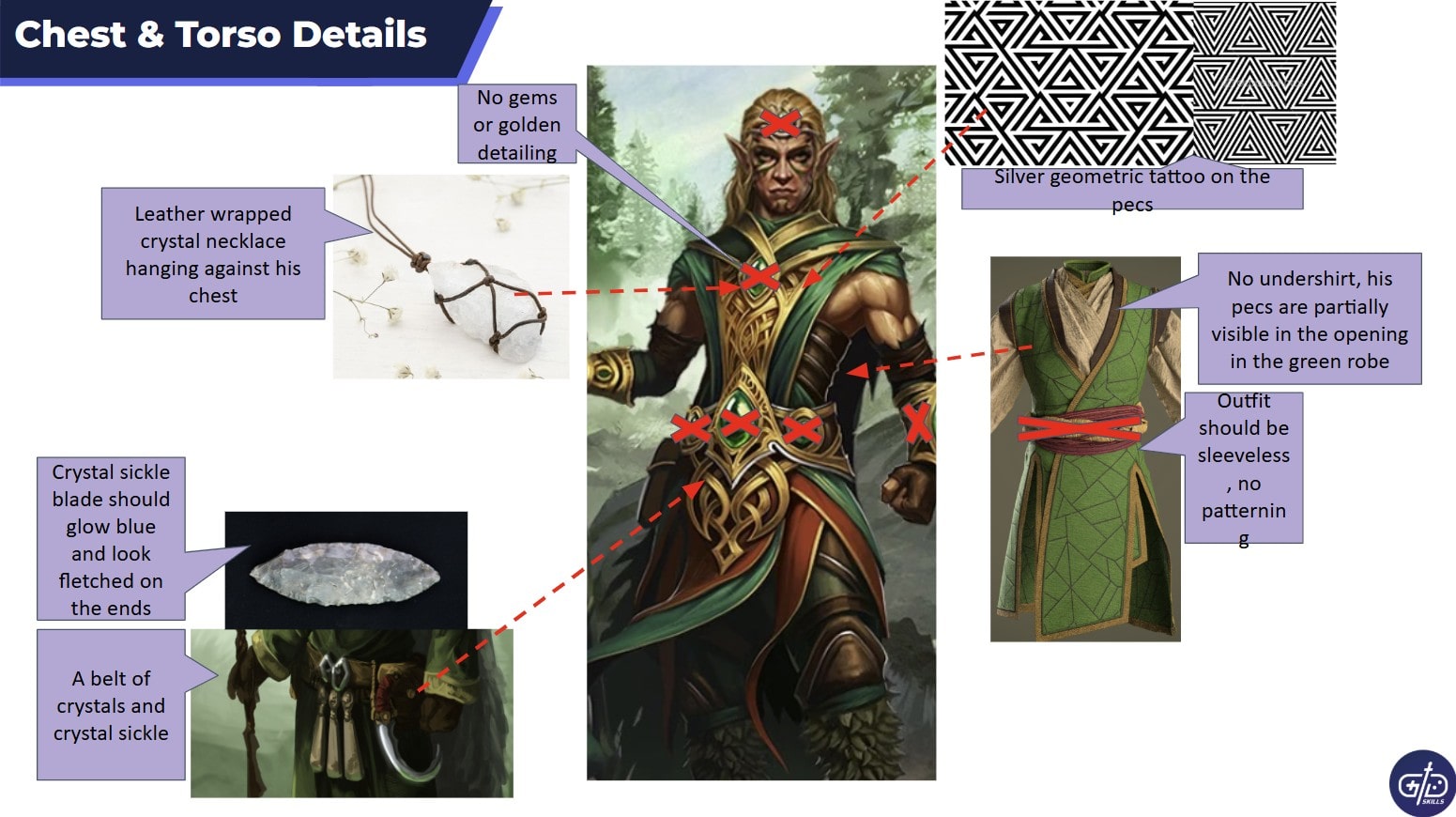
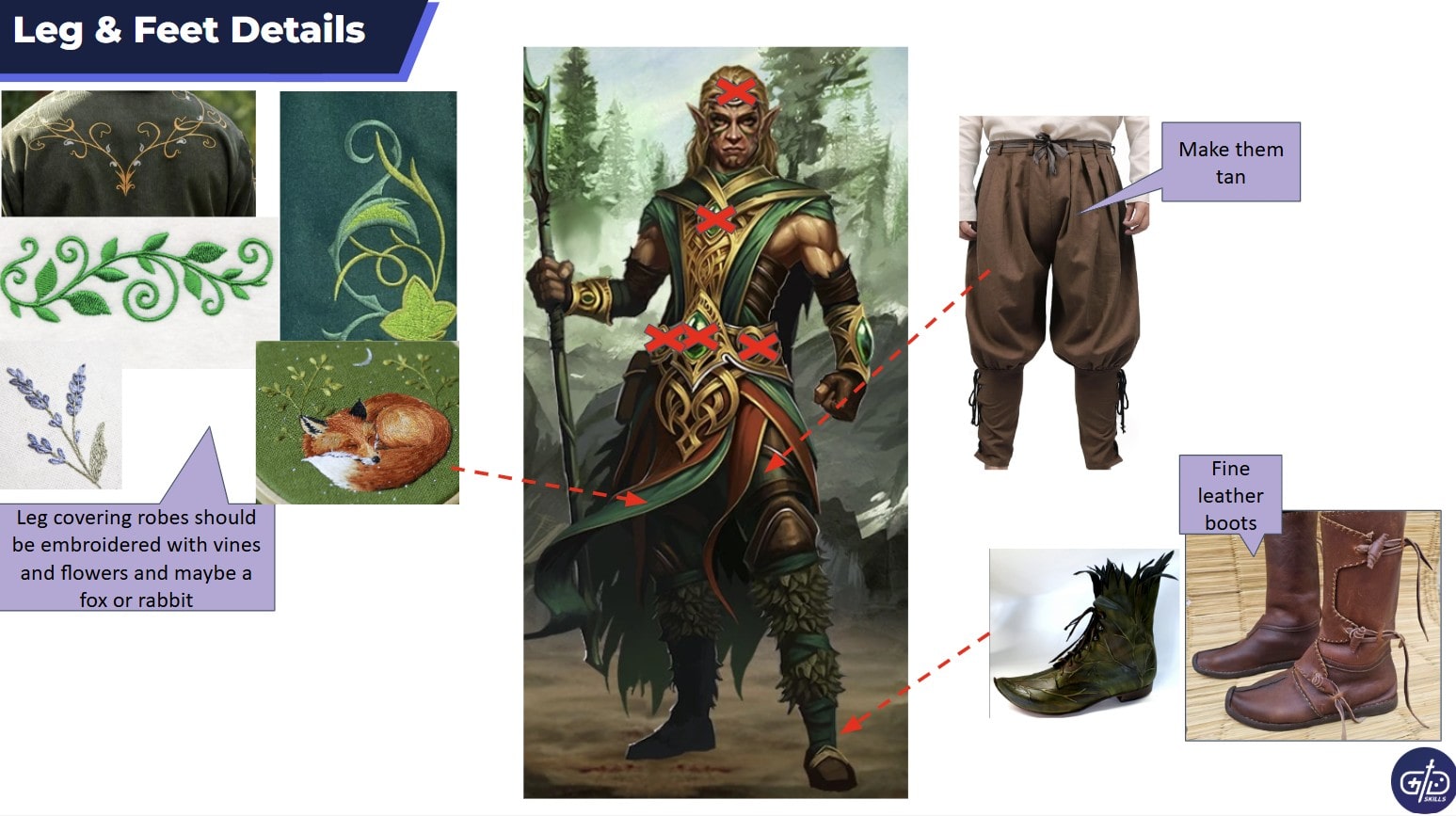
Character Design images, character bios, personality notes, motivations, and vocal directions for each character
All lines of dialogue for the character, along with scene details and quest summaries, are provided to provide situational and mood context for the voice actor
Location Design
Location Design
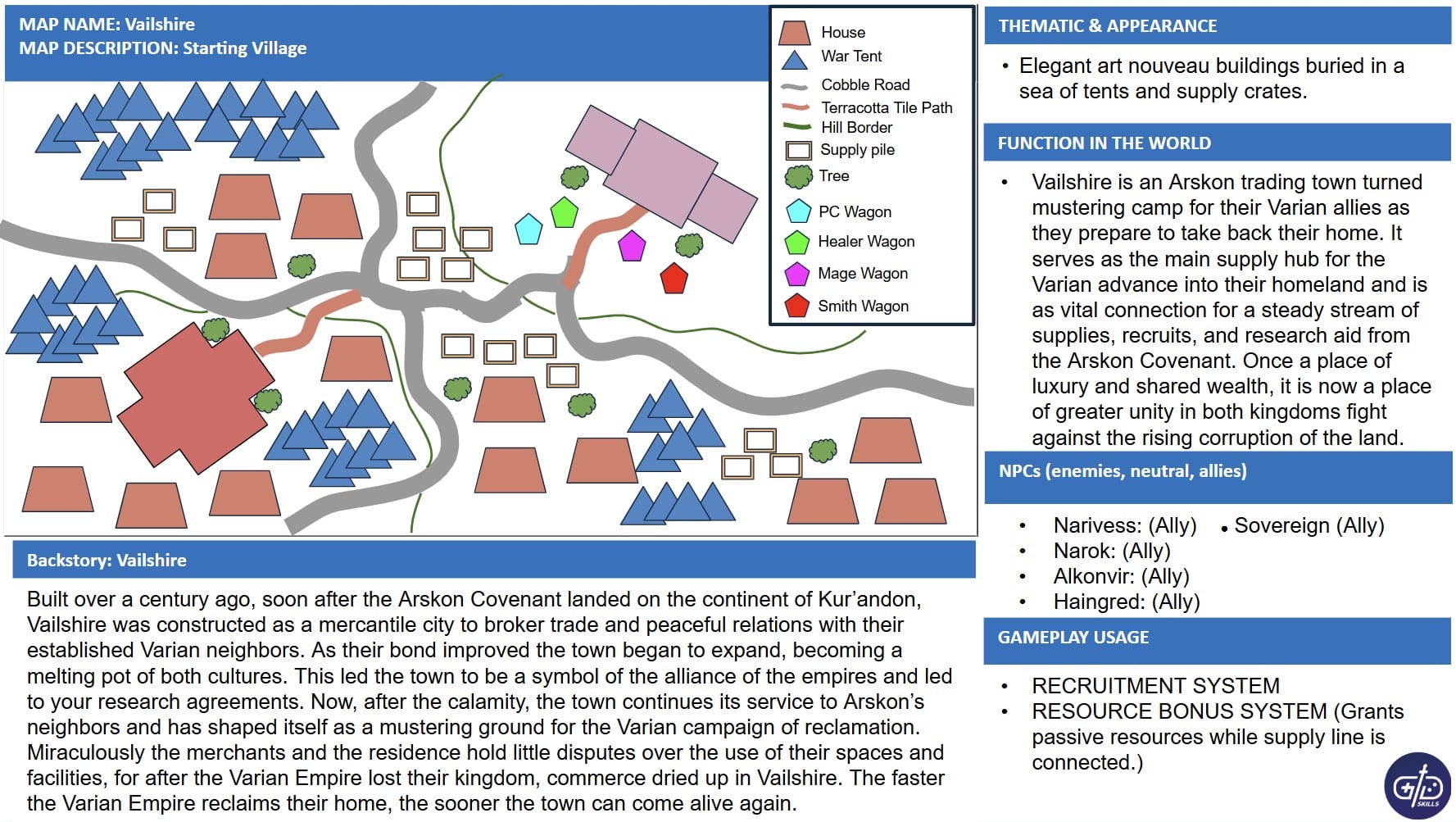
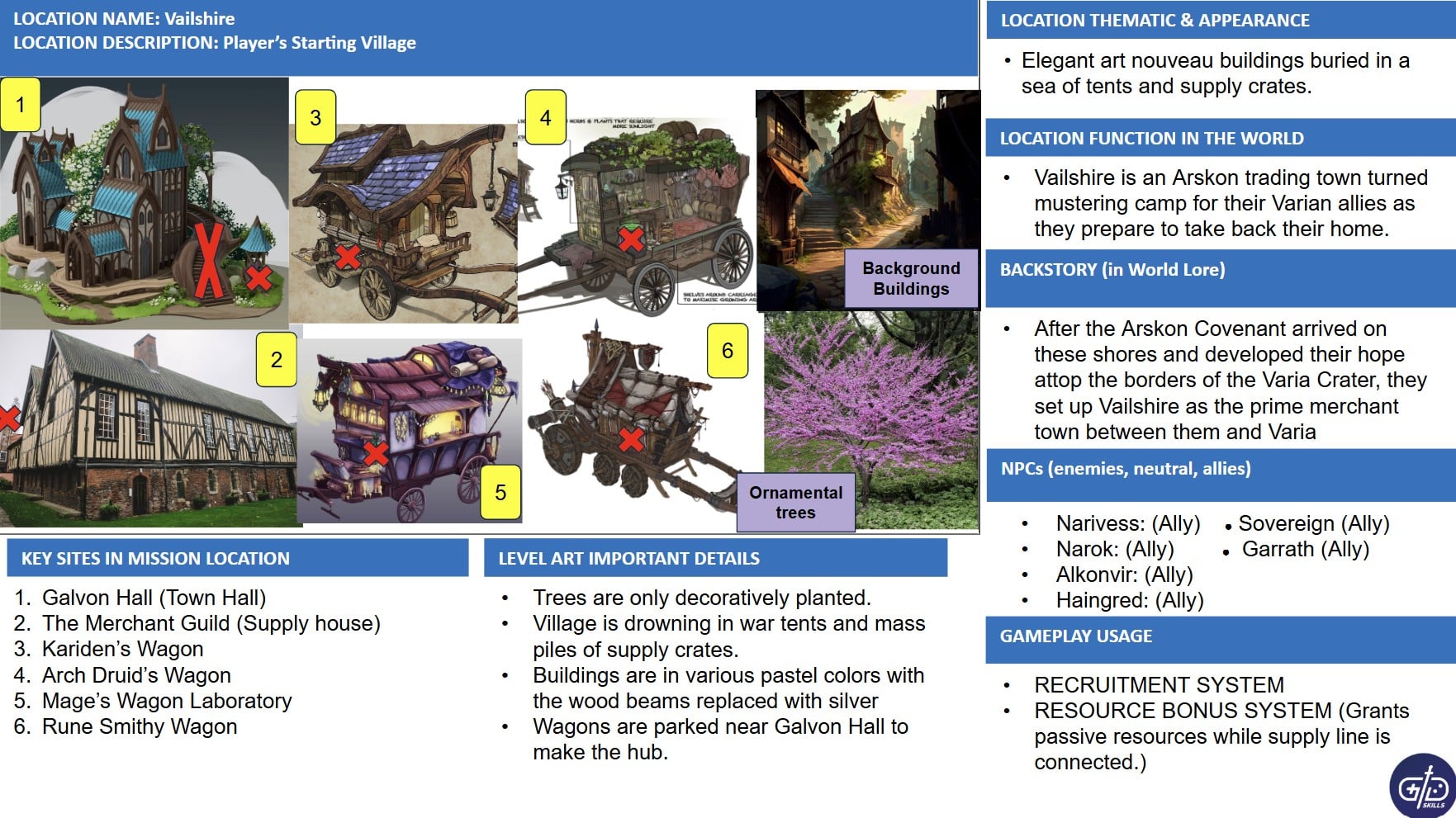
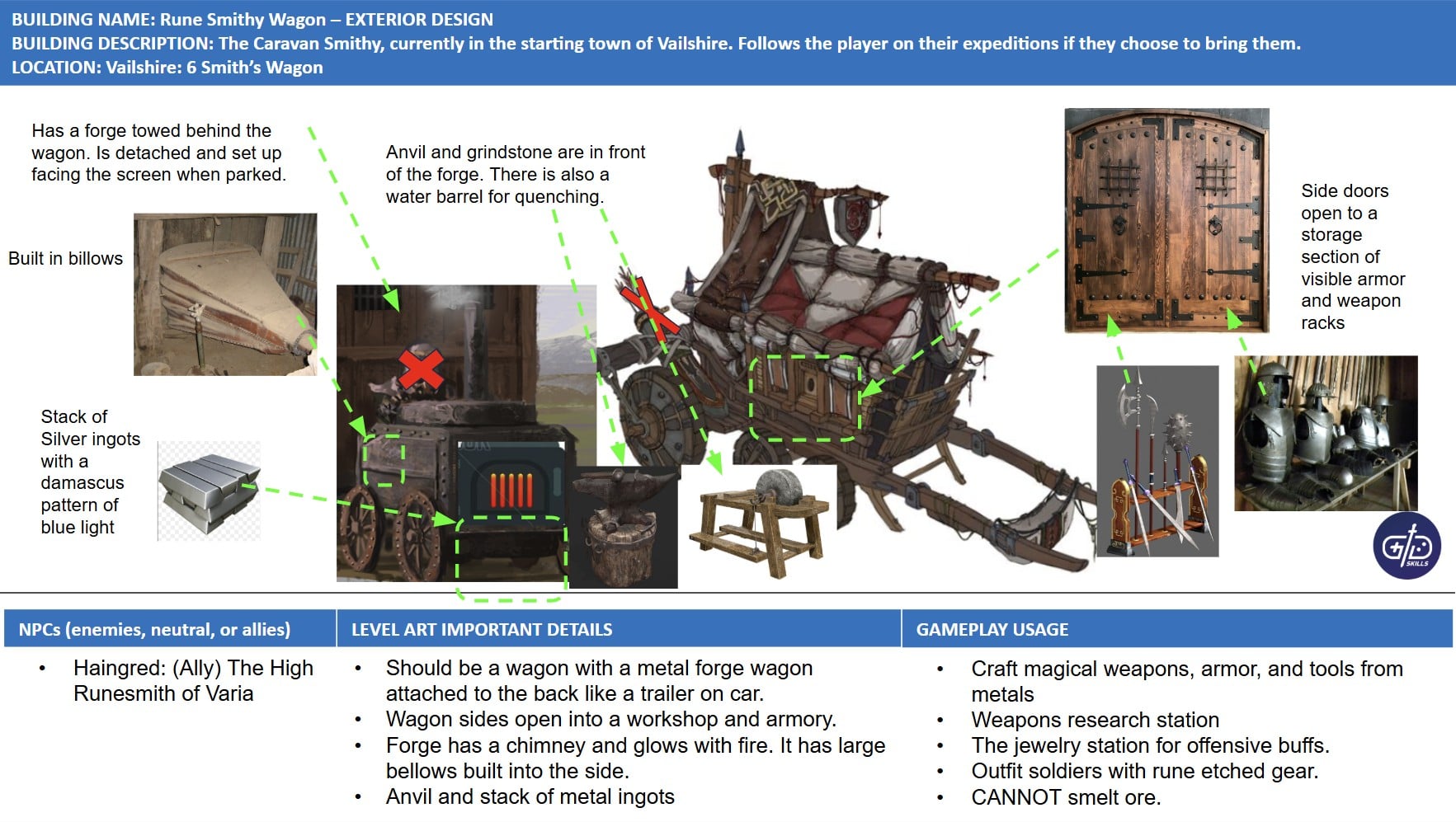
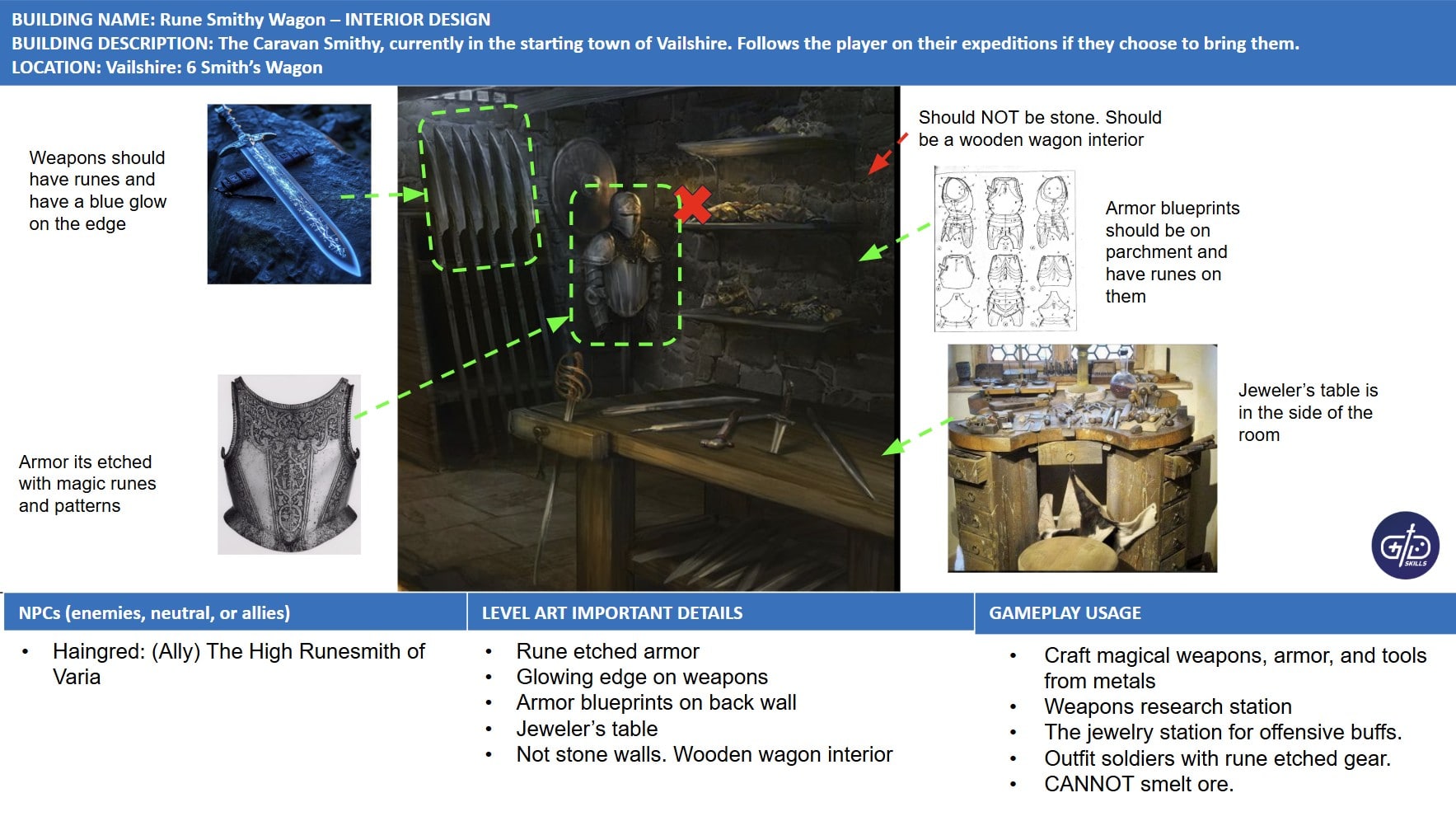
Designed Location, Building, and Town Map materials for collaboration with the art and level design teams:
Town Map
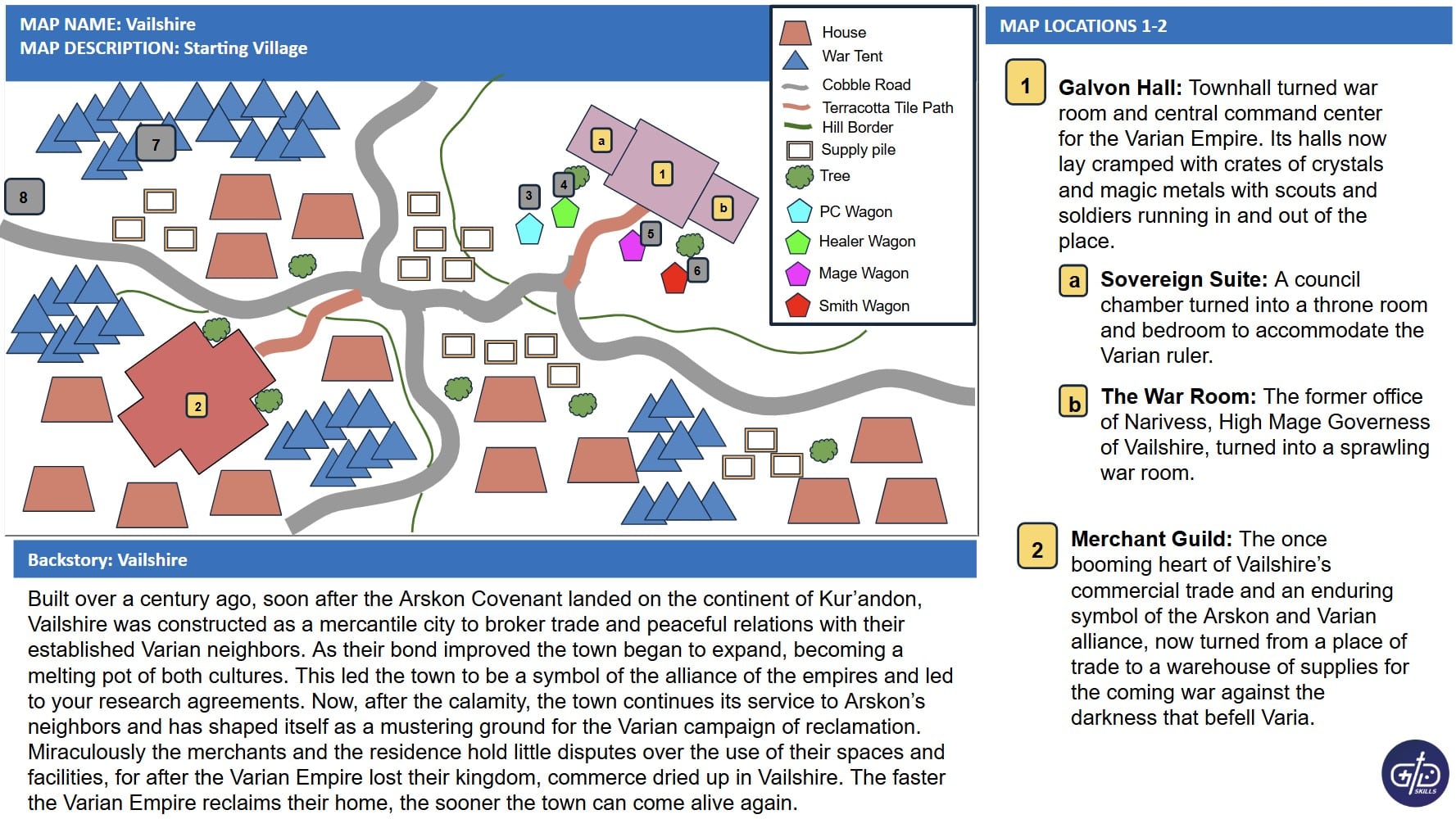
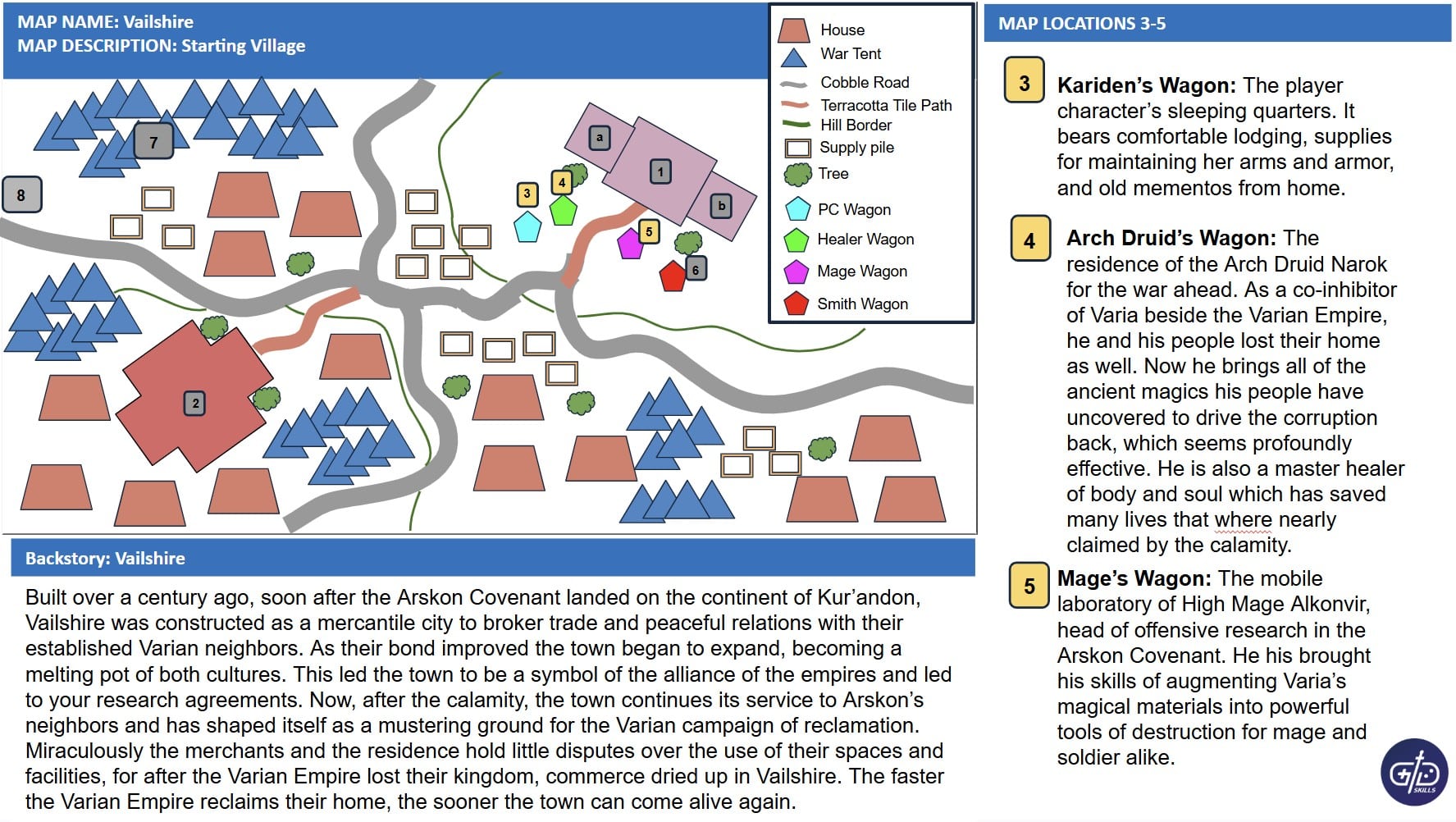
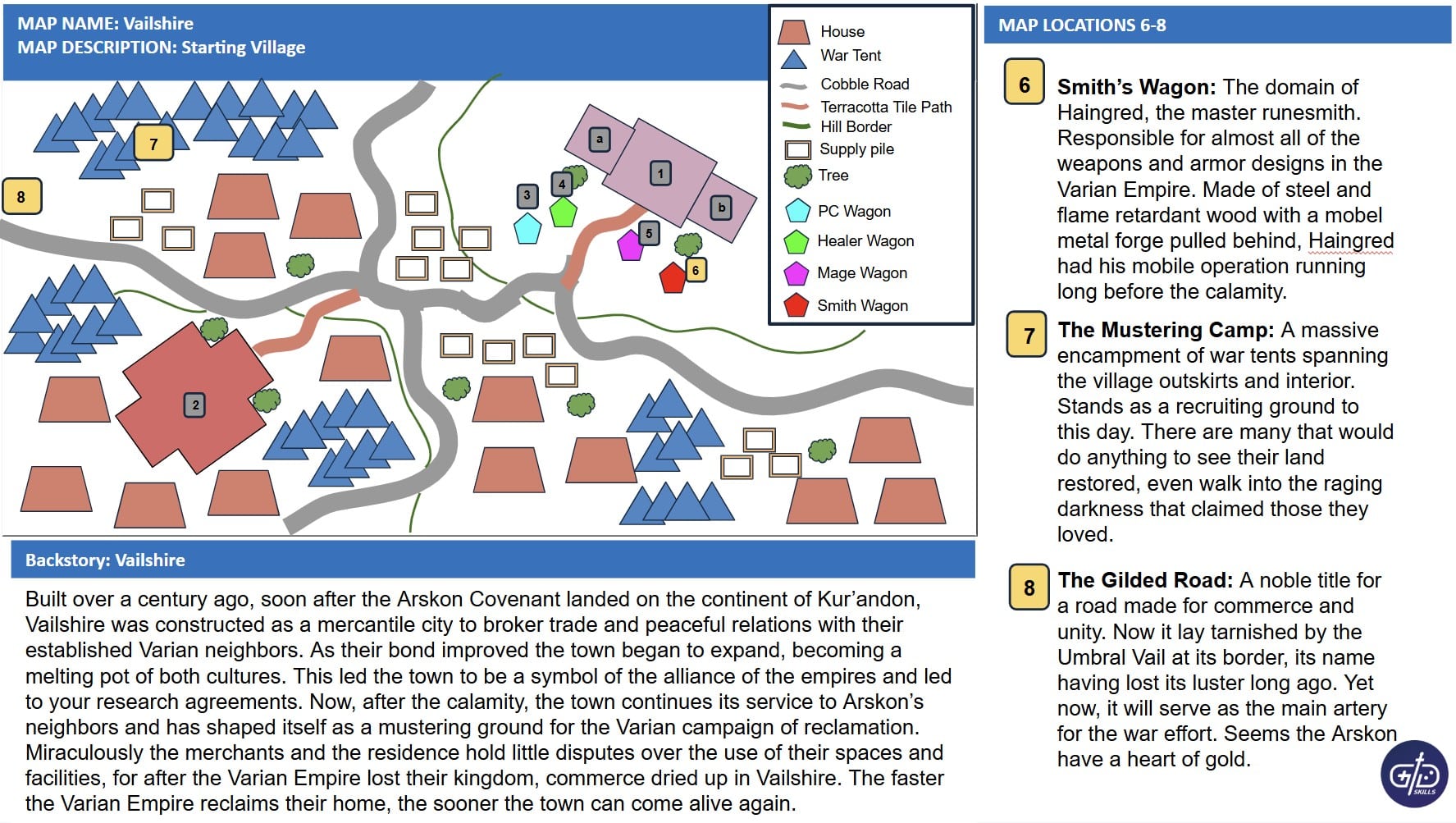
Town Map Design
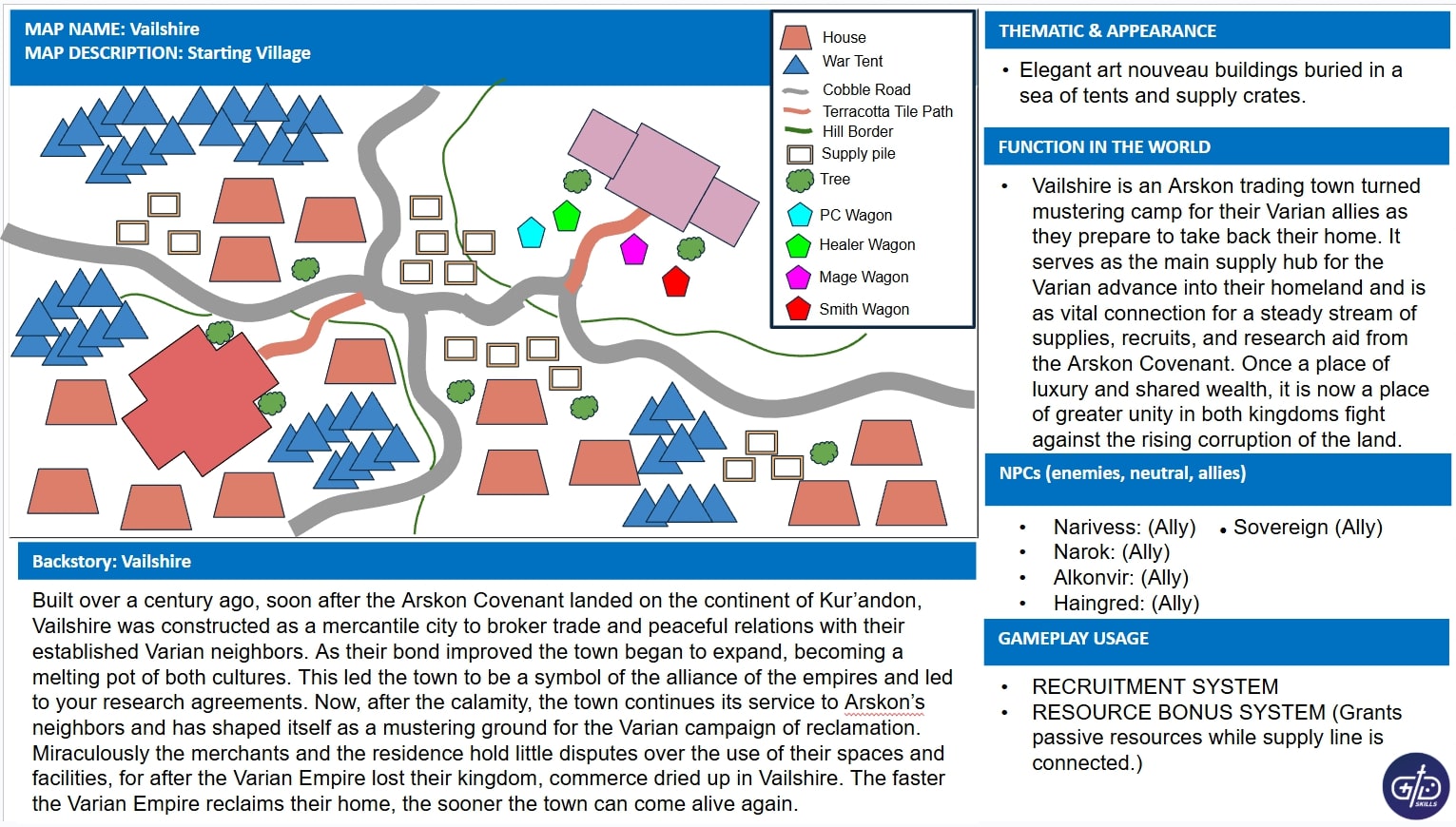
Designed Town Map materials for art and level design teams, covering the key elements of the location, including:
A reference key to help identify map details at a glance
Sections on important details such as theme & appearance, function in the world, NPCs in the location, gameplay usage, and backstory.
Included numbered sections for buildings that include brief descriptions of each building’s core lore, themes, and current state in the game world.
Location Design
Location Design
Designed the location document of the starting town to address the following design goals:
Highlight the key buildings in the location with assets that match each building’s respective design doc, as well as a list a connected list of key sites for the in-mission locations
Included notes on important details, reference images, and thematic elements for collaboration with the level art team
Included a brief backstory, notes on world function and gameplay usage, and a list of present NPCs for the design team’s quick reference
Building Design
Building Design
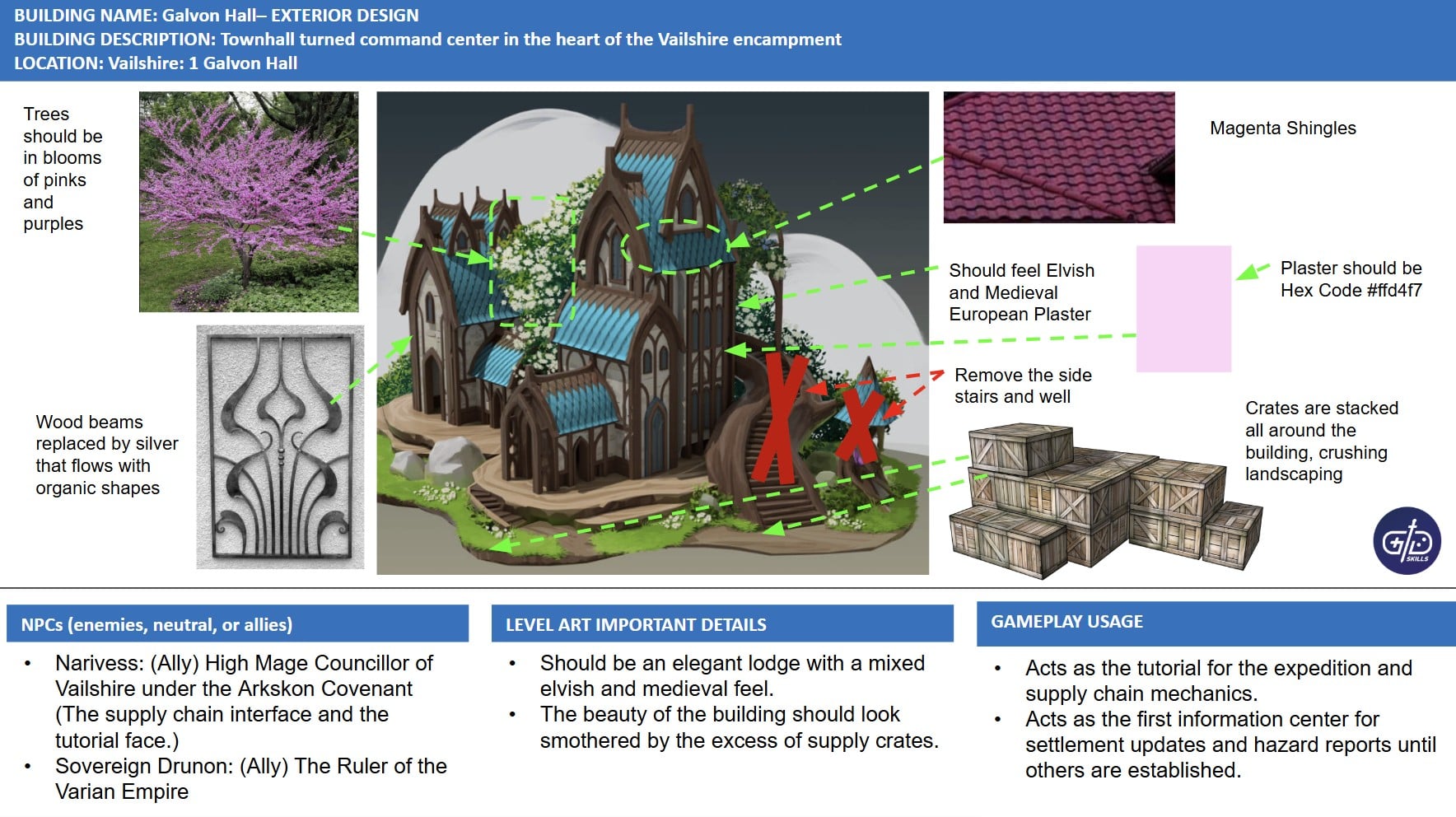
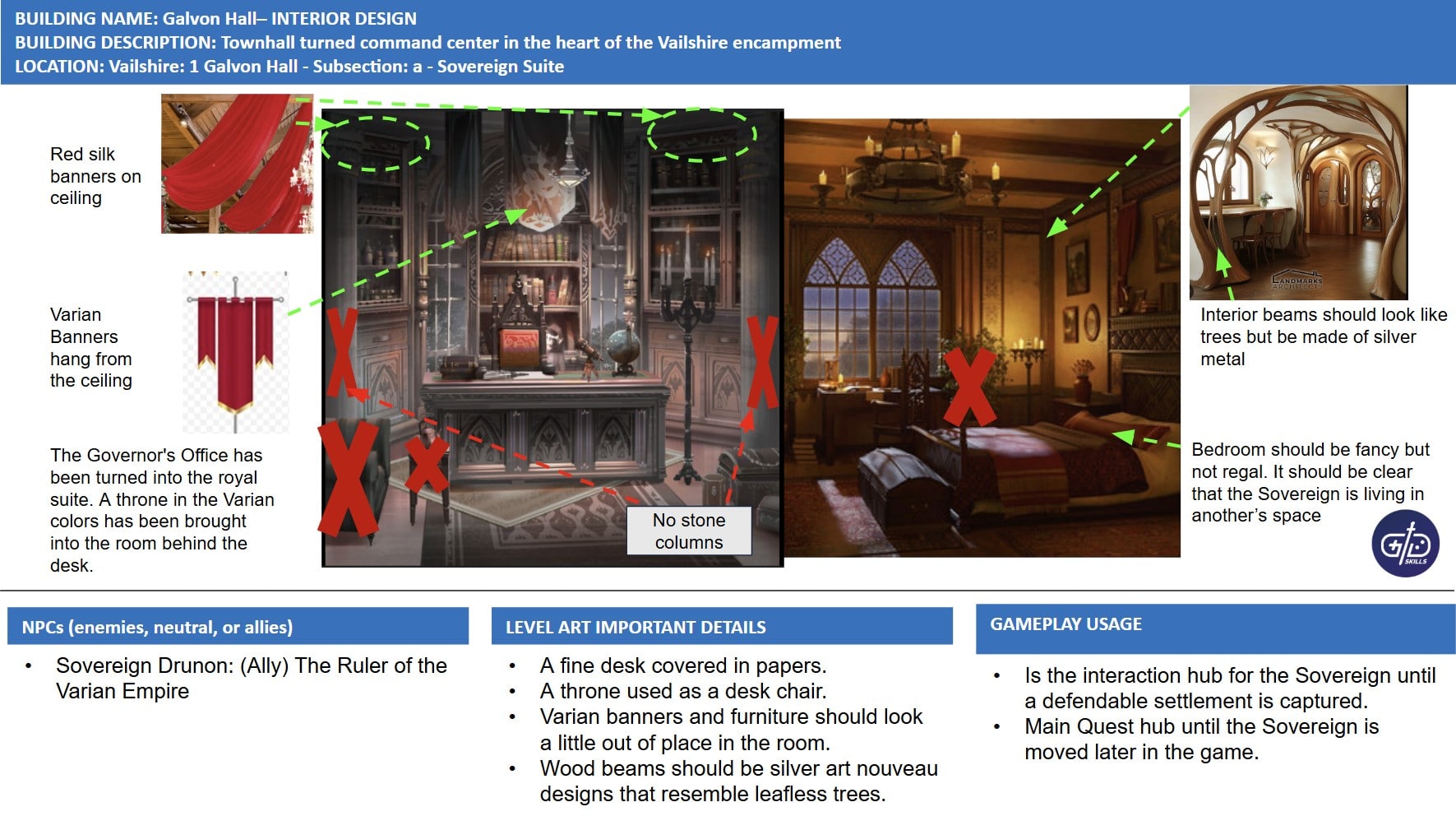
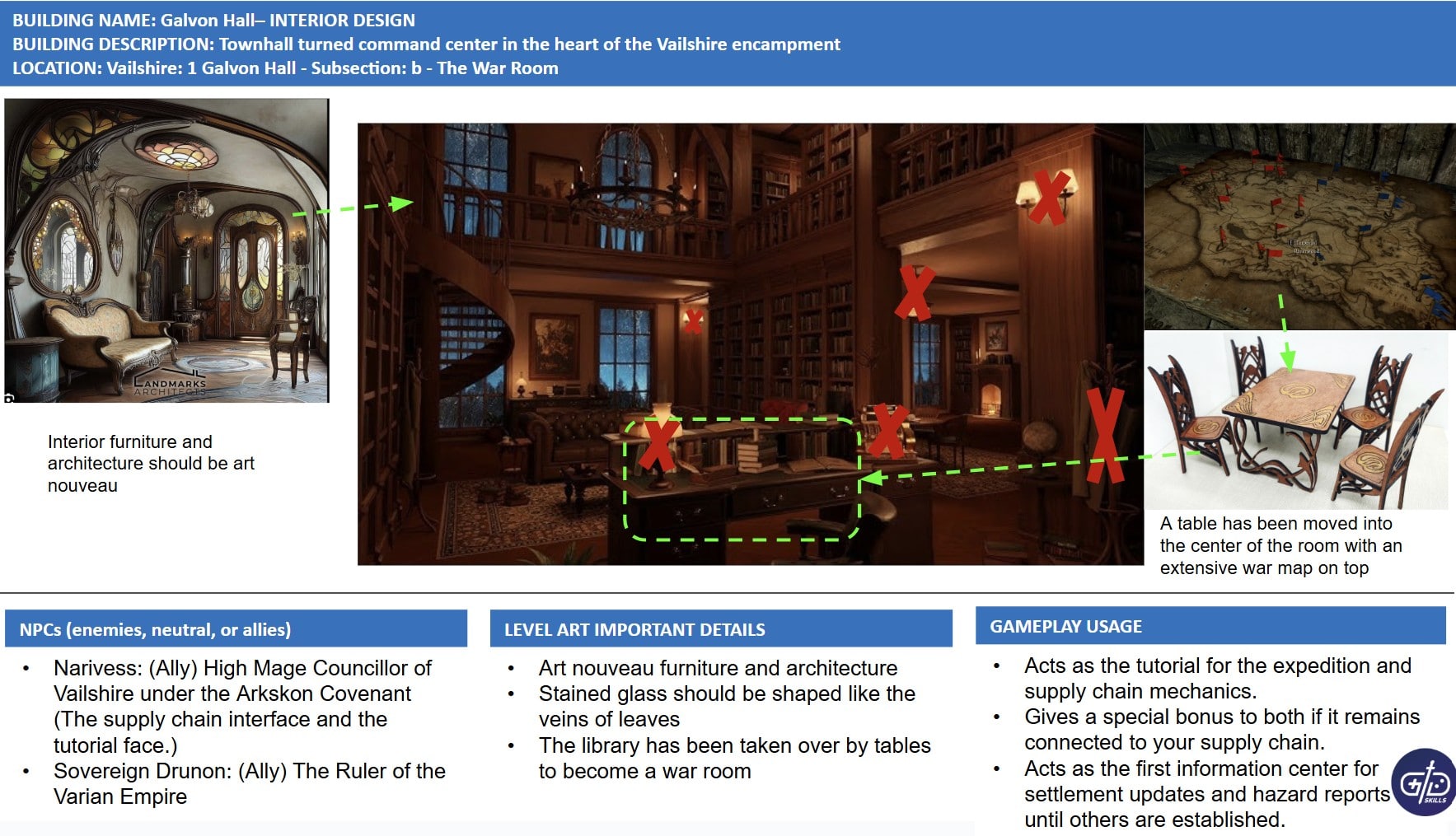
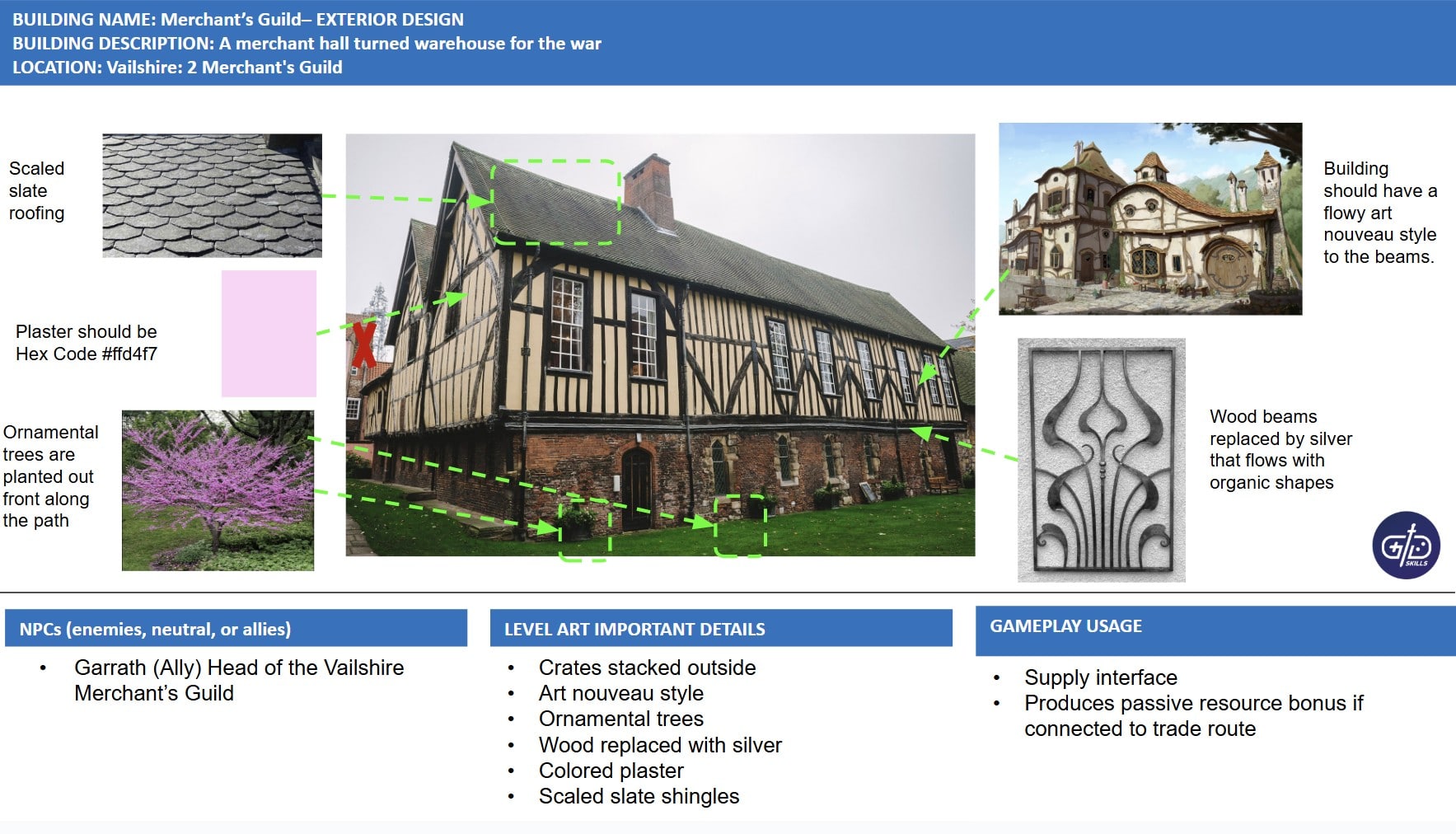
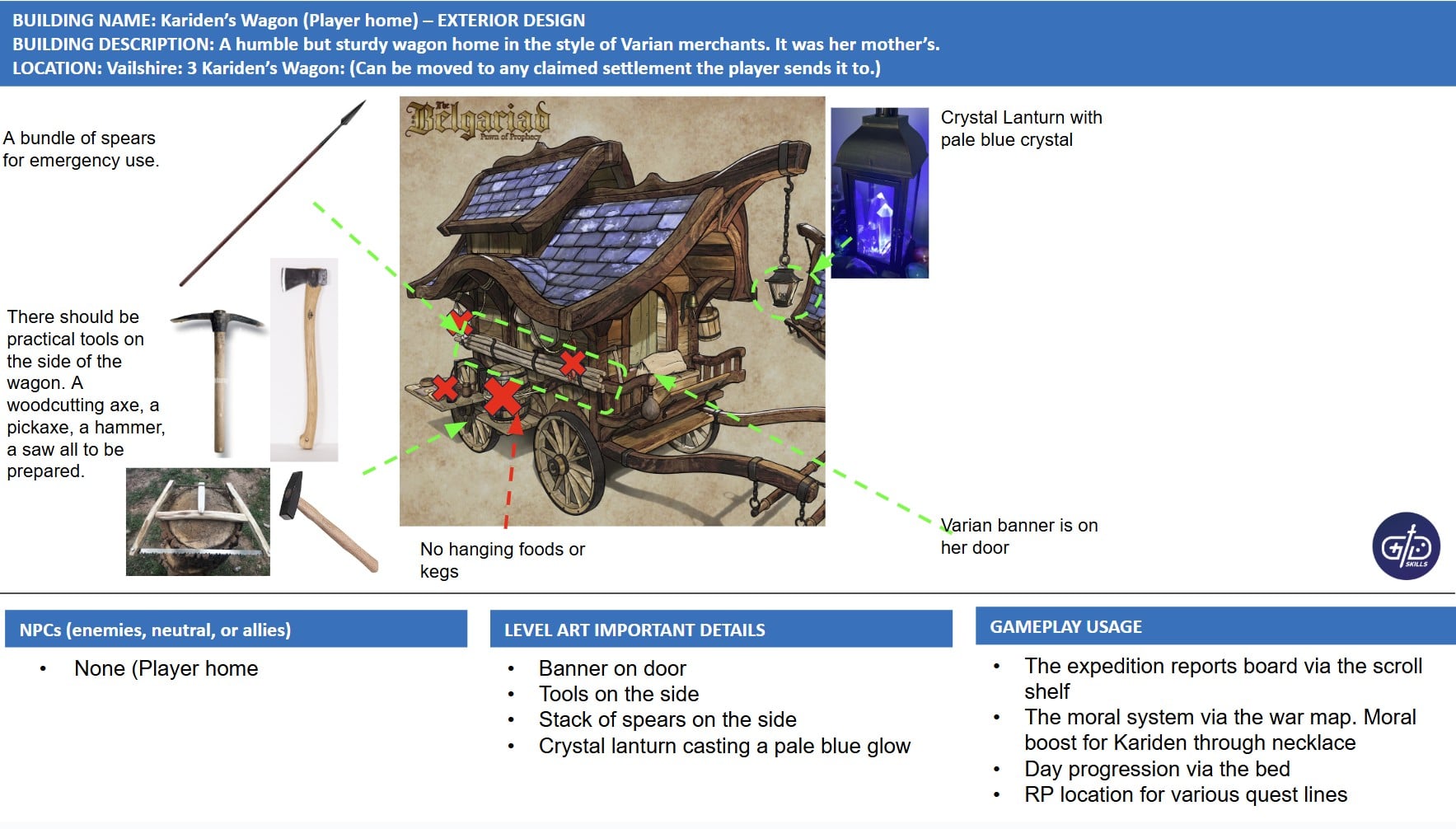
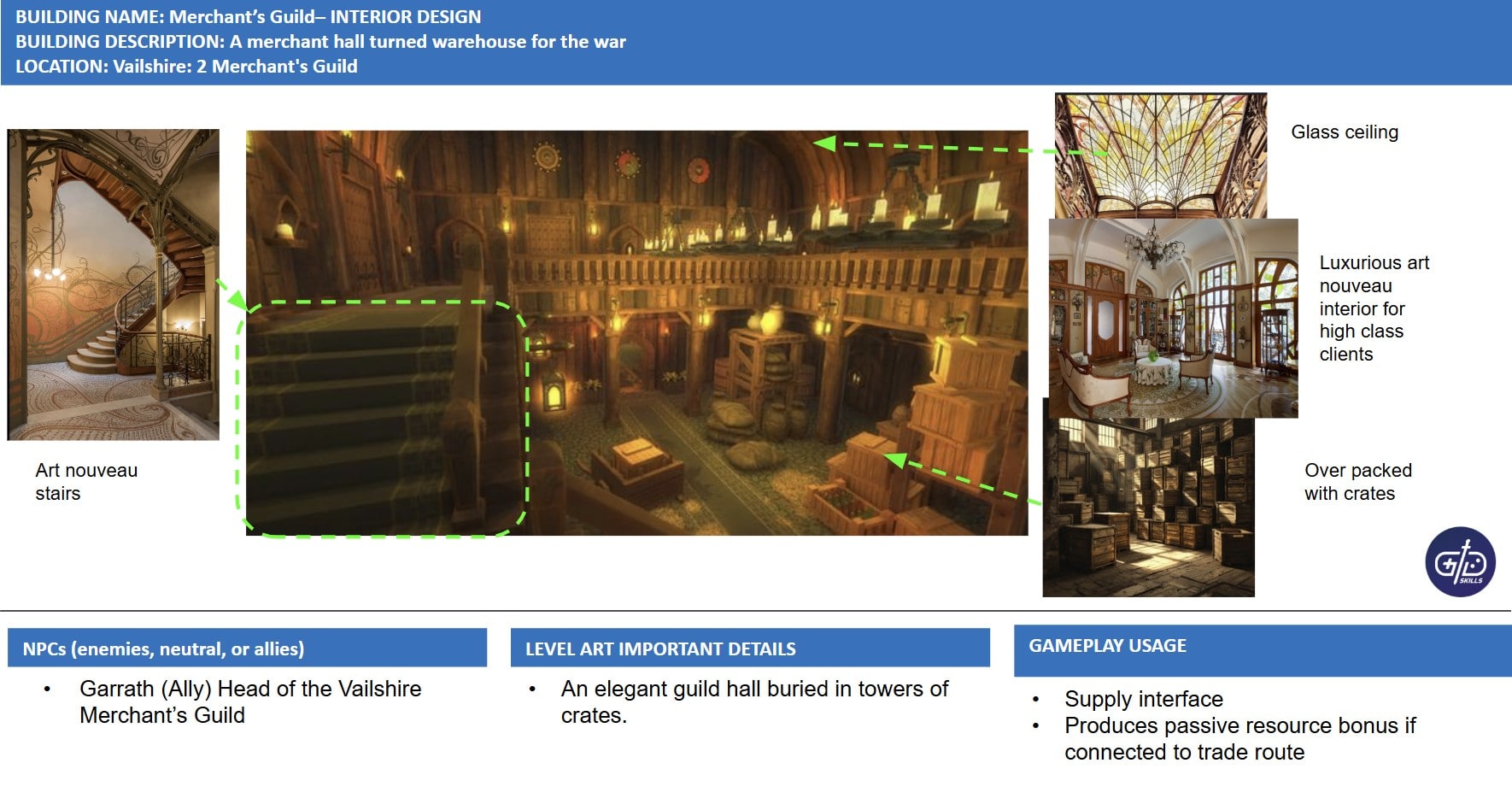
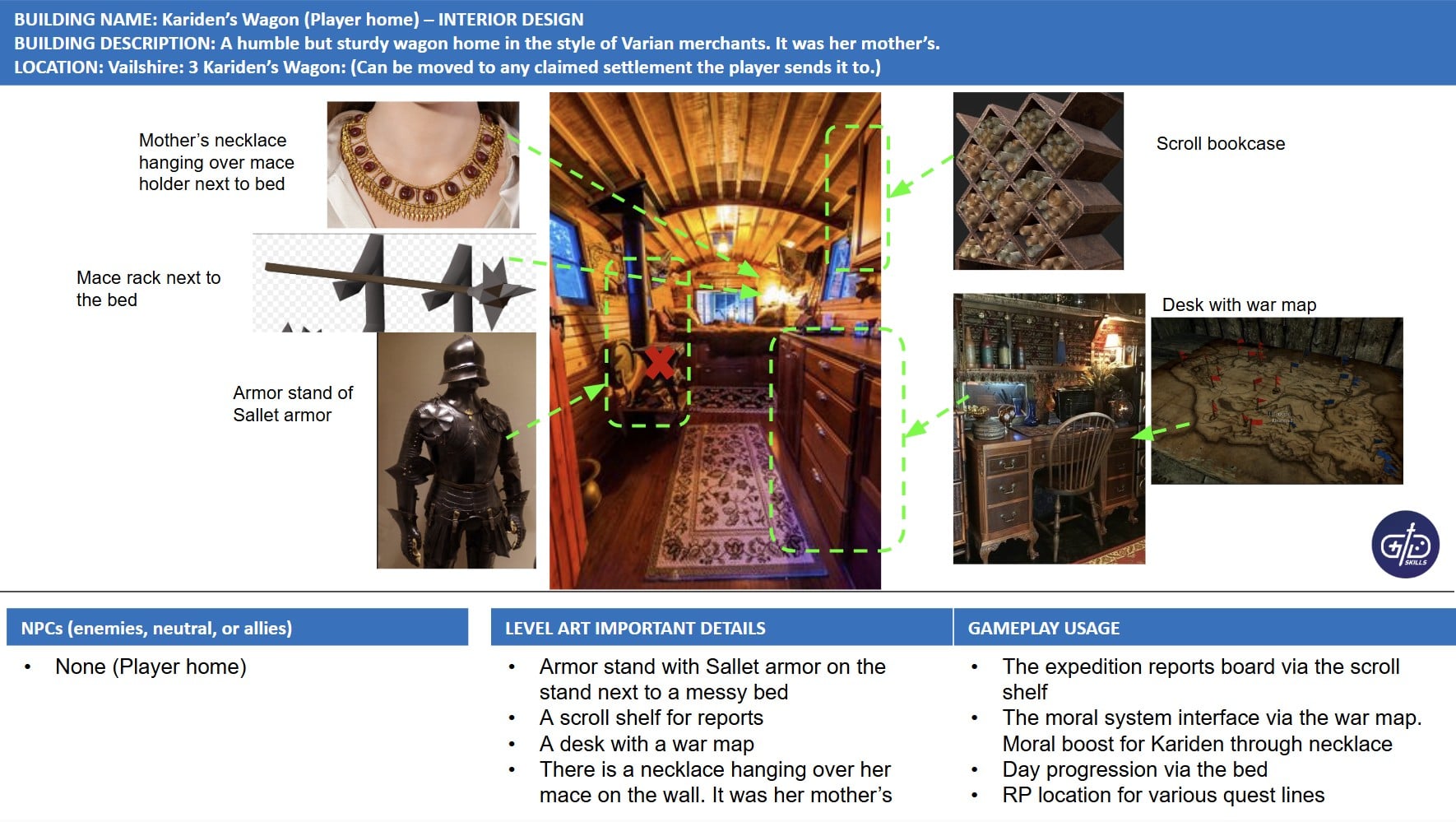
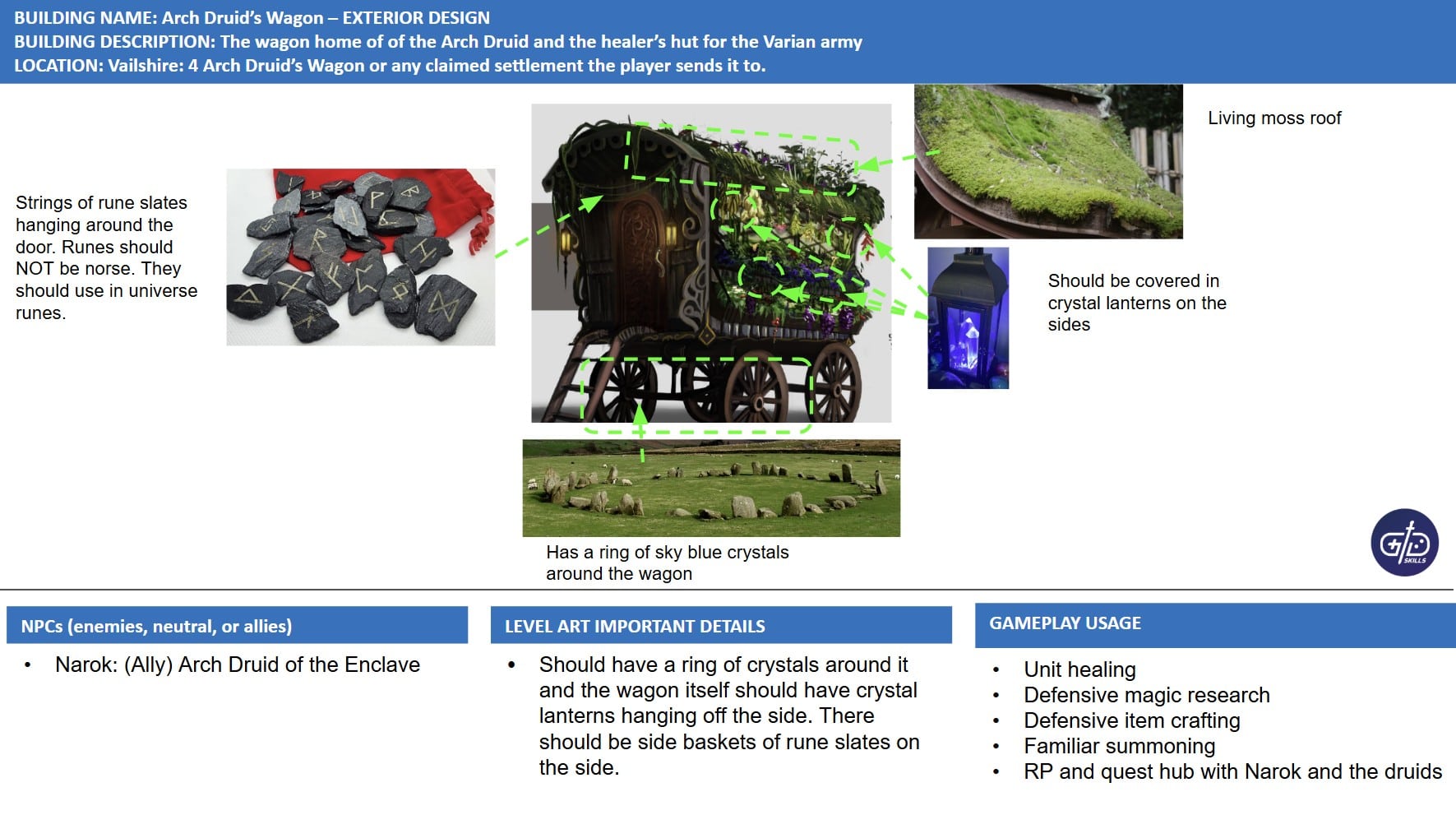
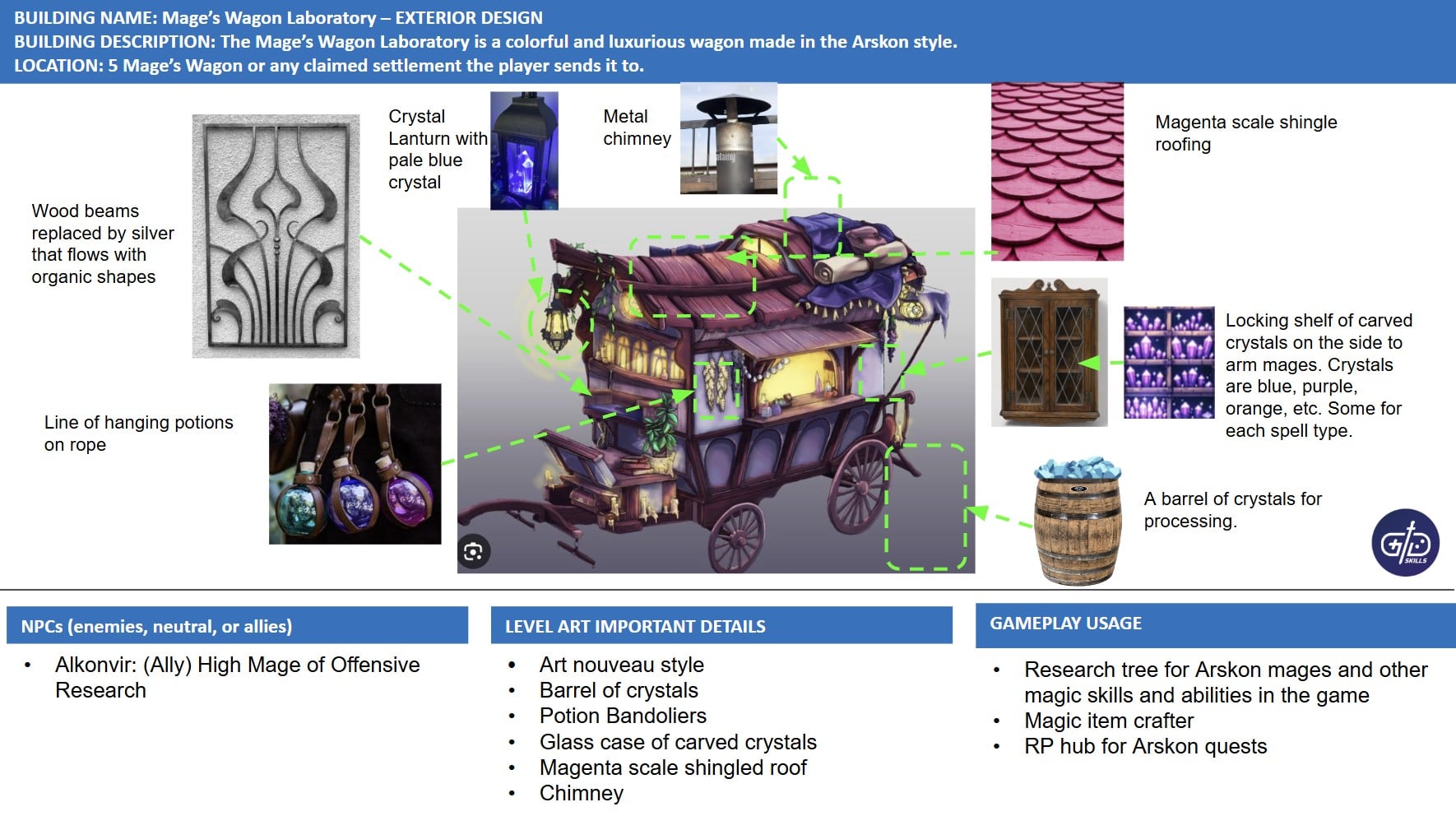
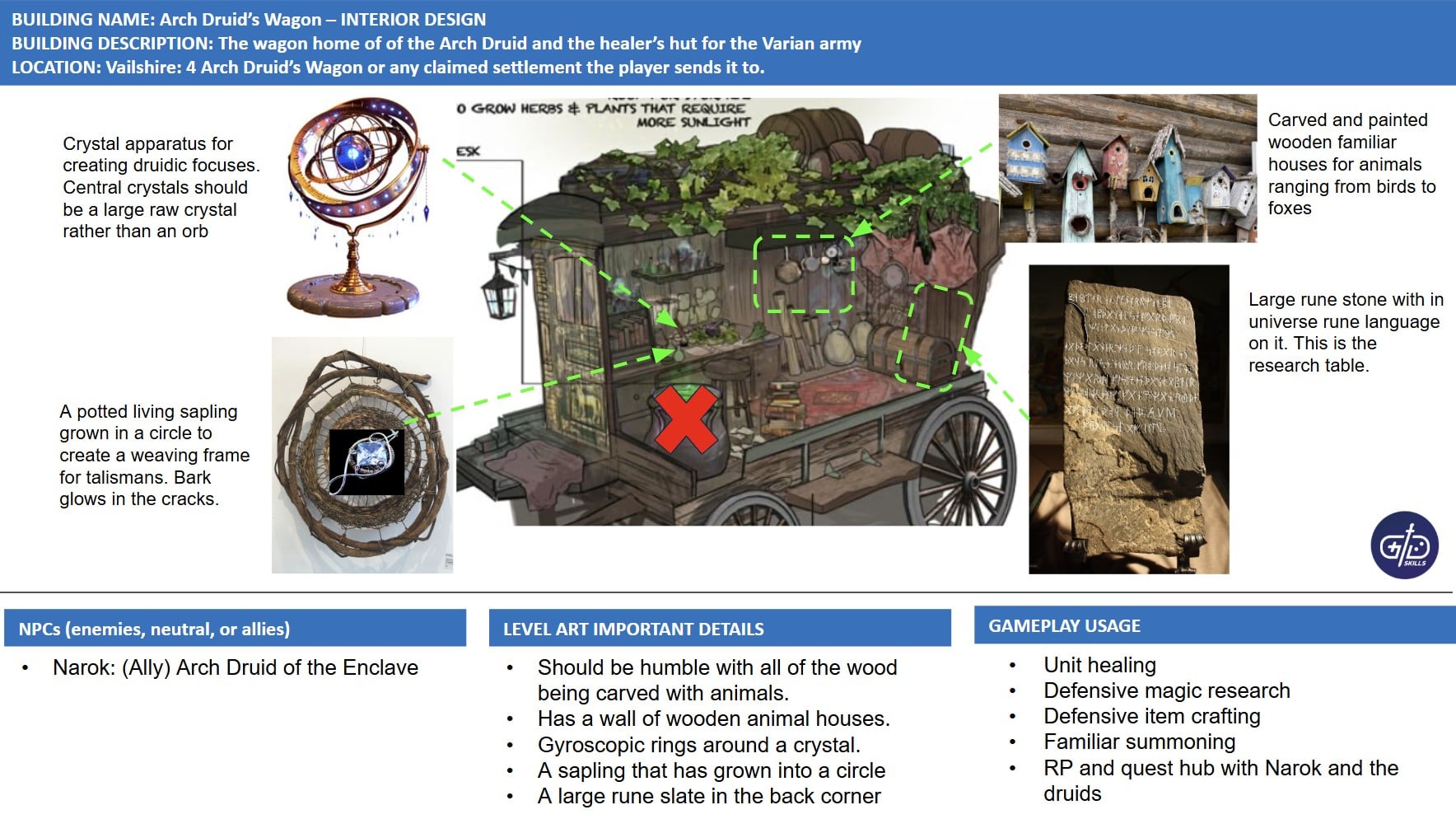
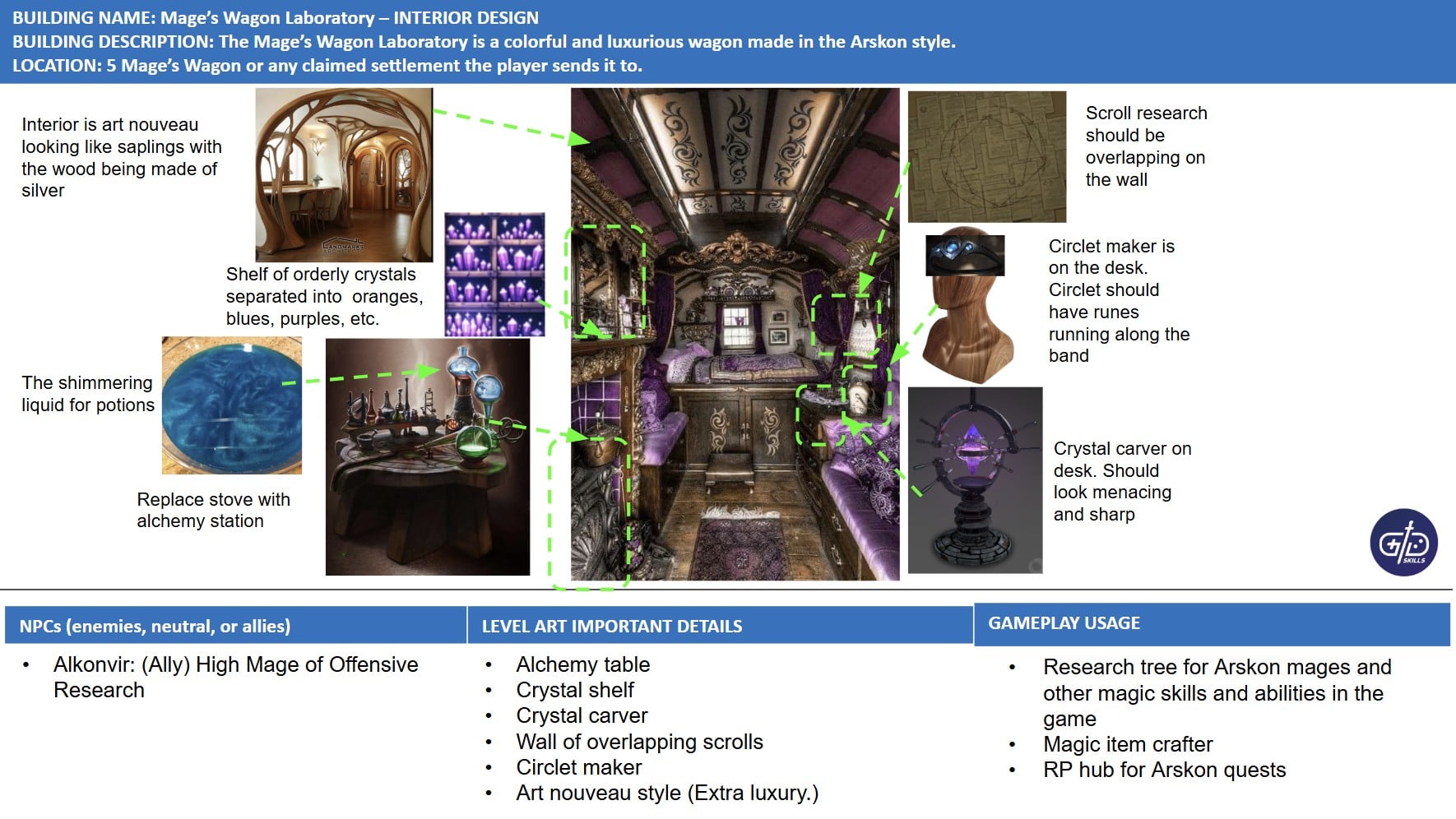
Designed the building documents for the art and design teams to achieve the following design goals:
Provide a key reference image with notes and additional information to further refine design intent and supply the art team with clear materials to inspire their work
Clearly indicated if the building document was for the interior or exterior of a building as well as its name and location number for the team to reference the town map with ease
Included notes on the important details, gameplay usage, NPCs, and brief descriptions of NPCs relating to the building for quick reference
Building Gallery
Building Gallery
Building Gallery
Storyboarding
Storyboarding
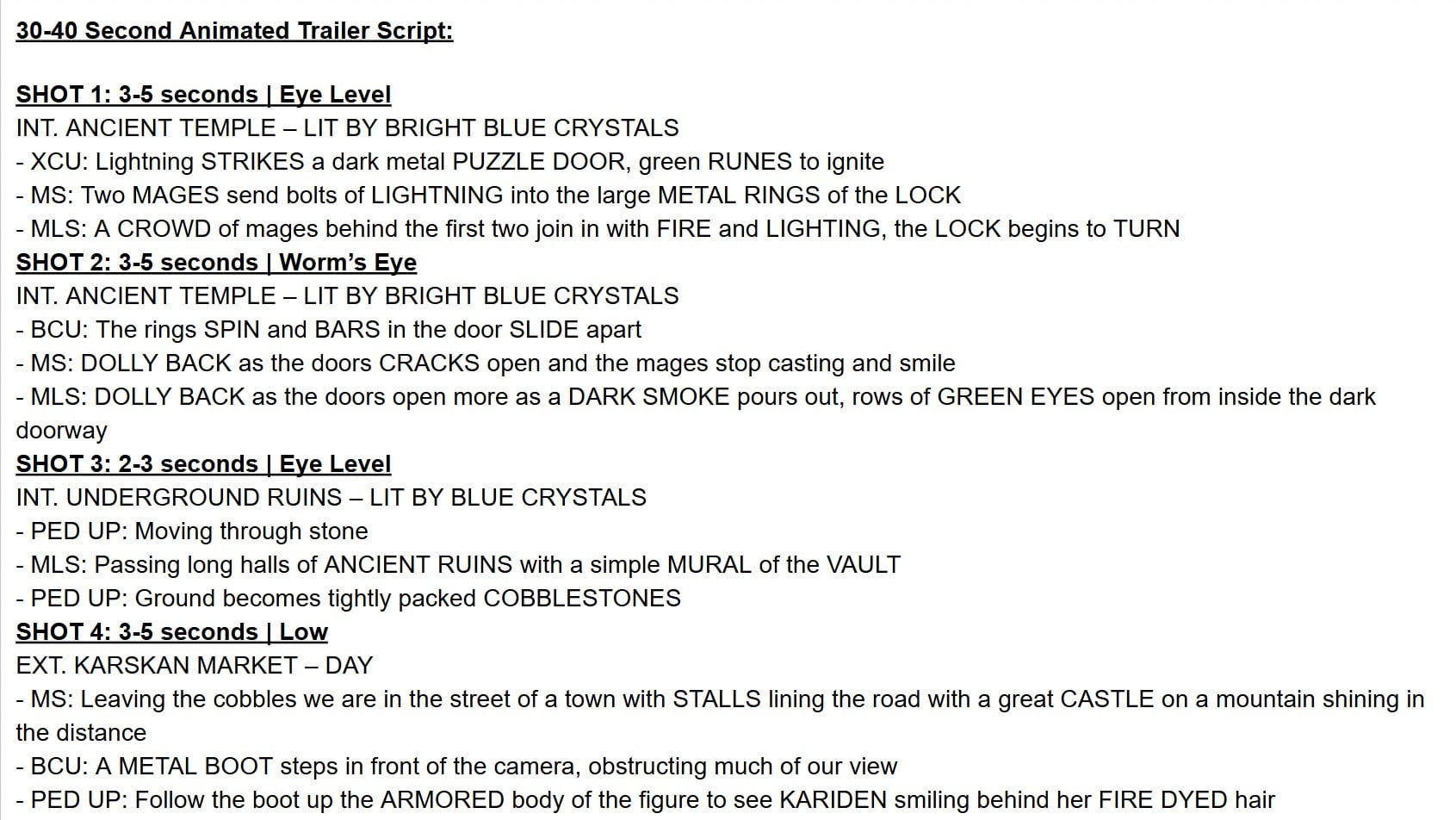
Storyboard and Script
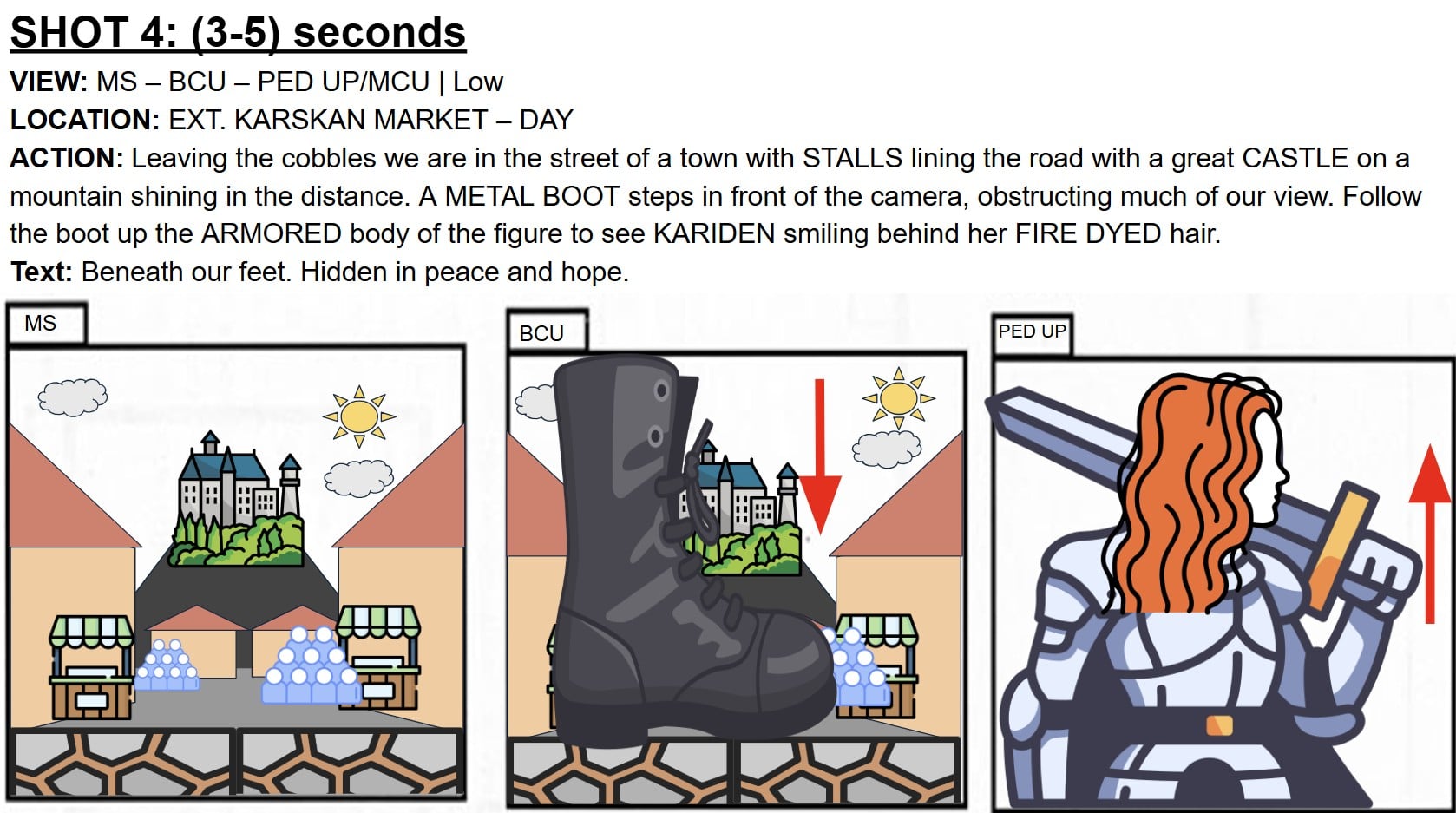
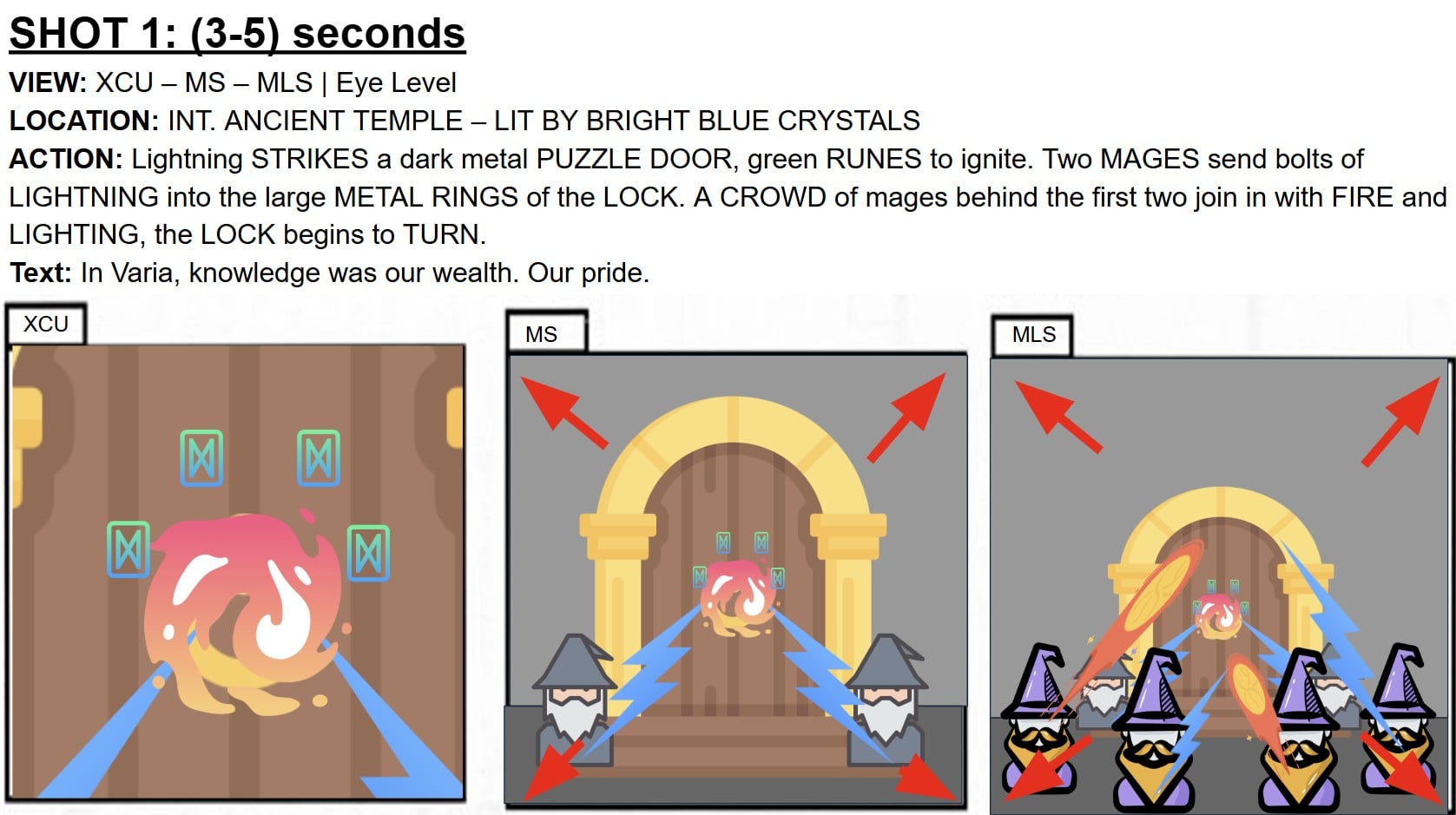
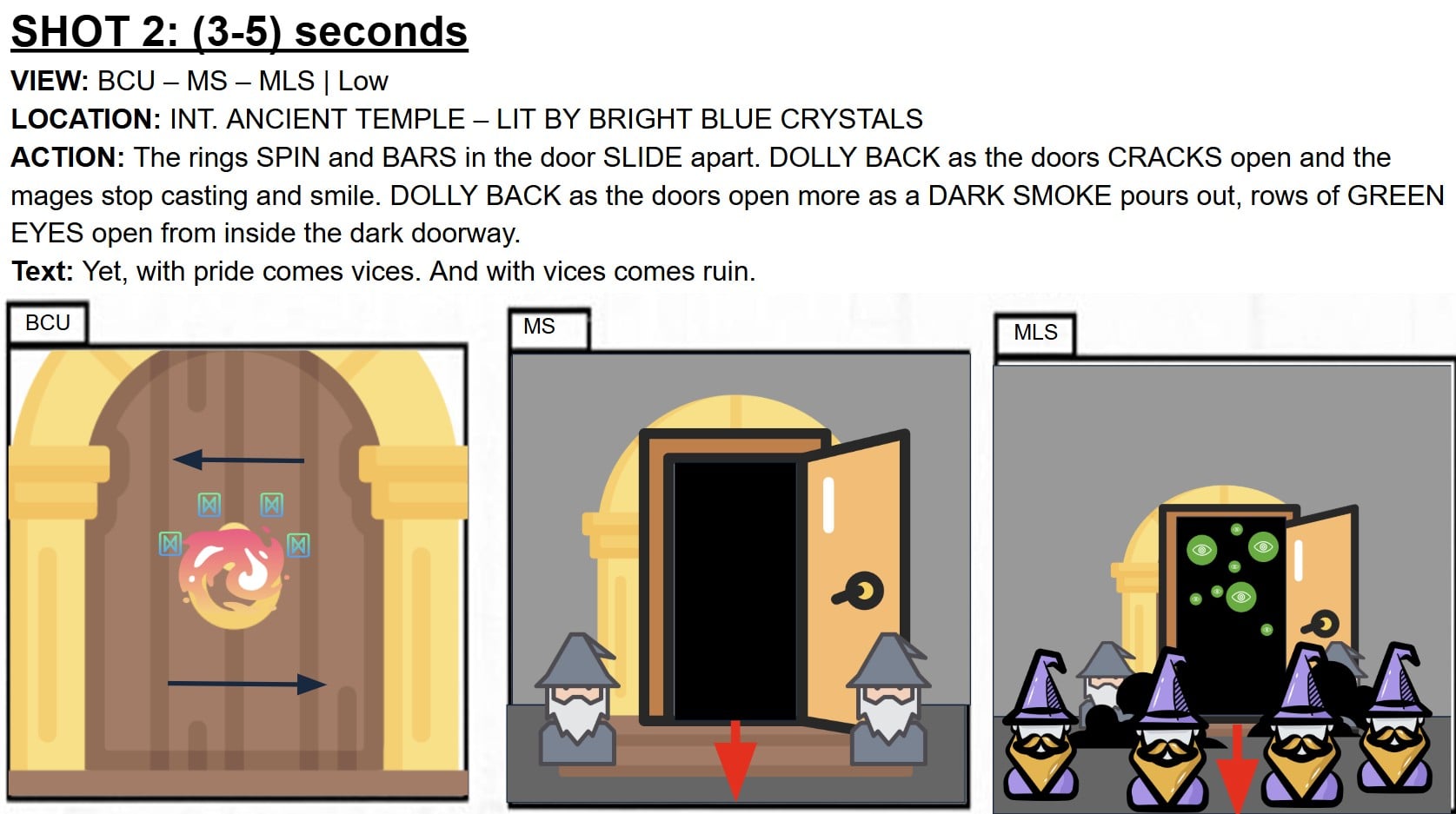
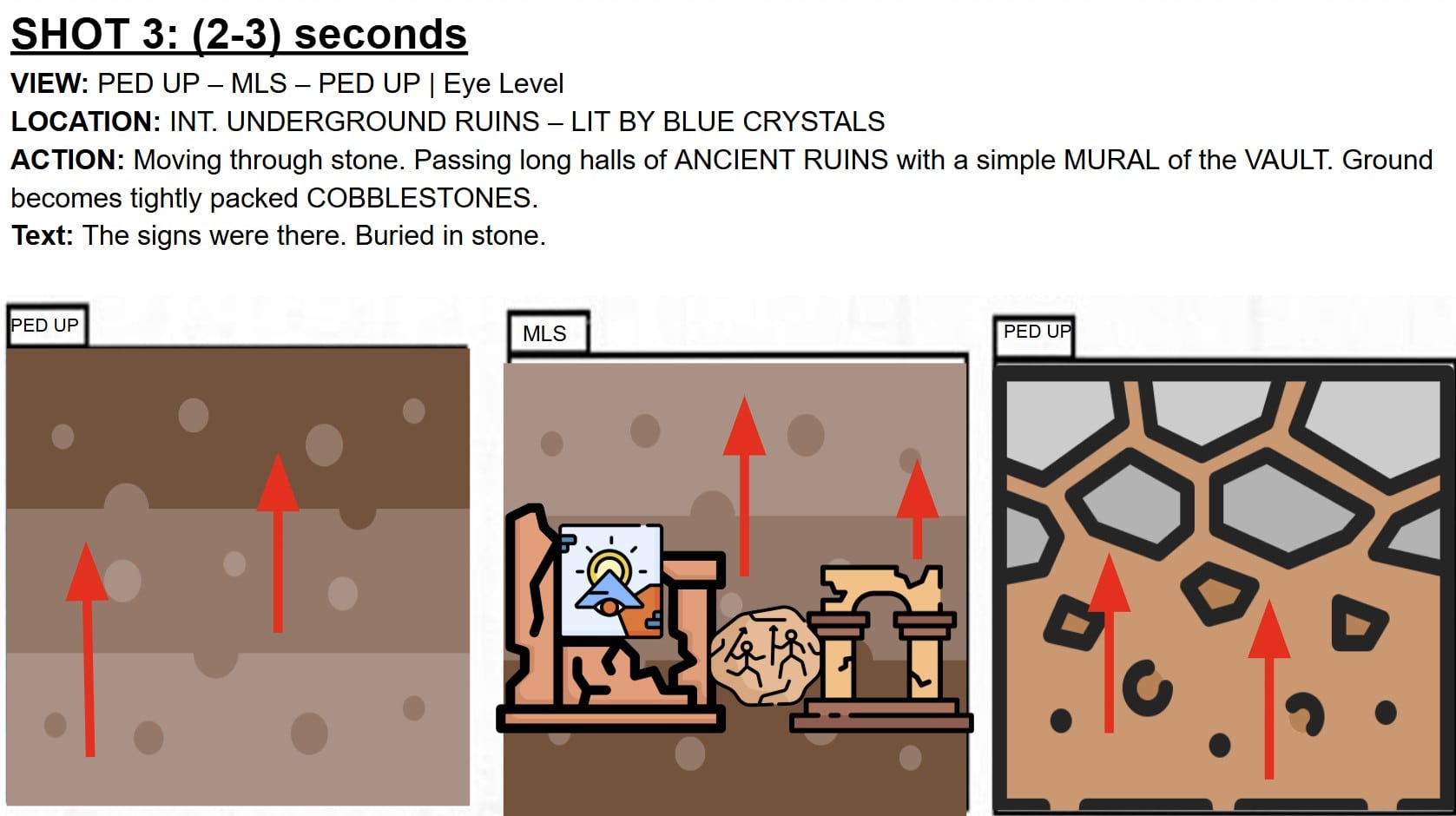
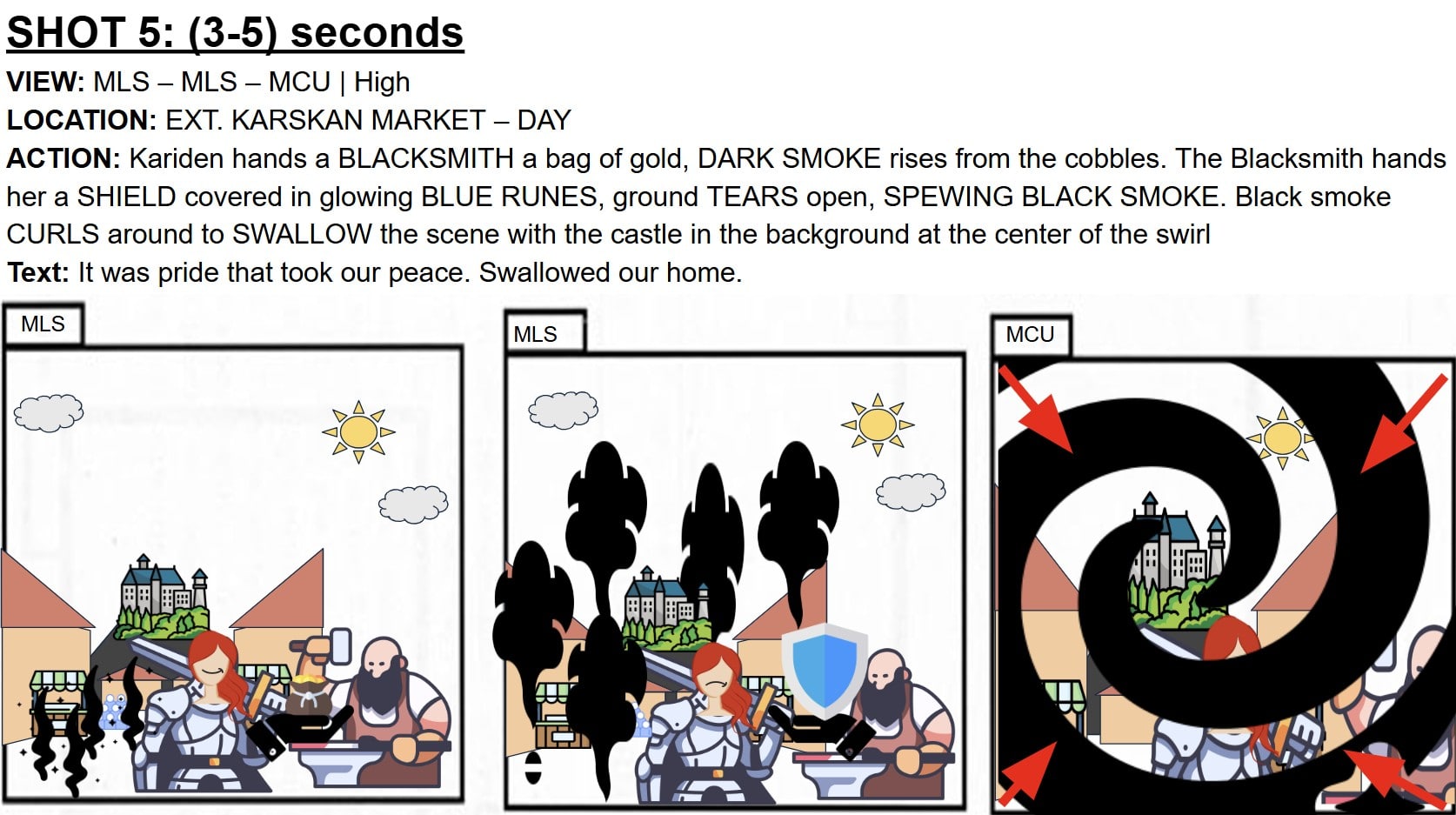
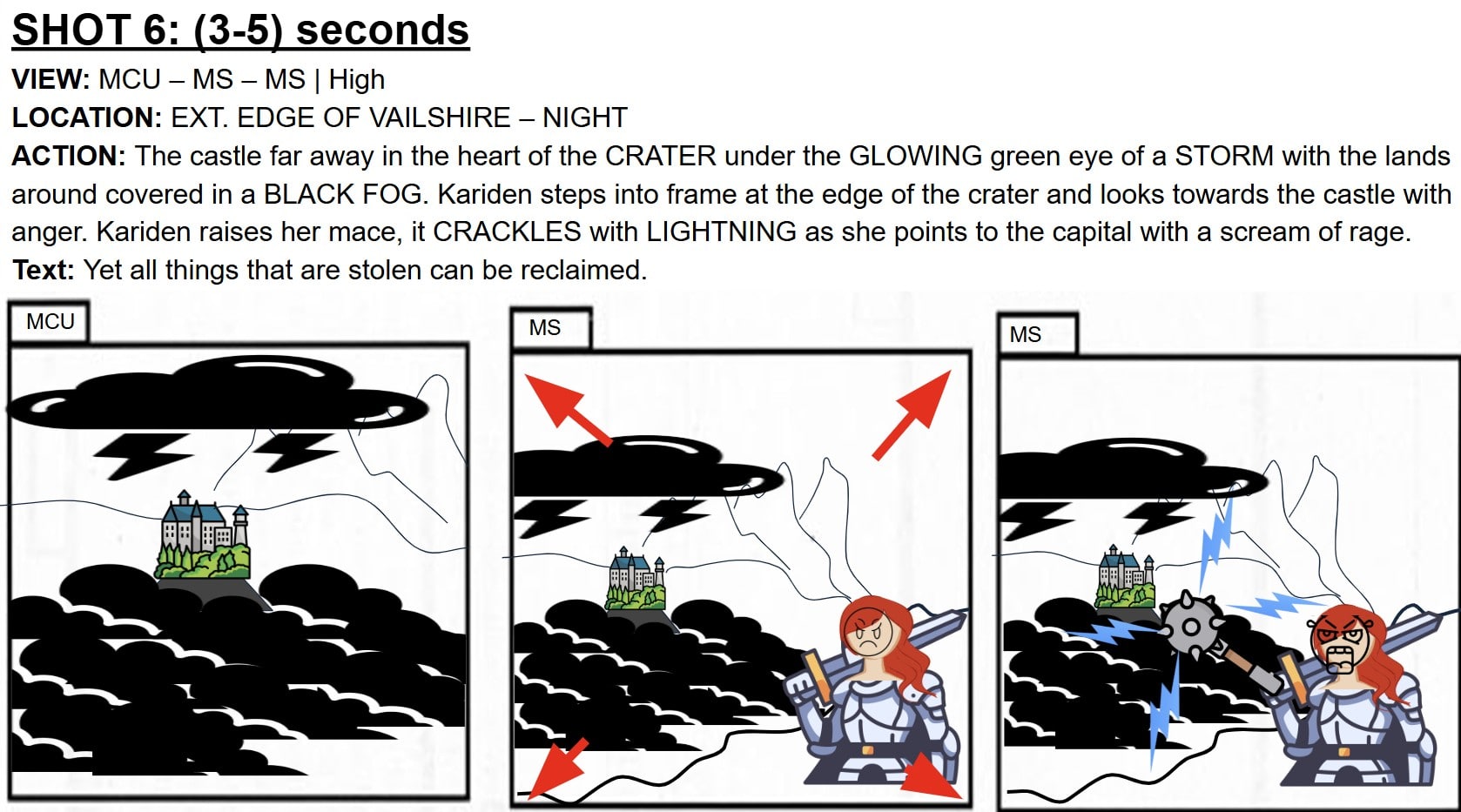
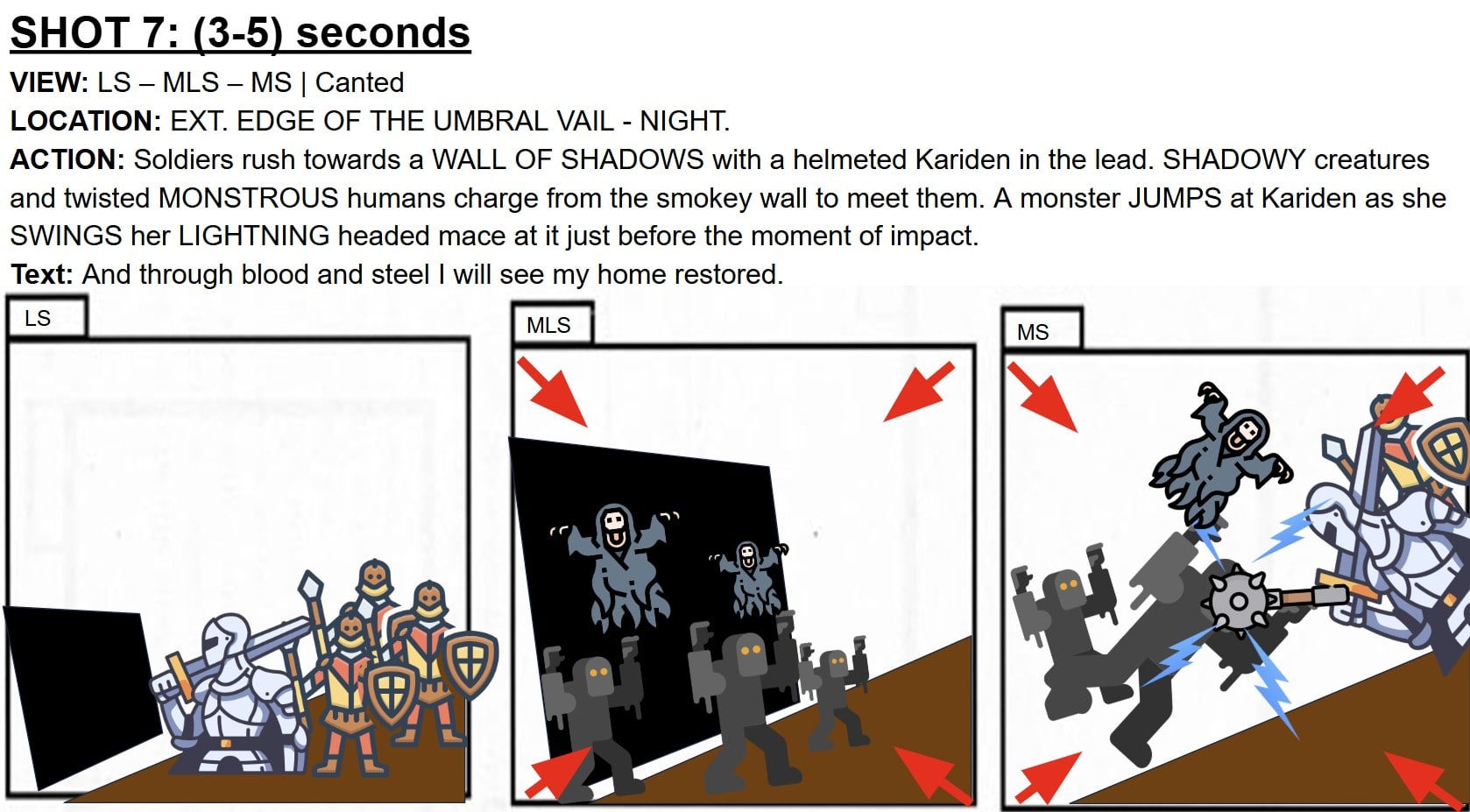
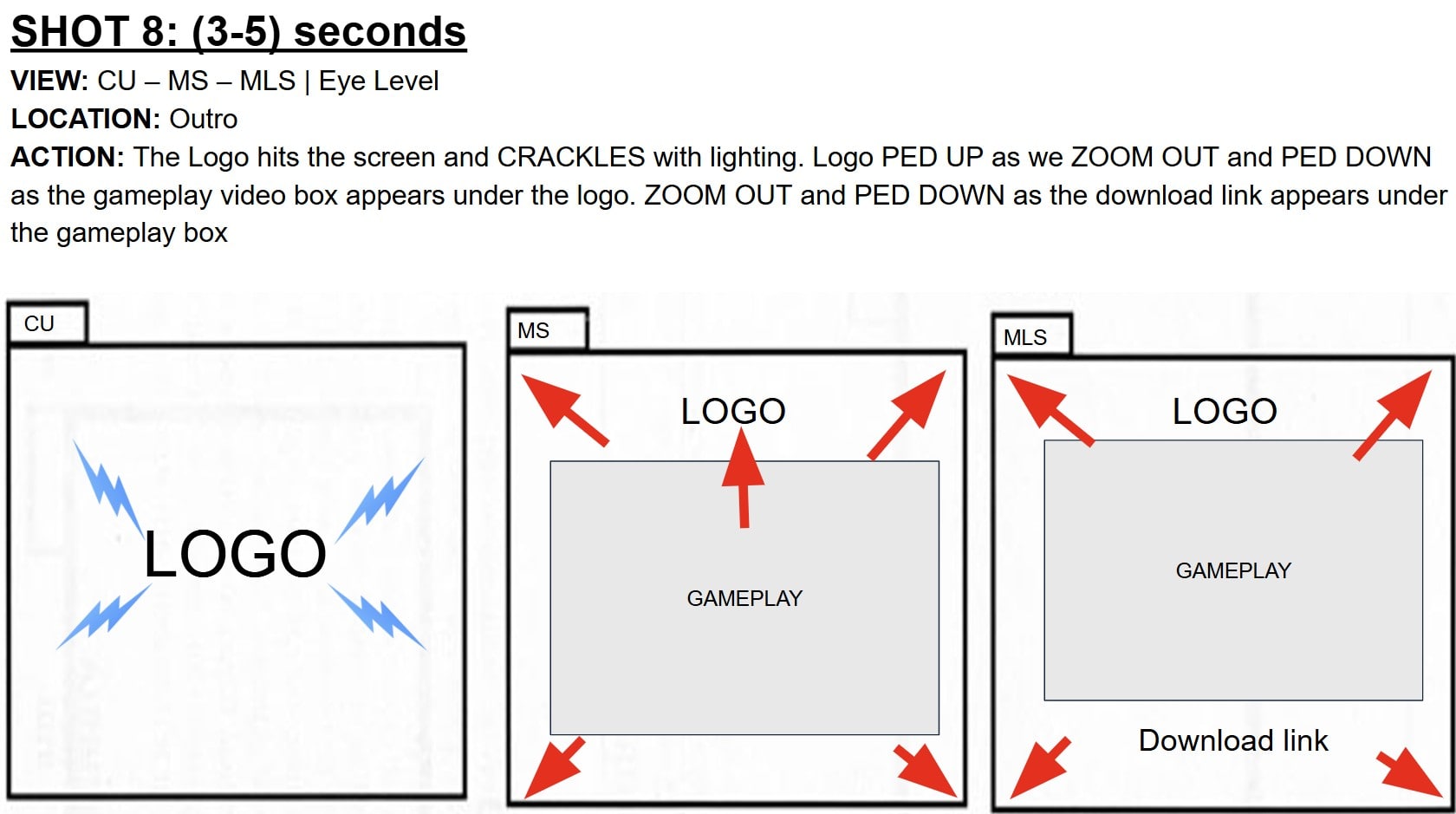
Wrote a storyboard script for the opening sequence of the game, and designed a preliminary storyboard to collaborate with the art and marketing teams, and get internal approvals:
Designed shots with worldbuilding in mind, creating a sequence that can be used as both a trailer for the game and the intro cinematic before the tutorial
Included clear location, camera view, and action for use by the art team.
Wrote text in the POV of the main character to maintain continuity with the character-centric narrative of the game.
Designed the text to be free-standing or read by the main character’s voice actor as needed by the marketing team.
Designed a storyboard prototype with simple assets for quick and efficient communication between teams
Storyboard Gallery
Storyboard Gallery
Audience Research
Audience Research
Researcher Gallery
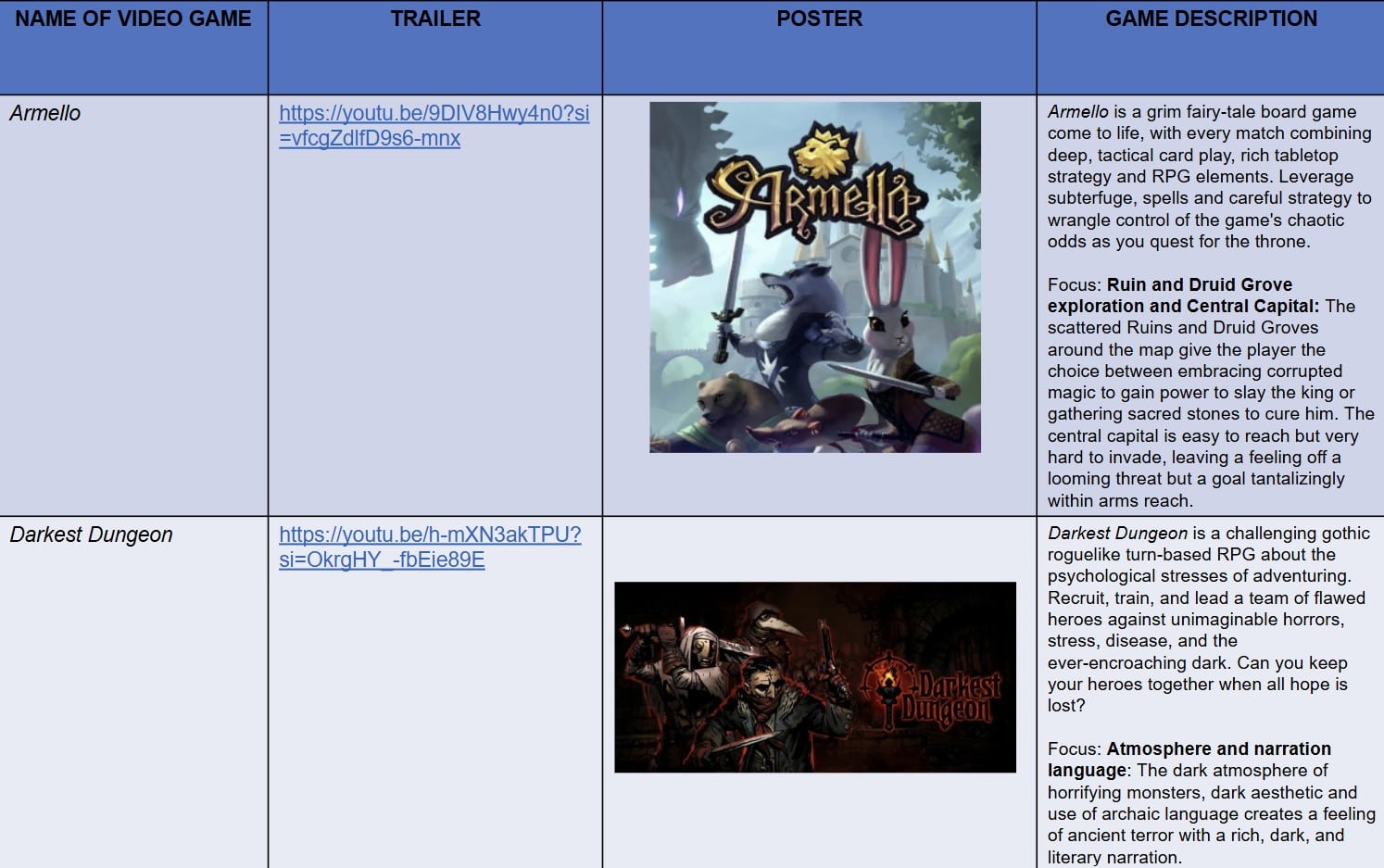
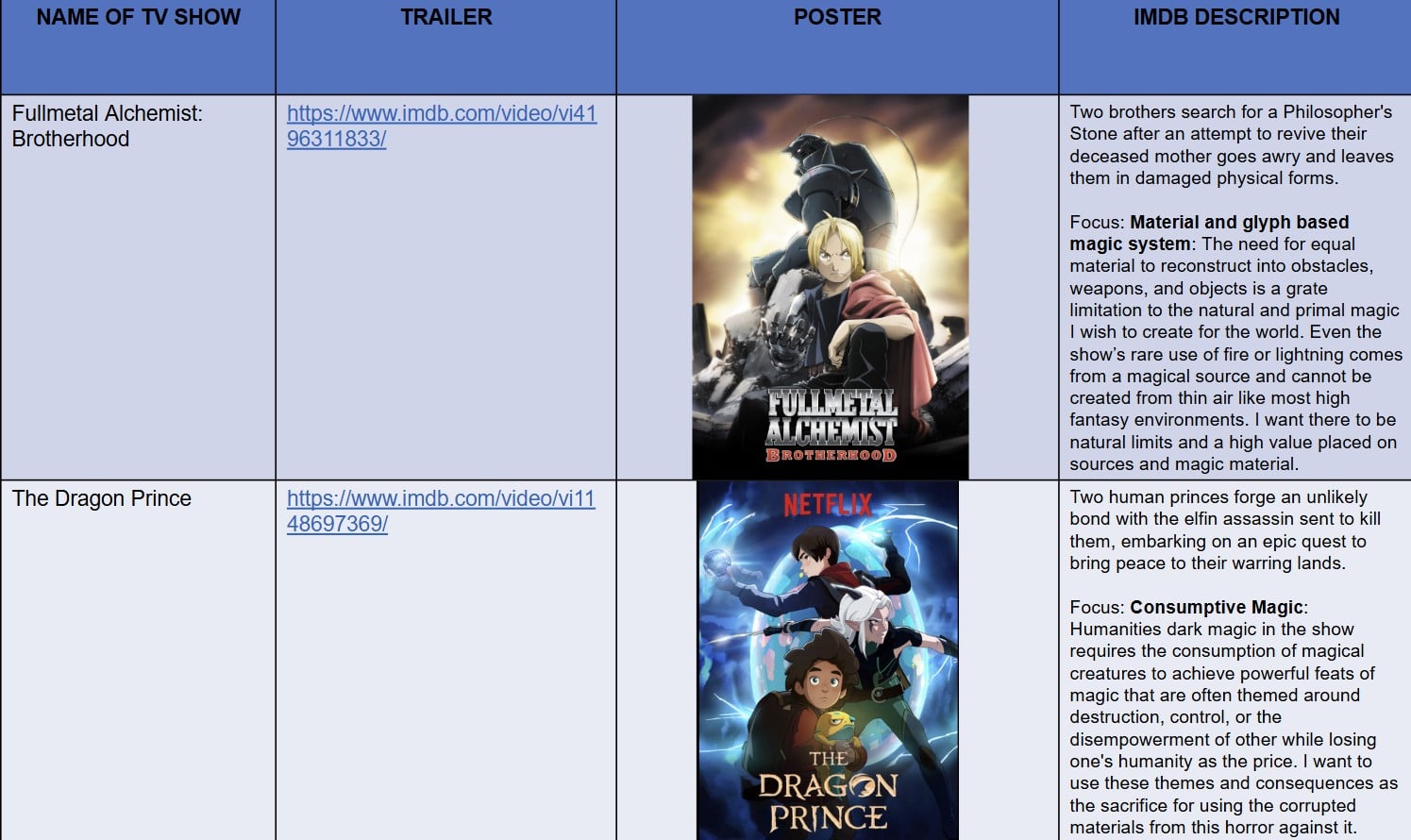
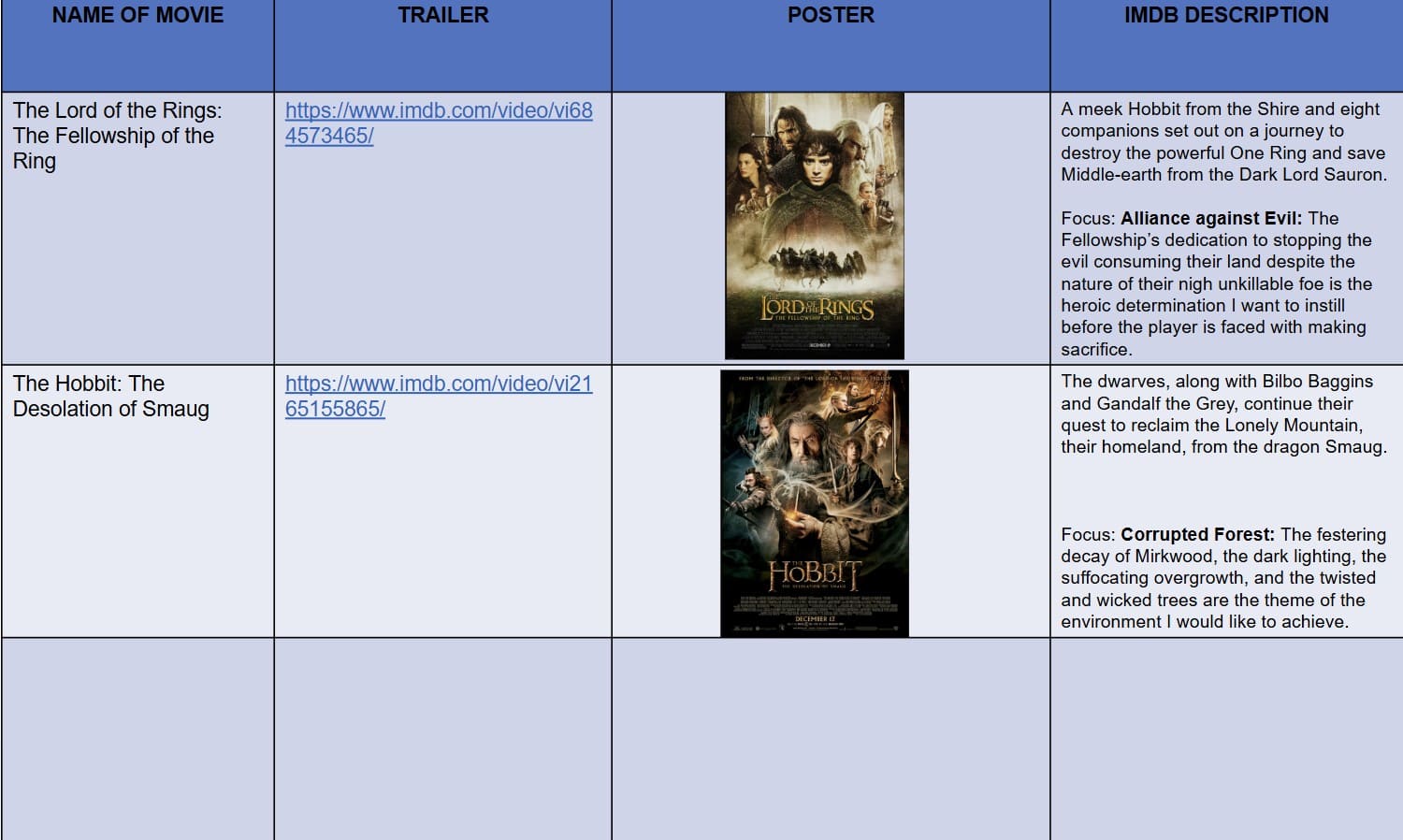
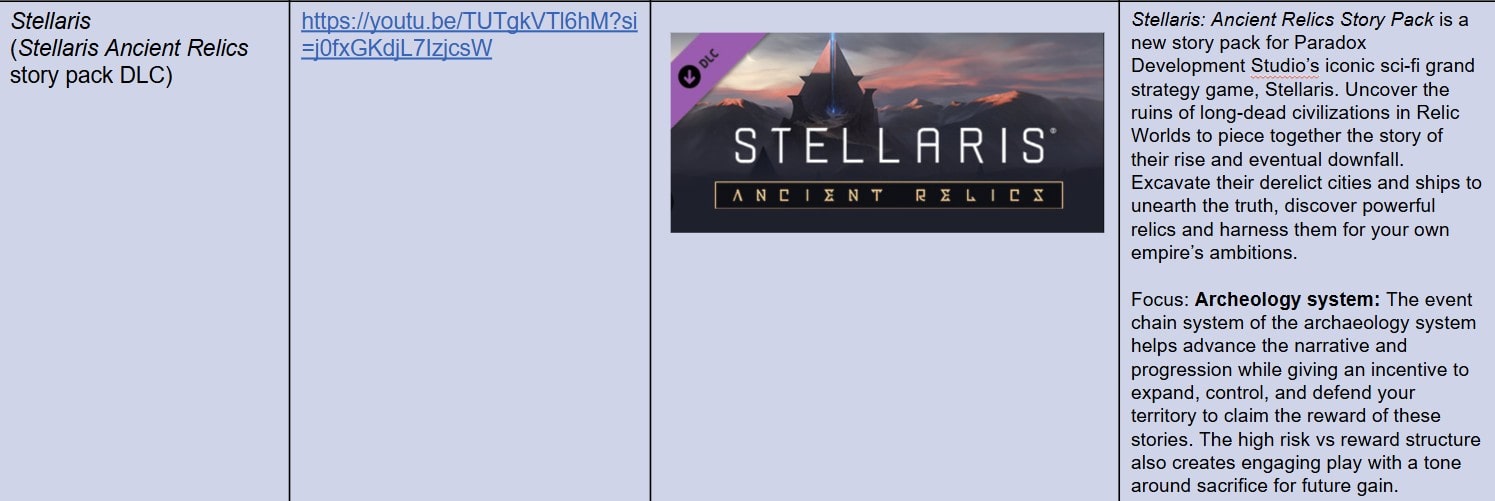
Performed high-level research document to help determine the game’s popularity and help the marketing team do preliminary research with the target audience, by critically consuming content from similar games as well as movies and shows that share narrative themes:
Created a list of movies, TV shows, and games, including the official synopses of the titles, and links to their trailers
Wrote focus notes on what elements to draw inspiration from to prove similar ideas have interest across several audiences
Worldbuilding
Cartography
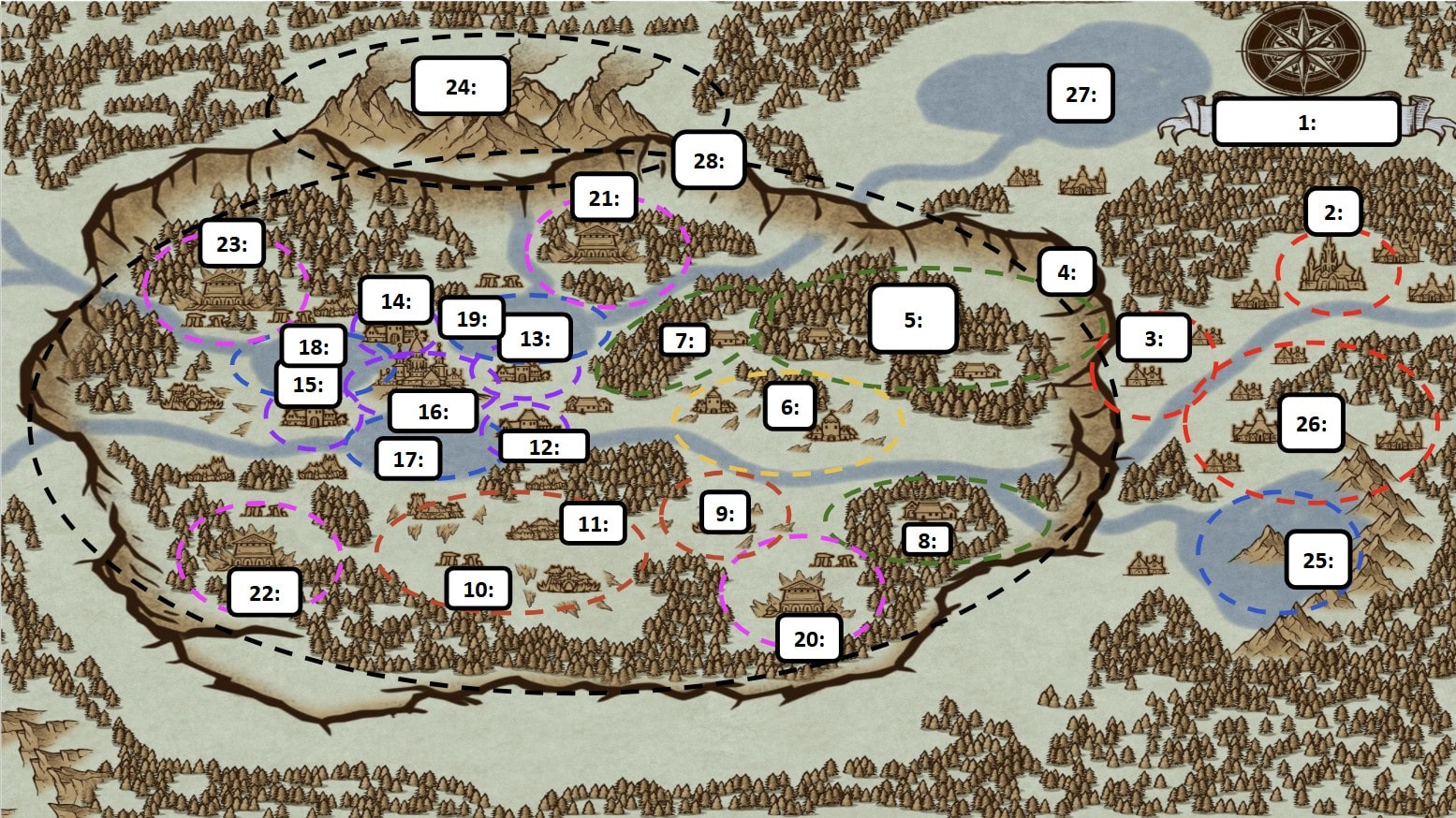
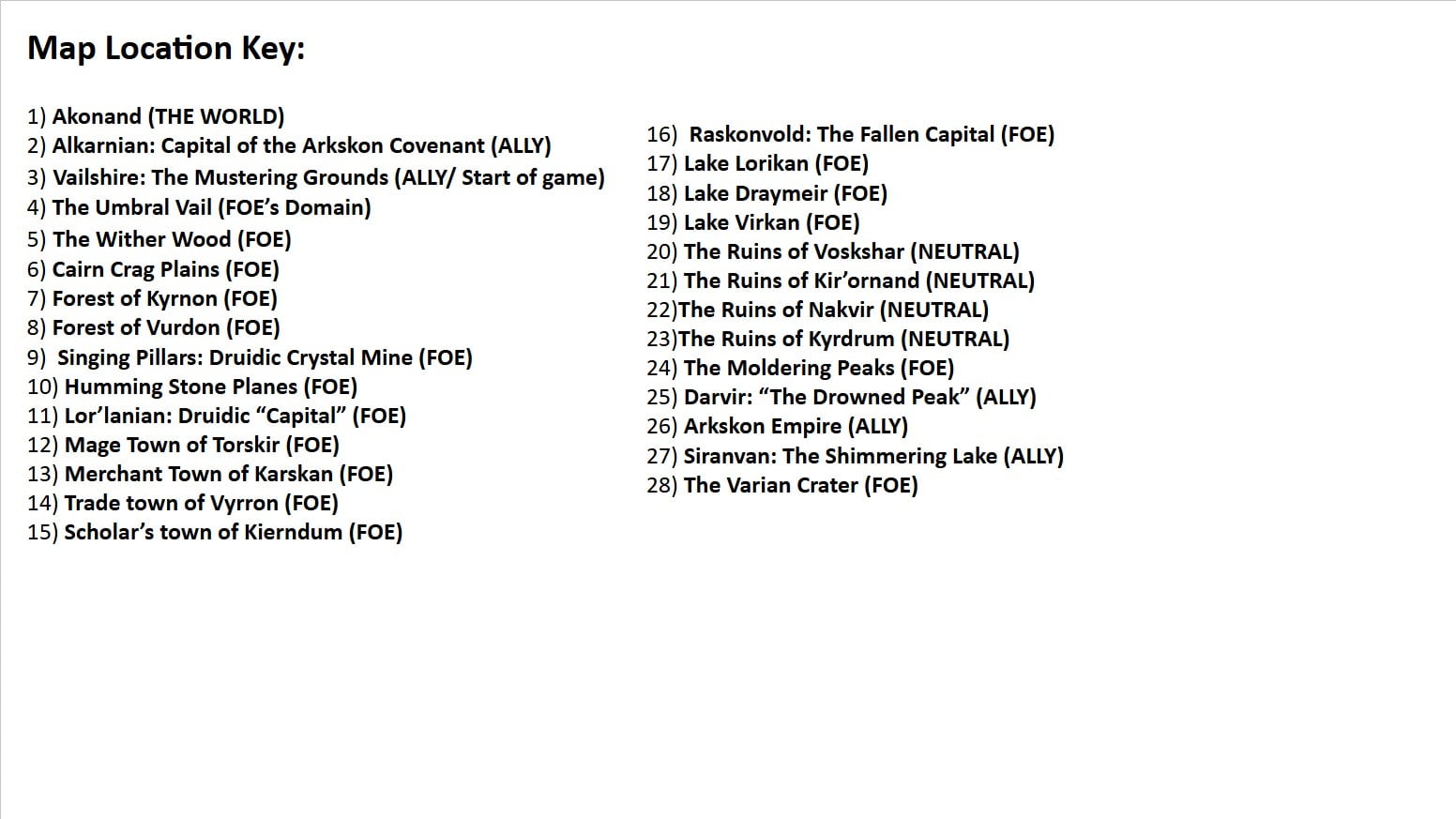
Designed world map with the game’s core mechanics in mind and shaped story and progression within those constraints while producing design materials for team collaboration:
World Map Design
World Map Design
Created a world map to achieve the following design goals:
Designed the crater as both a memorable story environment and a natural boundary for world scope
Created locations centered on the natural progression of resource needs for gameplay
Divided the key quest locations across the map to encourage exploration and expansion for players to unlock knew skills, tech trees, and narrative arcs as they claim new territory
Wrote a location key to indicate location names and their faction status at the start of the game
Surface Biome Mood Boards
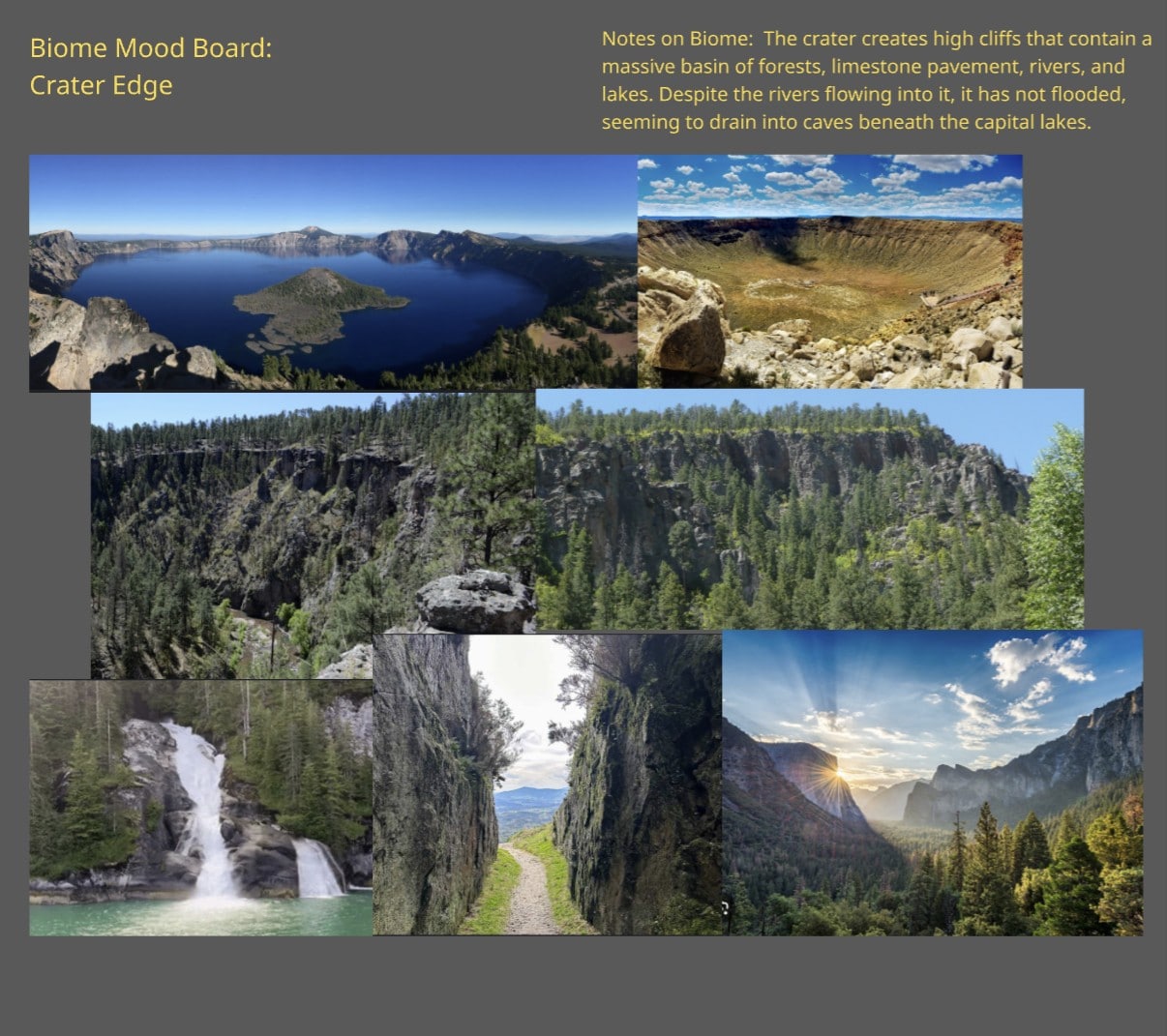
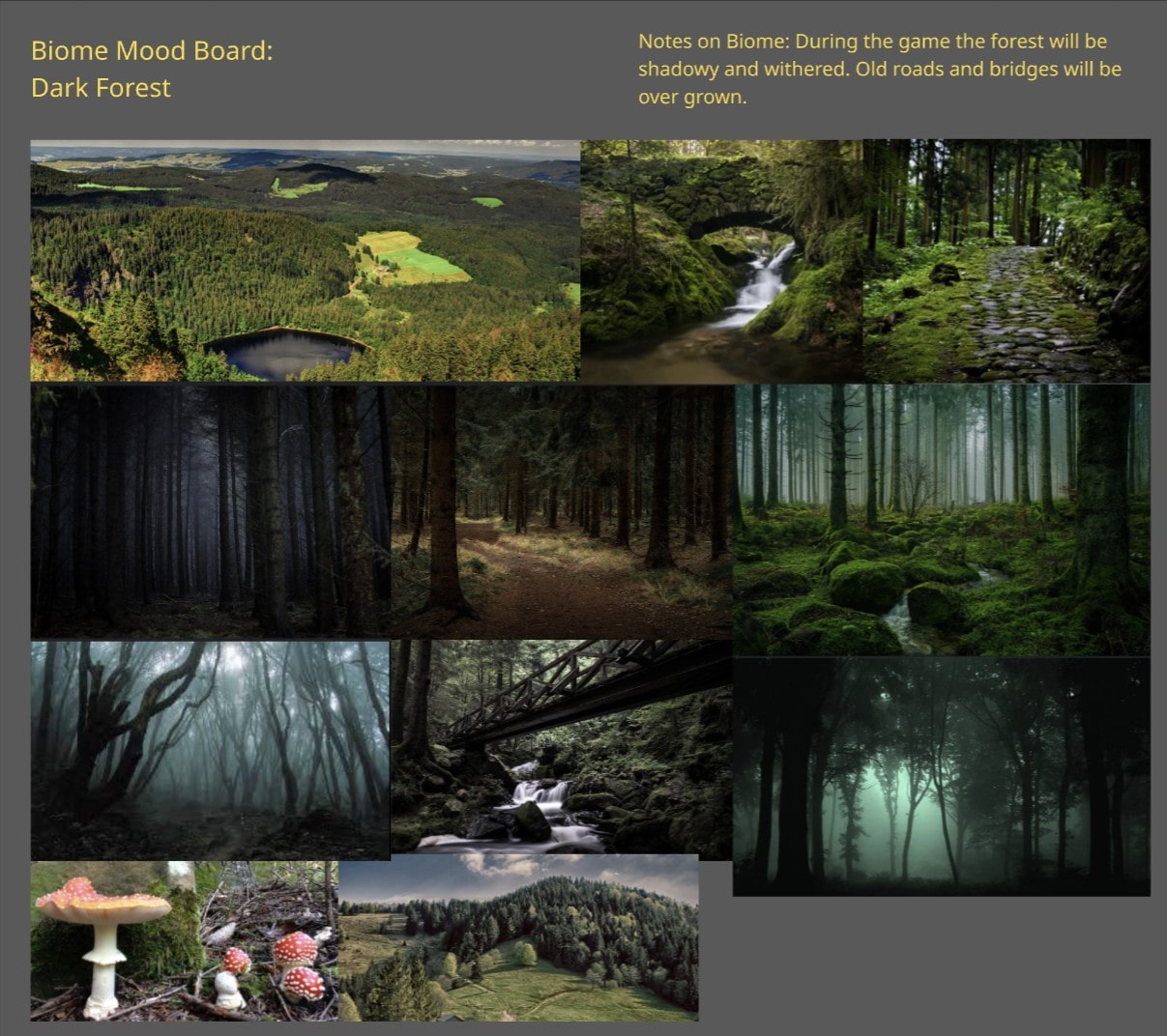
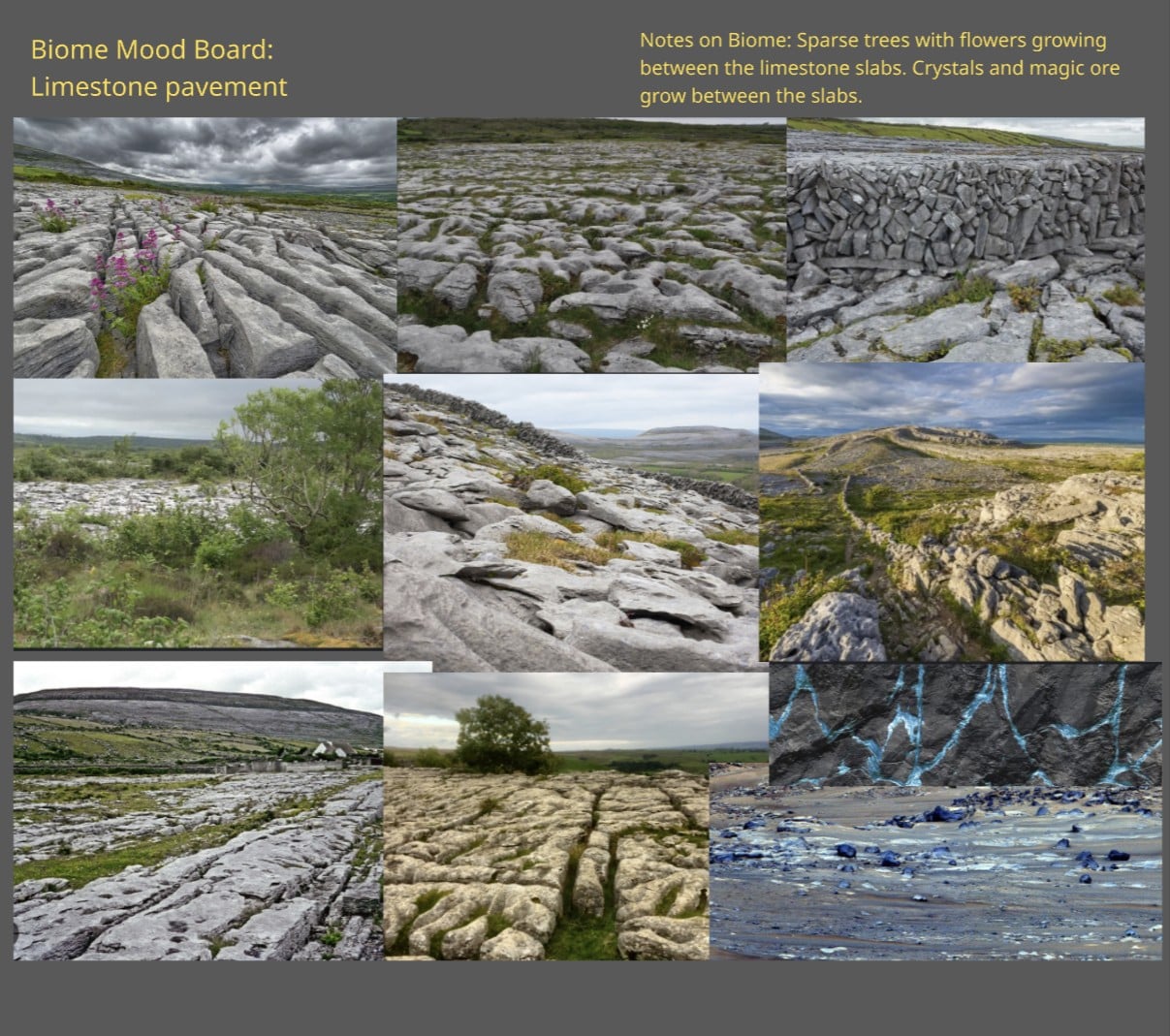
Biome Mood Boards:
Created biome mood boards for collaboration with the environment artists:
Researched rich wooded climates to tie into the dark fantasy theme of the game
Researched the limestone pavement of Ireland to create an alien stony atmosphere where the magic metals and crystals can be found on the surface, and trees can be limited to push player choice for which locations to occupy as they balance their resources
Gathered crater images to show real-world limits and paired them with references of cliffs to push the fantasy and grand scale of the environment
Special Biome Mood Boards
Special Biome Mood Boards:
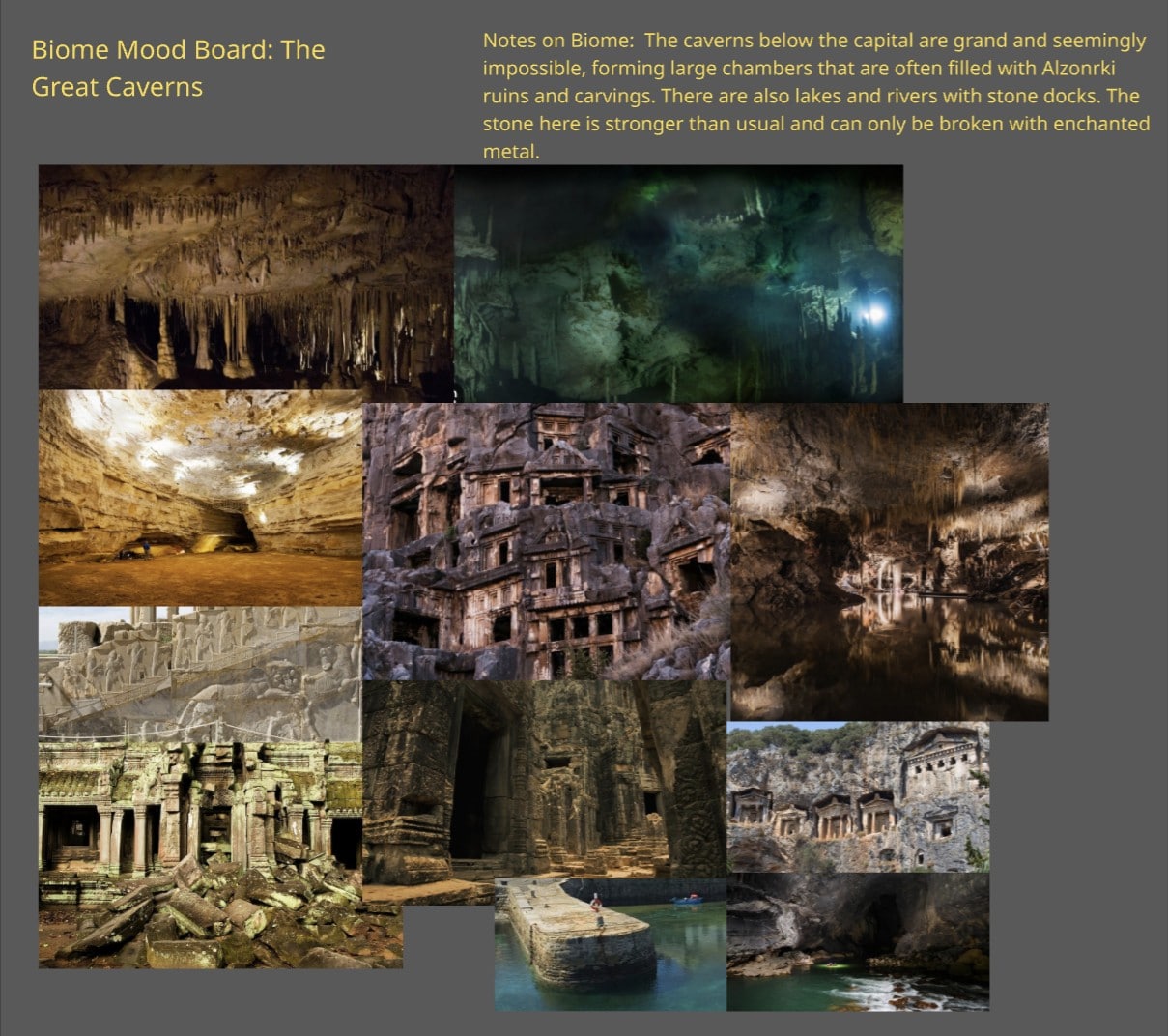
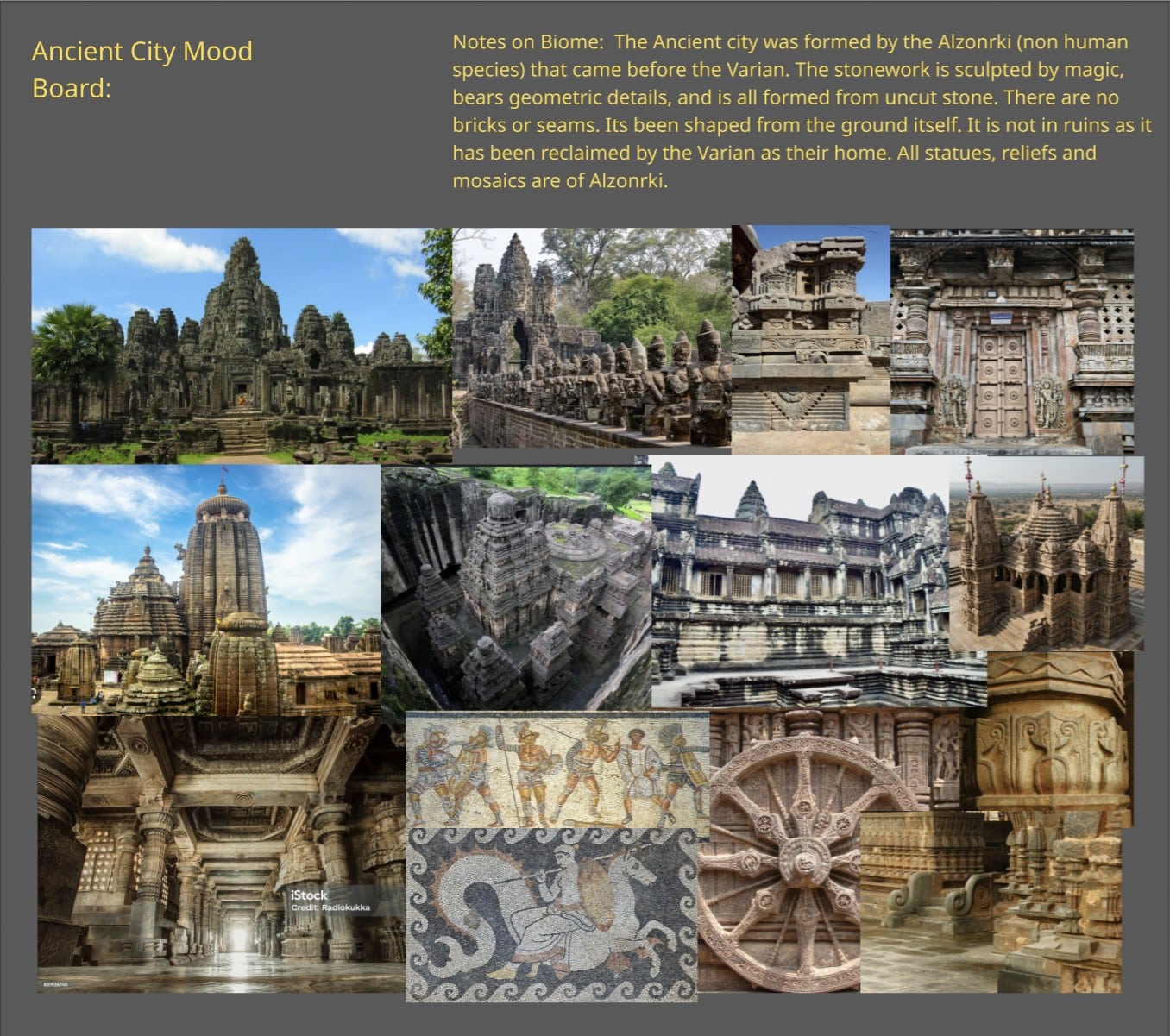
Created mood boards for special game locations for collaboration with the environment artists to enhance the ancient and grand theming of late game locations:
Researched ancient stone temples from around the world to inspire the designs of the art and level design teams
Researched cave formation and cliff-carved cities to create the ruins of the lost subterranean species central to the game’s mid-late game progression
this is a spacer
Written Documentation
Created and maintained worldbuilding documentation for collaboration with various teams. Documentation included:
Worldbuilding Summaries
Lore Summaries
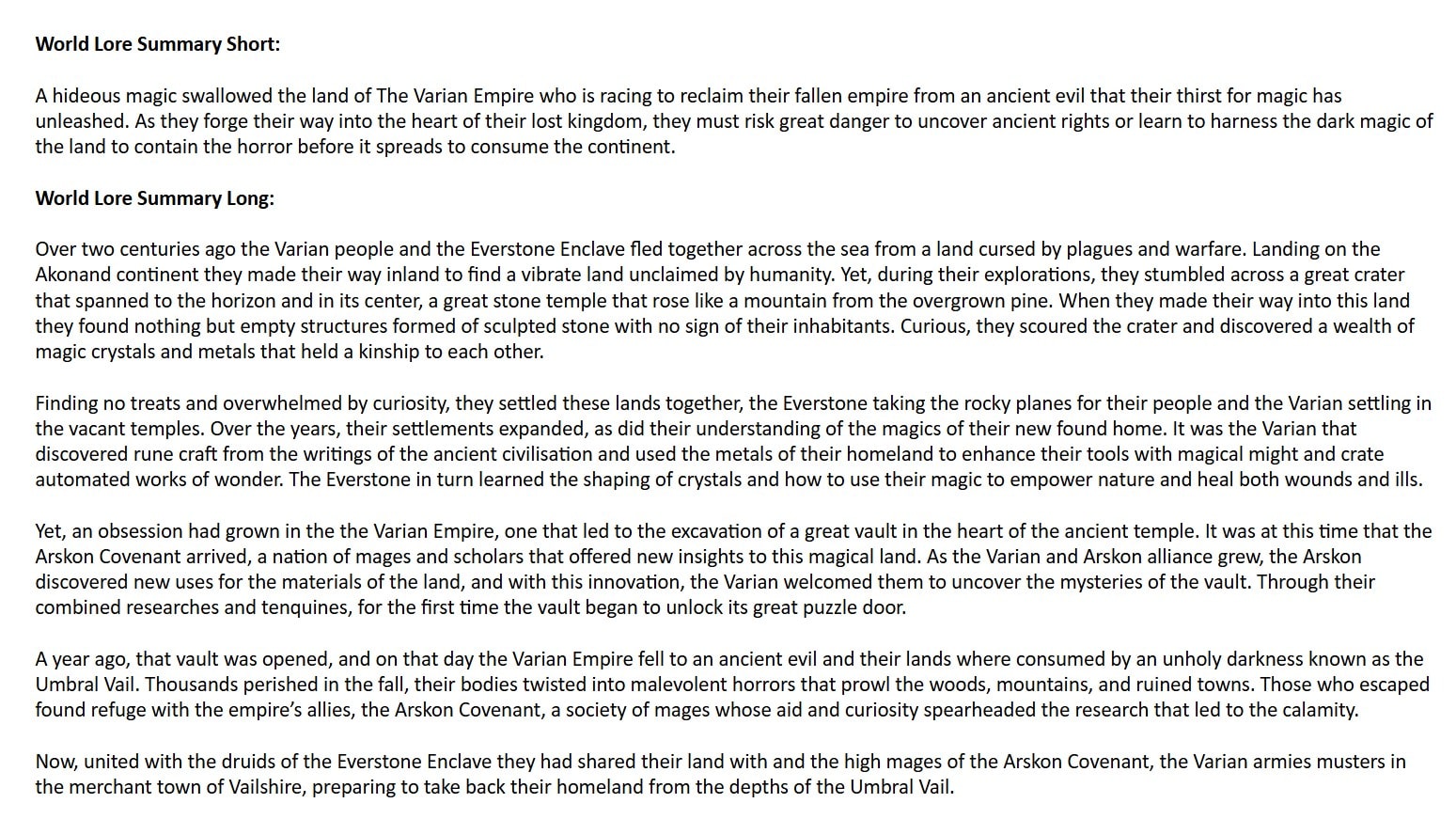
Created short and long lore summaries for both in-game and promotional use:
Short Summary was tailored for use as back-of-box or store page summary of the game, as well as in-game copy
Created the Long Summary for website copy
Both copies are for the use of the design teams to quickly scan the main themes of the story, as well as to invite collaboration with the narrative team
Core Worldbuilding Elements
Core Worldbuilding Elements
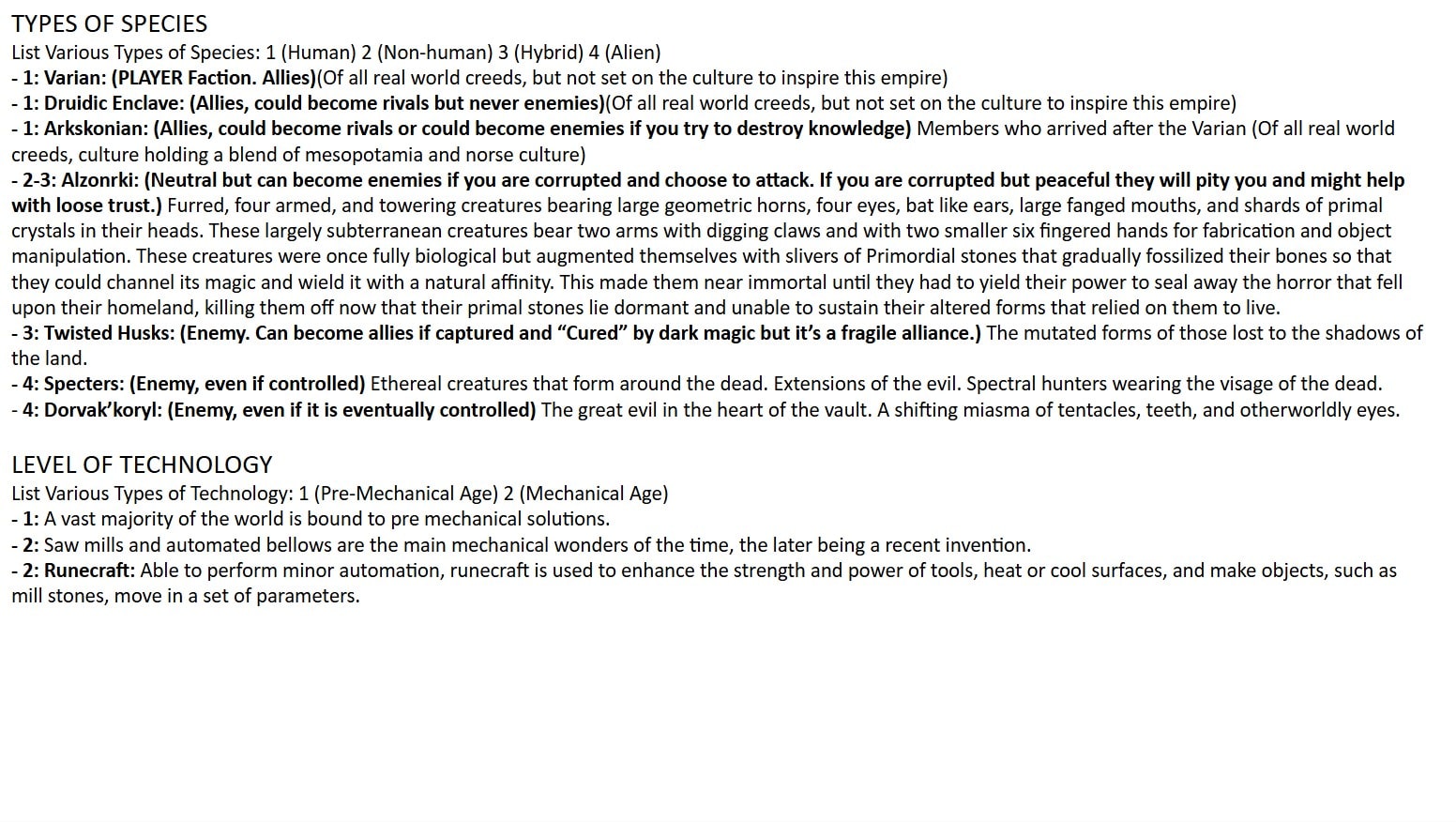
Created a list of world-building elements for collaboration and ideation with design teams:
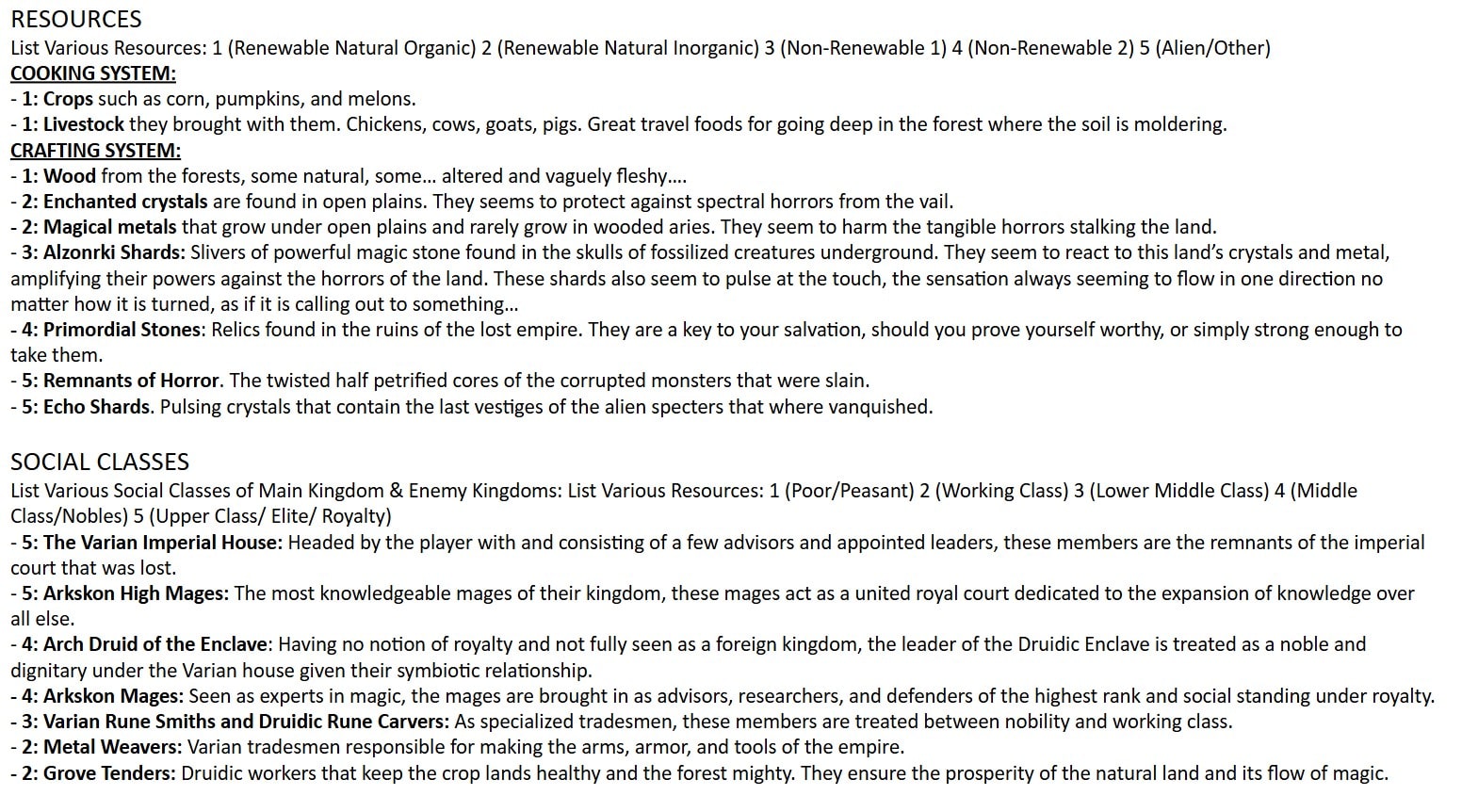
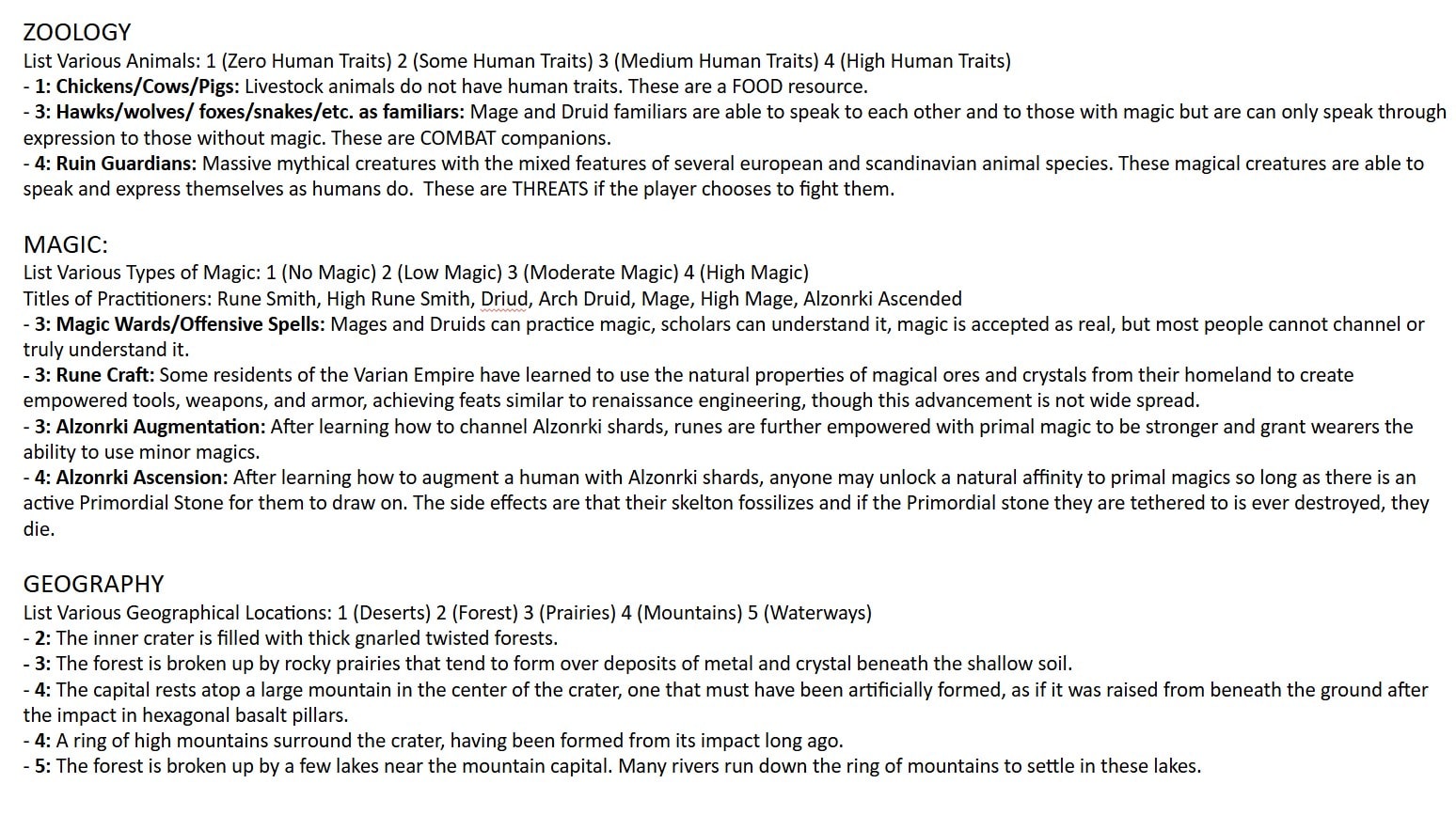
Outlined the zoology, geography, species, magic, level of technology, social classes, and resources available in the world
Created subsections in the resource categories to reflect what resources are used in which system for gameplay
World History
World History Breakdown
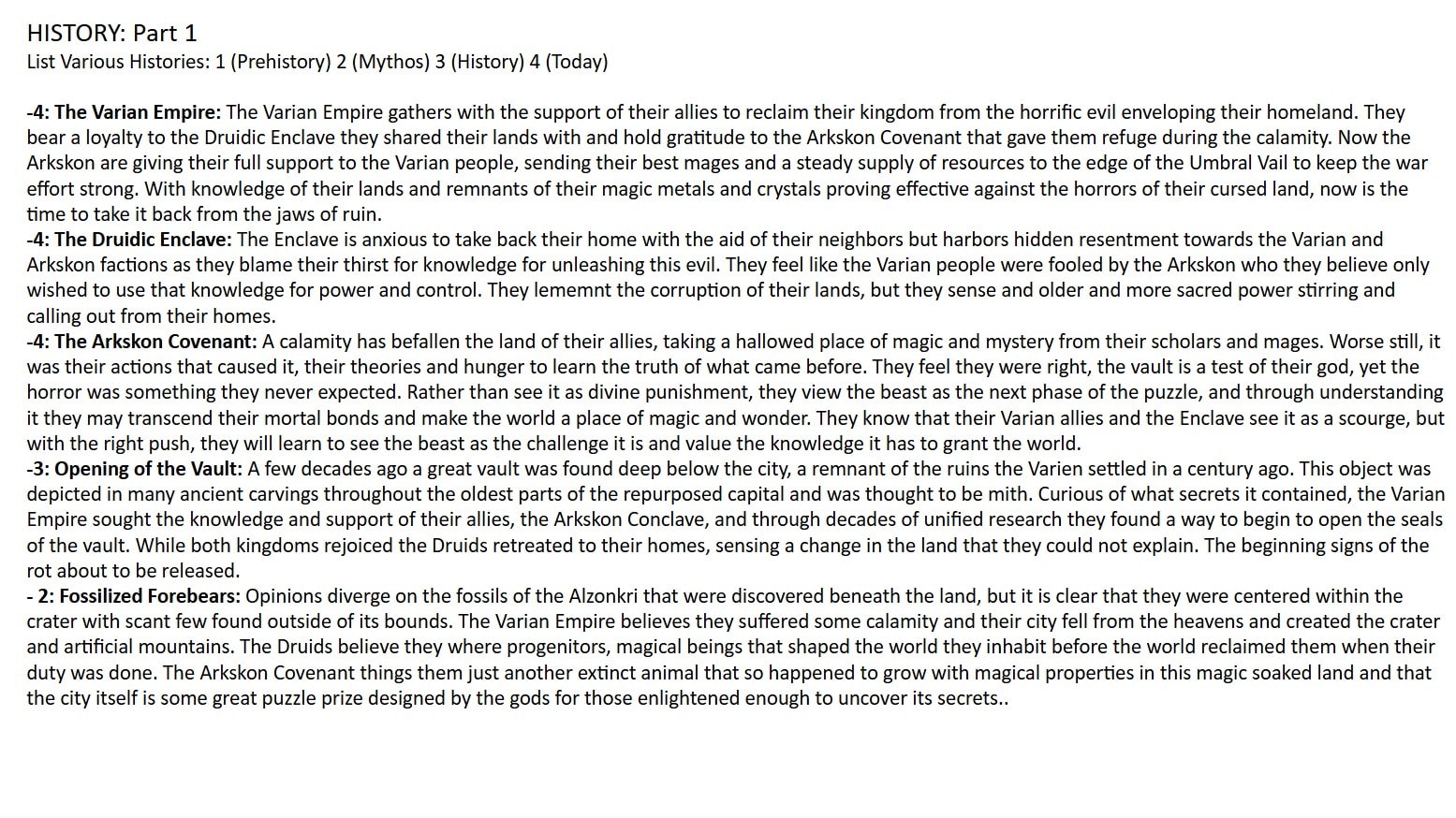
Created a living document of the game’s world history for collaboration with design teams:
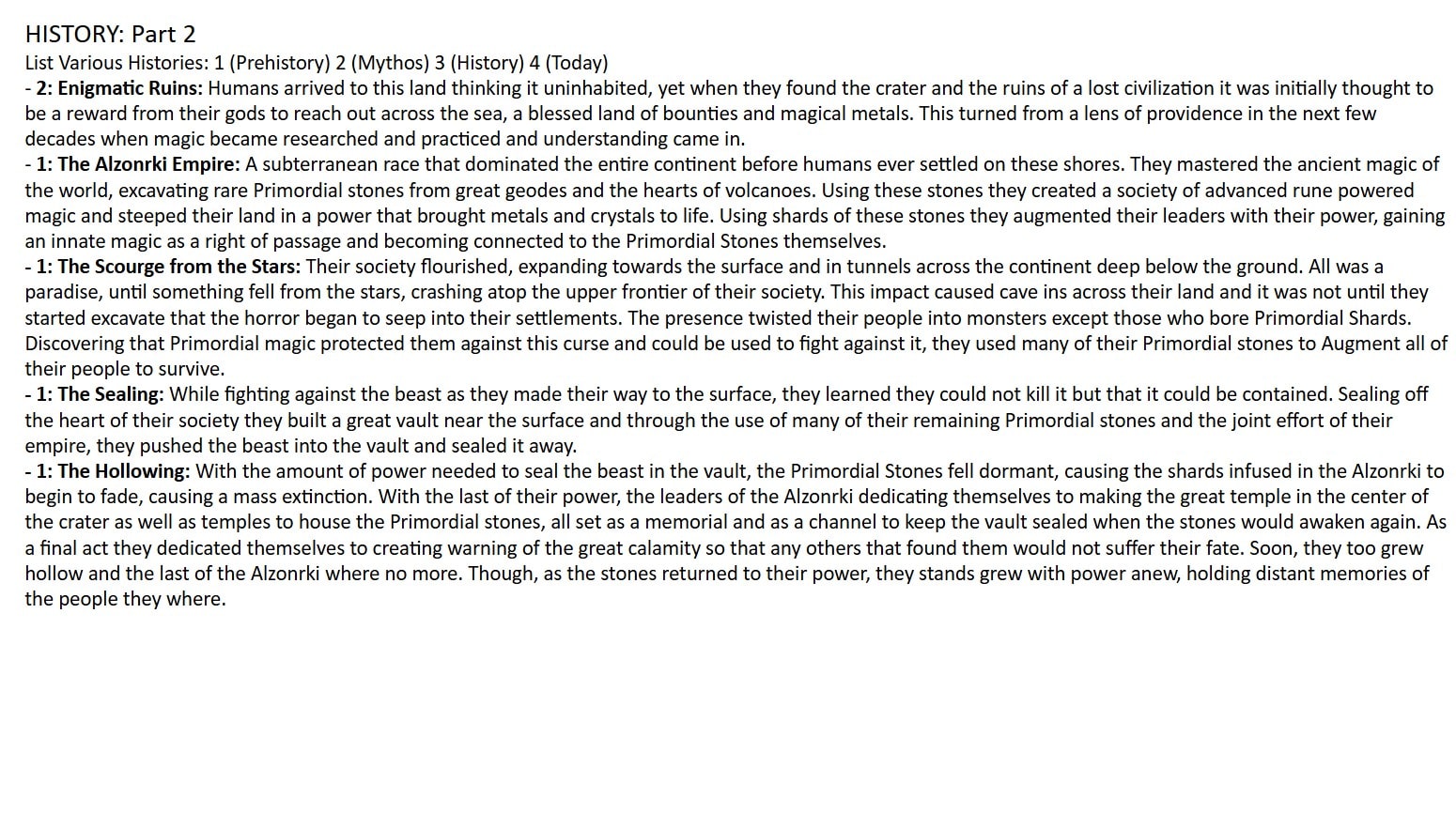
Included prehistory, mythos, history, and current history to inform the state of the world at the start of the game to create a fantasy for the players.
Created a current history for each of the three human allies to inform the motives and bonds of these factions to help the narrative and design teams as the game develops
Created prehistory and mythos as a foundation for the mid and late game where players will explore ancient ruins and harness forgotten magic to defeat the antagonist while showing rich lore and environments for various player types